• Home
  • Blog
  • About
  • Contact

The Air Dispatch

~ Covering the business of aviation and travel

The Air Dispatch

Tag Archives: FAA

FAA orders inspections of Boeing MAX jets over cracking risk

07 Friday Aug 2026

Posted by Abdul Latheef in Aircraft, Boeing, FAA

≈ Comments Off on FAA orders inspections of Boeing MAX jets over cracking risk

Tags

Aircraft, Aviation, Boeing, FAA, Transport

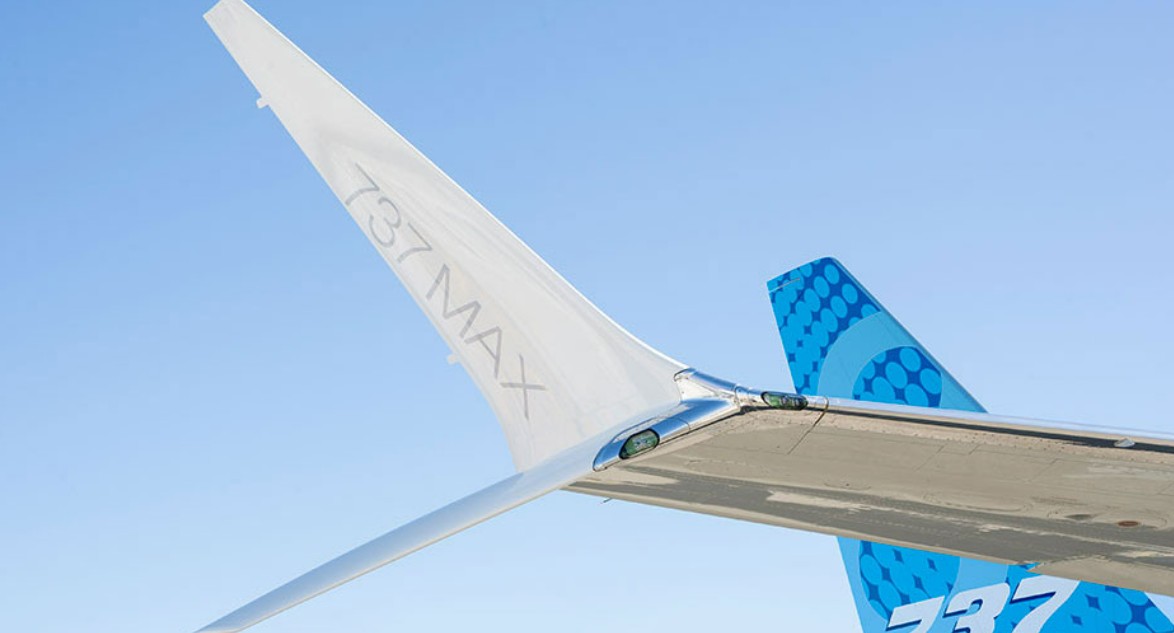
Photo: Boeing.

WASHINGTON – The U.S. Federal Aviation Administration has ordered inspections of hundreds of Boeing 737 MAX airplanes after determining that fatigue cracking could develop in a key structural reinforcement, potentially affecting the aircraft’s structural integrity.

The airworthiness directive, published Thursday in the Federal Register, applies to 471 U.S.-registered Boeing 737-8, 737-9 and 737-8200 airplanes. It becomes effective Sept. 10.

The directive requires operators to determine whether repairs have previously been made to the fuselage skin at the forward upper corner of the forward galley door cutout. Depending on the findings, airlines must carry out repetitive external inspections for cracking of the fuselage skin and the underlying bear strap, a structural reinforcement designed to help carry fuselage loads. Any cracking found must be repaired before further flight using a method approved by the FAA.

The FAA said the action was prompted by reports of bear strap cracking on Boeing 737 Next Generation airplanes. Although the agency said no cracking has been reported on 737 MAX aircraft, it determined that the MAX fleet is subject to the same unsafe condition because the affected structure has a similar design and manufacturing process.

Image: FAA.

According to the directive, cracks in the bear strap and fuselage skin could reduce the ability of a principal structural element to carry required loads. If left undetected, the damage could grow and compromise the structural integrity of the airplane.

The FAA estimated the required inspection to determine whether a repair exists would take about one work-hour per airplane. Additional inspections and any corrective actions would depend on the aircraft’s configuration and inspection results.

The agency estimated the cost of the initial inspection across the U.S. fleet at about $40,000, excluding any repairs that may be required.

The directive adopts requirements previously proposed by the FAA after the agency concluded the inspections were necessary to address the potential unsafe condition.

The directive comes days after the FAA certified Boeing’s 737-7, the smallest member of the 737 MAX family, for commercial service following what the agency described as years of work to resolve technical issues and complete its review of the aircraft’s design and safety analyses.

FAA clears Boeing 737-7 after lengthy review

03 Monday Aug 2026

Posted by Abdul Latheef in Aircraft, Aviation, Boeing, FAA

≈ Comments Off on FAA clears Boeing 737-7 after lengthy review

Tags

Aviation, Boeing, Business, FAA, News, Transport, Travel

Photo: Boeing

WASHINGTON/SEATTLE – After nearly a decade of review, the Federal Aviation Administration on Monday certified Boeing‘s 737-7 passenger jet for commercial service, clearing the smallest member of the 737 MAX family to begin airline deliveries.

The FAA said the amended type certificate follows years of work to resolve technical issues and complete an extensive review of the aircraft’s design and safety analyses.

Regulators said they scrutinized flight controls, system safety, human factors and other critical areas while requiring additional testing, design changes and analysis before approving the aircraft.

The certification required Boeing to incorporate changes mandated under the Aircraft Certification, Safety and Accountability Act and recommendations from the National Transportation Safety Board, including updates to flight-control software, the flight crew alerting system and a redesigned engine anti-ice system.

The FAA said the changes provide pilots with clearer warnings and prevent engine inlet overheating that could weaken surrounding structures.

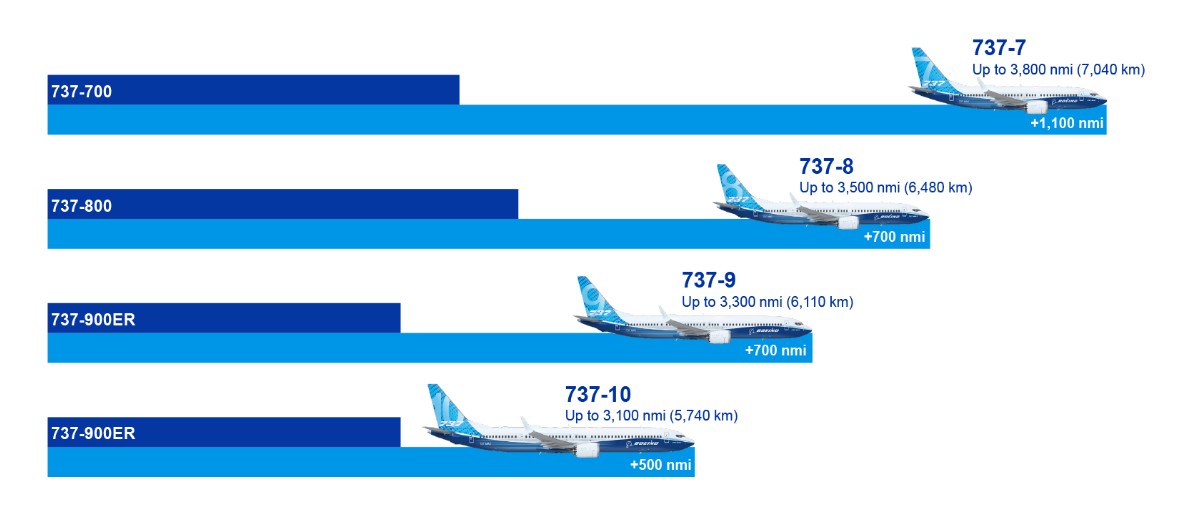
The 737-7 is designed to carry 135 to 160 passengers in a typical two-class configuration. It also has the longest range in the MAX lineup, capable of flying up to 3,800 nautical miles (7,040 kilometers).

Illustration: Boeing.

“This important certification validates the rigor of our airplane’s design and recognizes the determination and resilience of our 737 MAX development team,” Stephanie Pope, president and CEO of Boeing Commercial Airplanes, said in a statement.

Boeing said the aircraft burns 20% less fuel and produces 20% fewer carbon dioxide emissions than the airplanes it typically replaces while cutting its noise footprint by 50%.

Southwest Airlines, the launch customer for the 737-7, is preparing to take delivery of the first aircraft.

The FAA said safety inspectors will remain at Boeing production facilities to monitor manufacturing, including the company’s safety management system and safety culture.

Boeing has booked about 300 firm orders for the 737-7

Industry: Return of supersonic flights now ‘inevitable’

02 Thursday Jul 2026

Posted by Abdul Latheef in Aircraft, Aviation

≈ Comments Off on Industry: Return of supersonic flights now ‘inevitable’

Tags

Aviation, Boom Supersonic, Business, FAA, News, Supersonic, Transport, Travel

Boom Supersonic’s demonstrator aircraft, the XB-1.

WASHINGTON – The industry is welcoming a Federal Aviation Administration proposal to lift the ban on supersonic civilian flights in the U.S., with one executive declaring that that “the return of supersonic is inevitable” 23 years after the Concorde flew for the last time.

The FAA move was announced this week by U.S. Transportation Secretary Sean P. Duffy.

He said advances in supersonic technology will allow the next generation of aircraft to fly safely without producing a sonic boom.

“Restoring supersonic flight over land isn’t just about speed, it’s about unleashing American innovation and ushering in a Golden Age of Travel,” Duffy said.

The FAA noted in its proposal that current regulations prohibit civil aircraft from flying faster than the speed of sound over the U.S. unless they receive special authorization from the agency. The restriction is intended to protect the public from sonic booms.

Supersonic flight begins at Mach 1, or about 770 mph (1,240 km/h), significantly faster than the typical cruising speed of commercial airliners, which ranges from about 550 to 600 mph.

The FAA aims to finalize the rule by the middle of next year.

Blake Scholl, the founder and CEO of Boom Supersonic, which is developing a supersonic aircraft called Overture, quickly welcomed the government proposal.

Blake Scholl

“It’s time to get excited. The return of supersonic is inevitable,” Scholl wrote on LinkedIn.

Boom’s demonstrator aircraft, the XB-1, made history in January 2025 by becoming the first independently developed civil aircraft to successfully break the sound barrier.

Scholl said the FAA had specifically cited the XB-1’s demonstration of the boomless supersonic flight.

The first Overture commercial flight is scheduled for 2029. Boom has won firm orders or options for the aircraft from United Airlines, American Airlines and Japan Airlines.

The previous supersonic aircraft, the Concorde, was operated by Air France and British Airways during 1976-2003. A British Airways Concorde made the final commercial flight from New York to London on Oct. 24, 2003.

Images are courtesy of Boom Supersonic and FAA.

CS100: ‘The quietest in its class’

10 Thursday Sep 2015

Posted by Abdul Latheef in Airbus, Airlines, Aviation, Boeing, Bombardier, Business, Canada, CS100, CS300, CSeries, EASA, Embraer, Environment, FAA, ICAO, News, Toronto, Tourism, Transport, Travel, TSB

≈ 1 Comment

Tags

Aviation, Boeing, Bombardier, Business, Canada, CS100, CS300, EASA, Embraer, Environment, FAA, ICAO, News, Toronto, Tourism, Transport, Travel, TSB


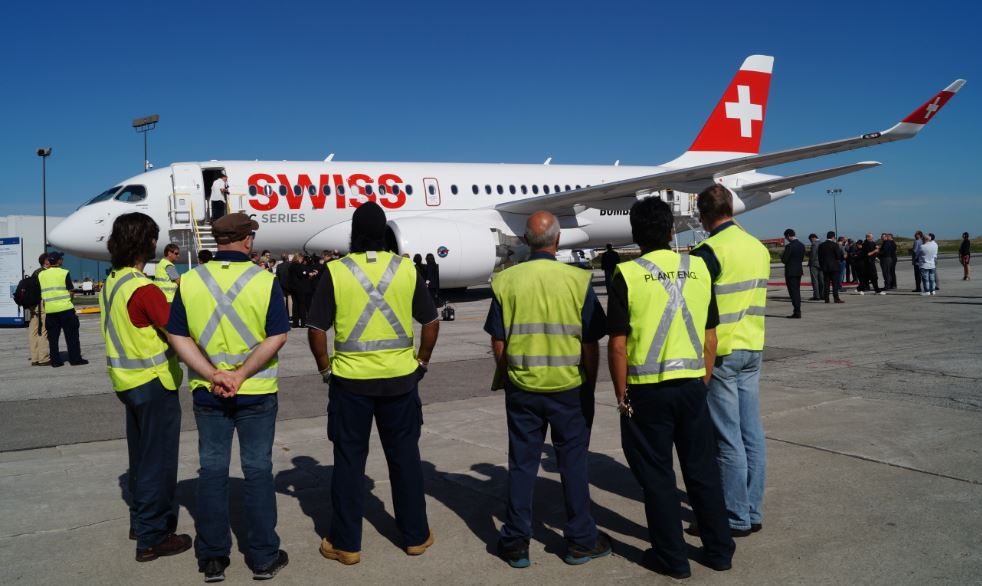
CS1
T
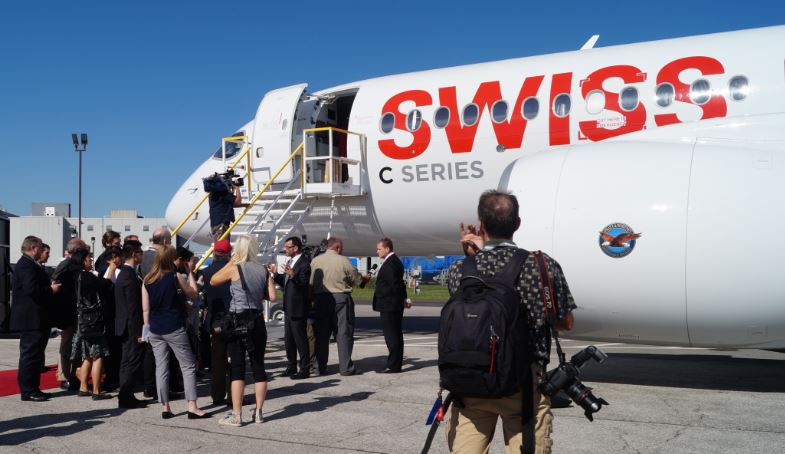
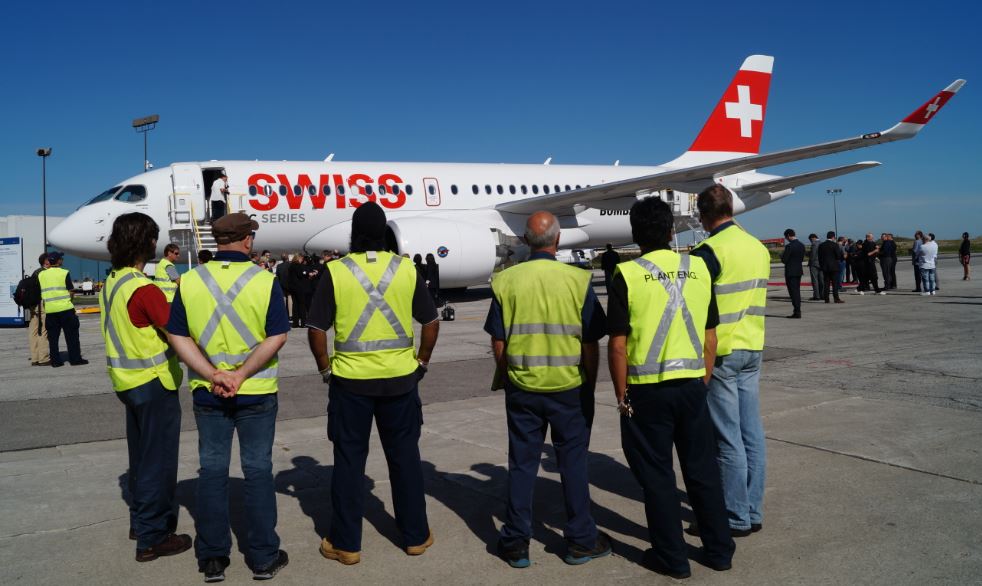
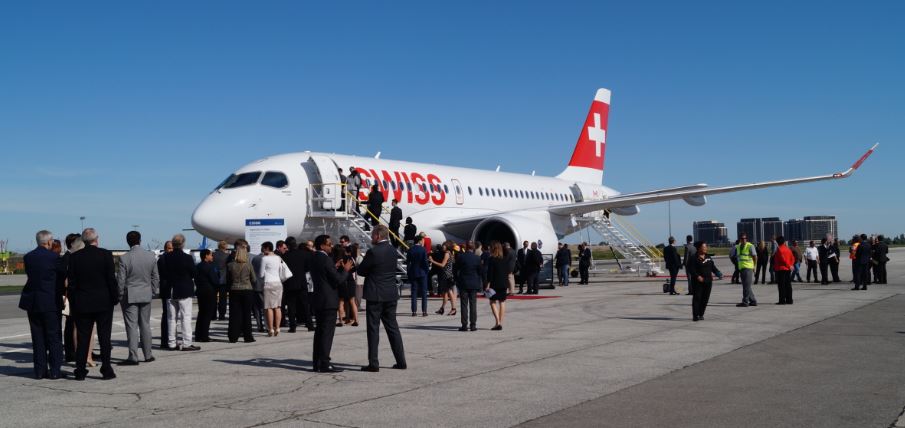
he message was loud and clear as the all-new Bombardier CS100 made its Toronto debut Thursday: It’s the quietest aircraft in its class.

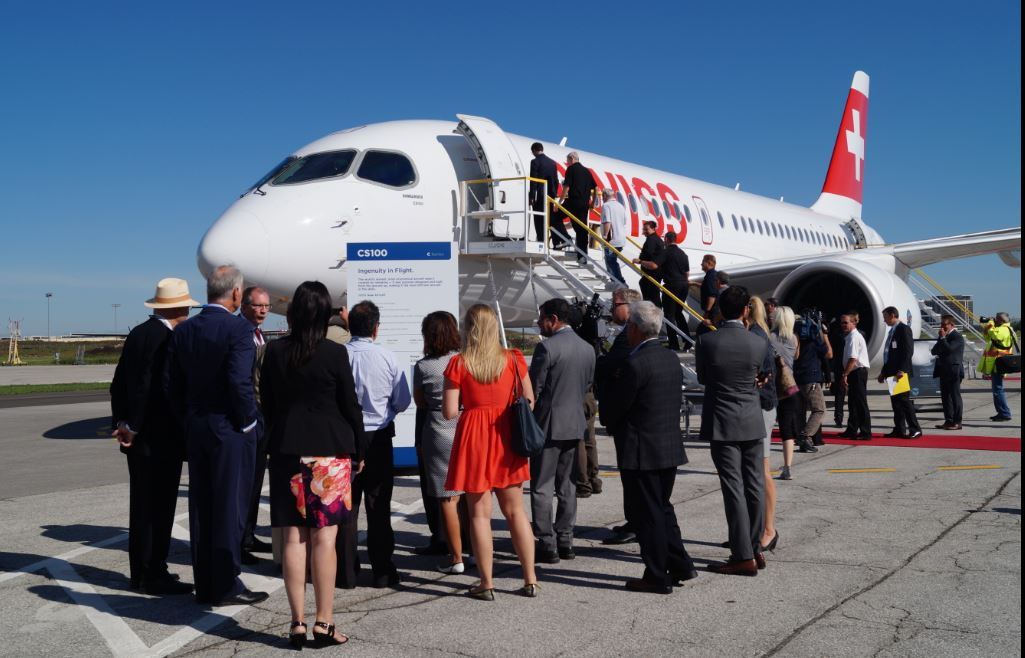
The company told a gathering of government officials and airline executives that the “aircraft’s noise performance and its outstanding short-field capability make it ideal for city centre operations.”

The CS100 is the smaller version in the CSeries and is on course for certification later this year.
CS3

The aircraft that debuted in Toronto was in the colours of launch customer SWISS, or Swiss International Air Lines, and is expected to make the first commercial flight before the middle of next year.

The CS100 can carry up to 125 people while the bigger version, the CS300, is meant for up to 160.

It is not the first time Bombardier is stressing the efficiency of the aircraft. Just before this year’s Paris Air Show, the company declared that the performance of the CSeries was “better than advertised.”

“We announced previously that the CSeries aircraft are exceeding their original targets for fuel burn, payload, range and airfield performance,” said Rob Dewar, vice-president of the program.

“Now we are delighted that the CS100 aircraft’s noise performance tests have confirmed it as the quietest in-production commercial jet in its class.”

The company said the first production CS100 will soon start function and reliability testing, signalling the start of the final flight testing phase.

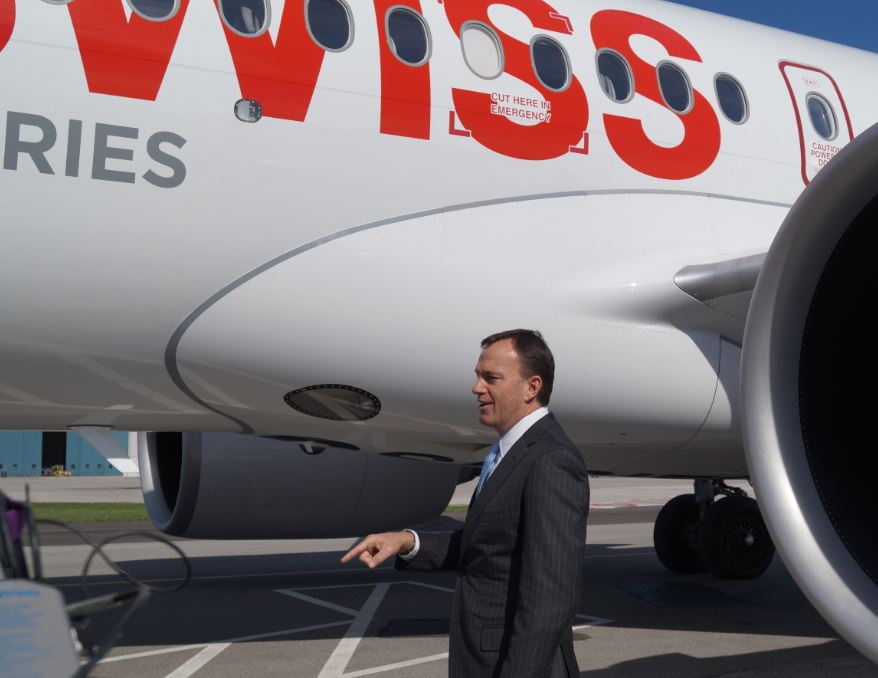
Fred2“For these tests, the aircraft will operate on a commercial airline type of schedule from key airports in North America.”

In all, Bombardier has won 243 firm orders for the CSeries aircraft, 180 of them for the CS300.

No new orders were announced Thursday but Fred Cromer (above), president of Bombardier Commercial Aircraft, was very optimistic.

“The momentum continues to grow,” he said.

CS8

All images are by the author.

Emirates hits back in Open Skies battle

01 Wednesday Jul 2015

Posted by Abdul Latheef in Alpa, American, Boeing, Delta, Dubai, Emirates, Etihad, FAA, Legacy Airlines, Open Skies, Qatar, Qatar Airways, Transport, Travel, United Airlines, United Arab Emirates, United States

≈ Leave a comment

Tags

Alpa, American, Boeing, Dubai, Emirates, Etihad, FAA, Legacy Airlines, Qatar Airways, Transport, Travel, United, United Arab Emirates, United States

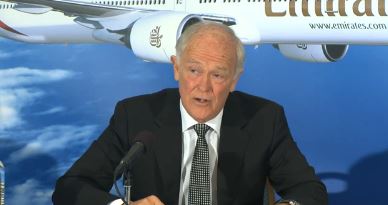
EK2Dubai’s Emirates airline has released a 400-page rebuttal to claims by three major U.S. airlines that it is enjoying an unfair advantage through state subsidies.

In a white paper issued in January, U.S. legacy airlines Delta, United and American had accused Emirates of receiving more than $6 billion in subsidies from the Dubai government.

On Tuesday, Emirates hit back.

“Their argument is nothing more than a mess of legal distortions and factual errors,” the U.A.E. national carrier said in the document posted on its website.

“What the legacy carriers want is protection from competition. Such protection would do irreparable harm to U.S. cities and airports, America’s world-leading aerospace industry, U.S. exports and jobs, U.S. air cargo carriers, and most of all, U.S. consumers, including passengers and shippers,” the document said.

“It would also undermine America’s leadership in international aviation — leadership that has made Open Skies the global template for air services.”

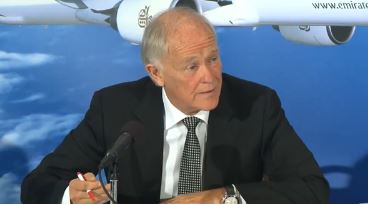
EK3The document was also presented to U.S. officials in Washington by Emirates president Sir Tim Clark.

“The legacy carriers have received more than $100 billion in government support since 2002,” Clark told reporters after his meeting.

“In sum, there is no factual or legal justification for U.S. unilateral action against Emirates,” the document said.

“Such a step by the United States would seriously disadvantage other U.S. stakeholders, sound the death knell for Open Skies, and send a very negative signal about the value of U.S. trade, diplomatic, and security commitments,” the airline warned.

“For these reasons, the legacy carriers’ demands for protection should be firmly rejected.”

Images are courtesy of Emirates.

787 receives 330-minute certification

28 Wednesday May 2014

Posted by Abdul Latheef in Air Canada, Aircraft, Airlines, Airports, Aviation, Boeing, Business, Dreamliner, FAA, News, Transport, Travel

≈ Leave a comment

Tags

Aviation, Boeing, Business, Dreamliner, FAA, News, Transport

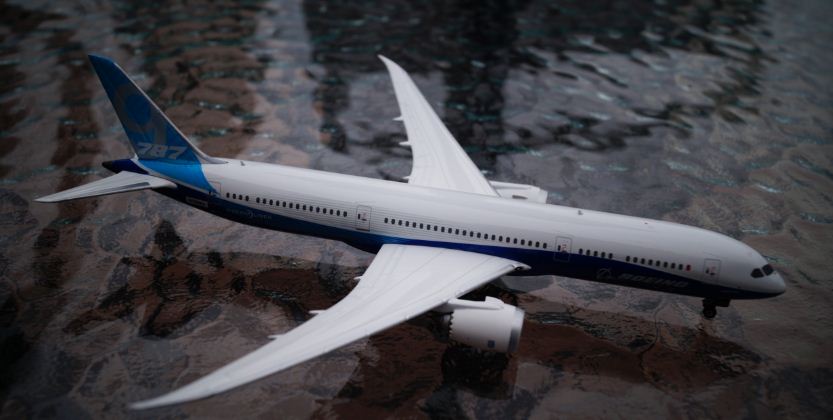
The Boeing 787-9 Dreamliner (from my collection).

The Boeing 787-9 Dreamliner (from my collection).

Boeing’s 787 Dreamliner has received regulatory approval for extended operations (ETOPS), which the company said today would allow airlines to launch additional routes.

“The move will allow 787s to be operated up to 330 minutes (51/2 hours) from a landing field and signals continued confidence in the airplane’s technical capabilities,” Boeing said.

The U.S. Federal Aviation Administration had already allowed the airliner to operate up to 180 minutes (three hours) away from a landing field since they began flying in 2011.

“We’re delighted that this capability, which was designed into the airplane from the very beginning, has been certified,” said Larry Loftis, vice-president of the 787 program.

Boeing has received orders for 1,030 Dreamliners from 60 customers and delivered 146 aircraft.

Air Canada, which has ordered 37 Dreamliners, received its first airplane this month.

Aviation, Airports, Airlines, Airshows, Bizjets, Business, Industry, News, People, Travel

Airbus Aircraft Airlines Airports Aviation Biofuel Boeing Bombardier Business Business Aircraft Business Aviation Canada China Cities CS100 CS300 Dreamliner Dubai Dubai Airshow Embraer Emirates Environment eVTOLs FAA Farnborough Airshow Gulfstream IATA India Las Vegas Le Bourget Lufthansa Montreal NBAA NBAA-BACE News Paris Air Show Qatar Airways Sustainability Technology Toronto Tourism Transport Travel UAE United Airlines

Archives

  • November 2026
  • October 2026
  • September 2026
  • August 2026
  • July 2026
  • June 2026
  • March 2026
  • August 2025
  • May 2025
  • March 2025
  • January 2022
  • January 2021
  • September 2020
  • April 2020
  • February 2020
  • January 2020
  • December 2019
  • November 2019
  • October 2019
  • May 2019
  • February 2019
  • May 2018
  • June 2016
  • January 2016
  • December 2015
  • November 2015
  • October 2015
  • September 2015
  • August 2015
  • July 2015
  • June 2015
  • May 2015
  • April 2015
  • March 2015
  • February 2015
  • January 2015
  • December 2014
  • November 2014
  • September 2014
  • August 2014
  • July 2014
  • June 2014
  • May 2014
  • April 2014
  • February 2014
  • January 2014
  • December 2013
  • November 2013
  • October 2013

Powered by WordPress.com.

Loading Comments...