Tags
Aviation, Boeing, Business, Environment, Lufthansa, News, Pollution, Rolls-Royce
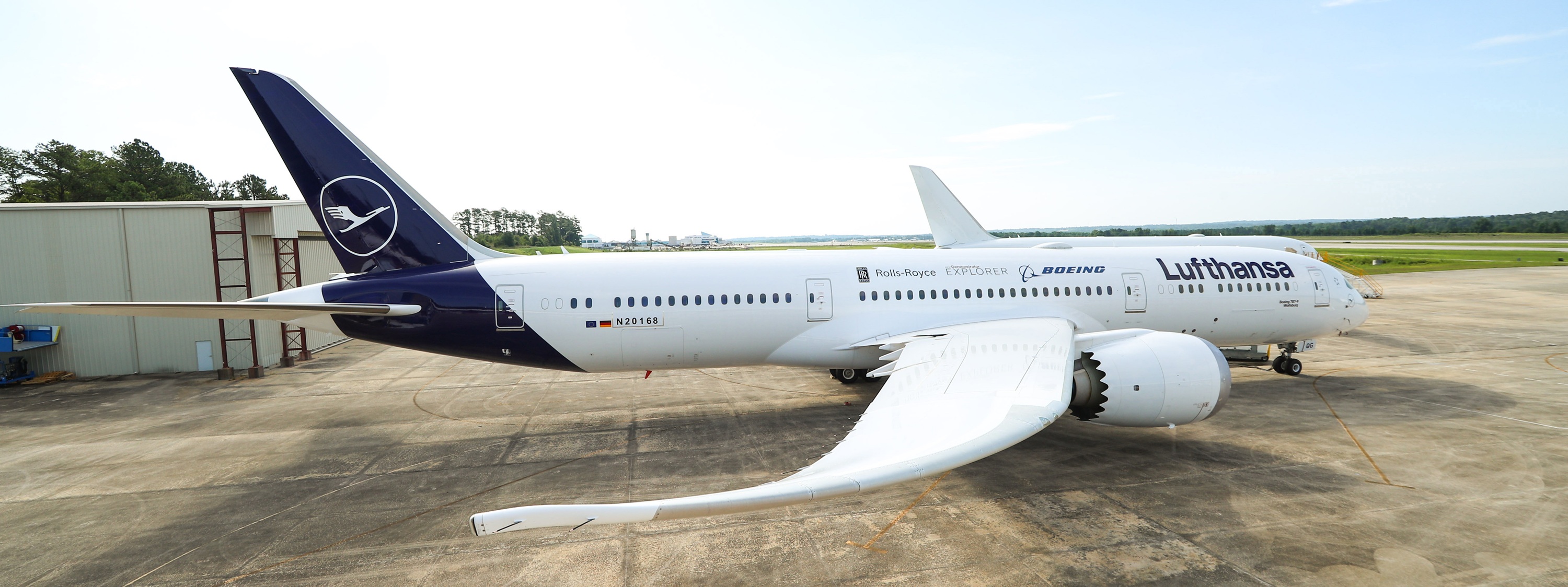
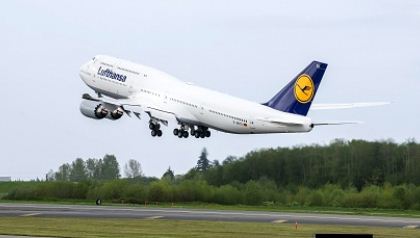
SEATTLE – Boeing said Thursday it will begin flight tests later this month with Lufthansa and Rolls-Royce of engine and flight operation technologies designed to improve fuel efficiency and reduce aircraft noise.
The U.S. aircraft manufacturer said the testing will use a Boeing 787-9 Dreamliner at its facility in Glasgow, Montana, and is expected to continue through mid-August.
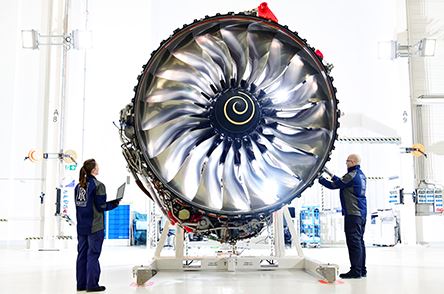
The aircraft, powered by Rolls-Royce Trent 1000 engines, is scheduled for delivery to Lufthansa after the test program.
The companies also will test modified departure and arrival procedures, including Intelligent Operations flight paths.
Boeing said the flight paths use algorithms and multiple data sources to identify routes intended to improve fuel efficiency while reducing community noise around airports.
The flight tests are part of Phase III of the Federal Aviation Administration’s Continuous Lower Energy, Emissions and Noise, or CLEEN, program, a public-private initiative that supports the development and testing of technologies to improve aircraft fuel efficiency and reduce noise.
One technology being evaluated is the Next Generation Inlet, a reduced-length engine inlet with advanced acoustic treatments. Boeing said the design is intended to reduce engine weight and aerodynamic drag while maintaining acoustic performance and supporting the integration of more fuel-efficient engines on future aircraft.
Rolls-Royce is providing engineering support and oversight for operation of the Trent 1000 engine equipped with the Next Generation Inlet during the flight tests.
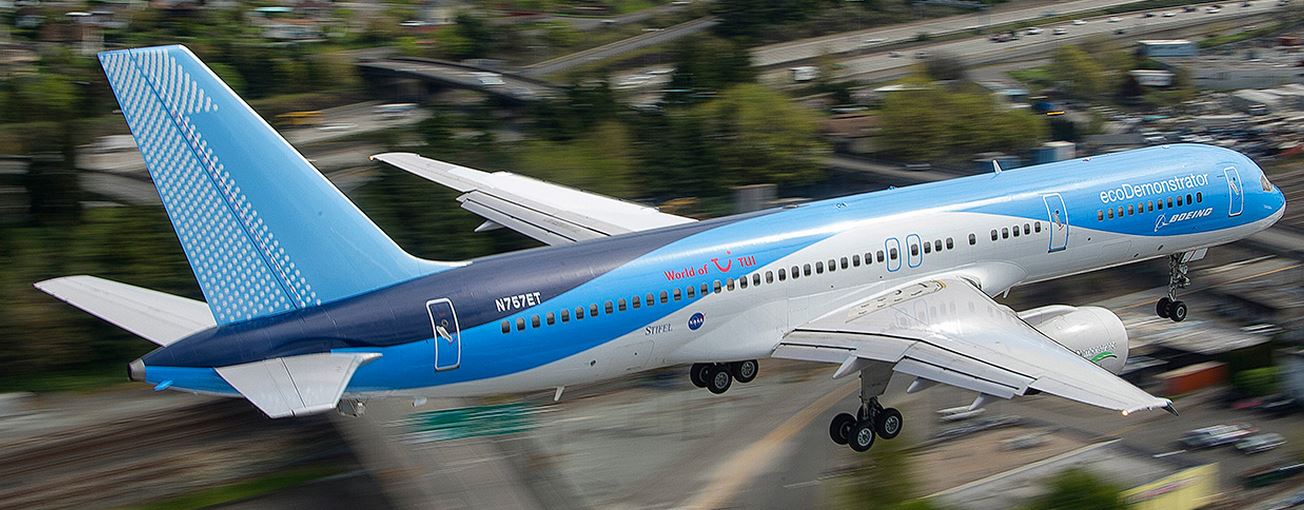
The flight tests are being conducted as part of Boeing’s ecoDemonstrator program, launched in 2012 to evaluate new aviation technologies under operational flight conditions.
The program has tested more than 260 technologies related to fuel efficiency, emissions, noise reduction, safety and operational performance.
Sustainability will be a major topic of discussion at next week’s Farnborough International Airshow in the United Kingdom.
Commercial aviation generates about 2.5% of global carbon dioxide emissions, but its overall contribution to climate change is estimated at 3.5% to 4% when non-CO₂ effects such as contrails are taken into account.
The figures are based on a 2021 study published in Atmospheric Environment and cited by the Intergovernmental Panel on Climate Change.
Images are courtesy of Boeing and Rolls-Royce.
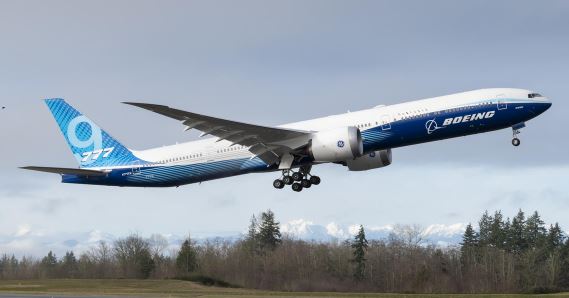
 The aircraft took off in front of thousands at Paine Field in Everett, Wash., at 10:09 a.m. local time for a three-hour, 51-minute flight over Washington state before landing at Seattle’s Boeing Field, the company said.
 The Air Dispatch