• Home
  • Blog
  • About
  • Contact

The Air Dispatch

~ Covering the business of aviation and travel

The Air Dispatch

Tag Archives: Sustainability

GE Aerospace’s flying lab generates huge airshow interest

23 Thursday Jul 2026

Posted by Abdul Latheef in Aircraft, Aviation, GE Aerospace, Technology

≈ Comments Off on GE Aerospace’s flying lab generates huge airshow interest

Tags

Aviation, News, Transport, Farnborough Airshow, Sustainability, Aircraft, Engines, Contrails, GE Aerospace
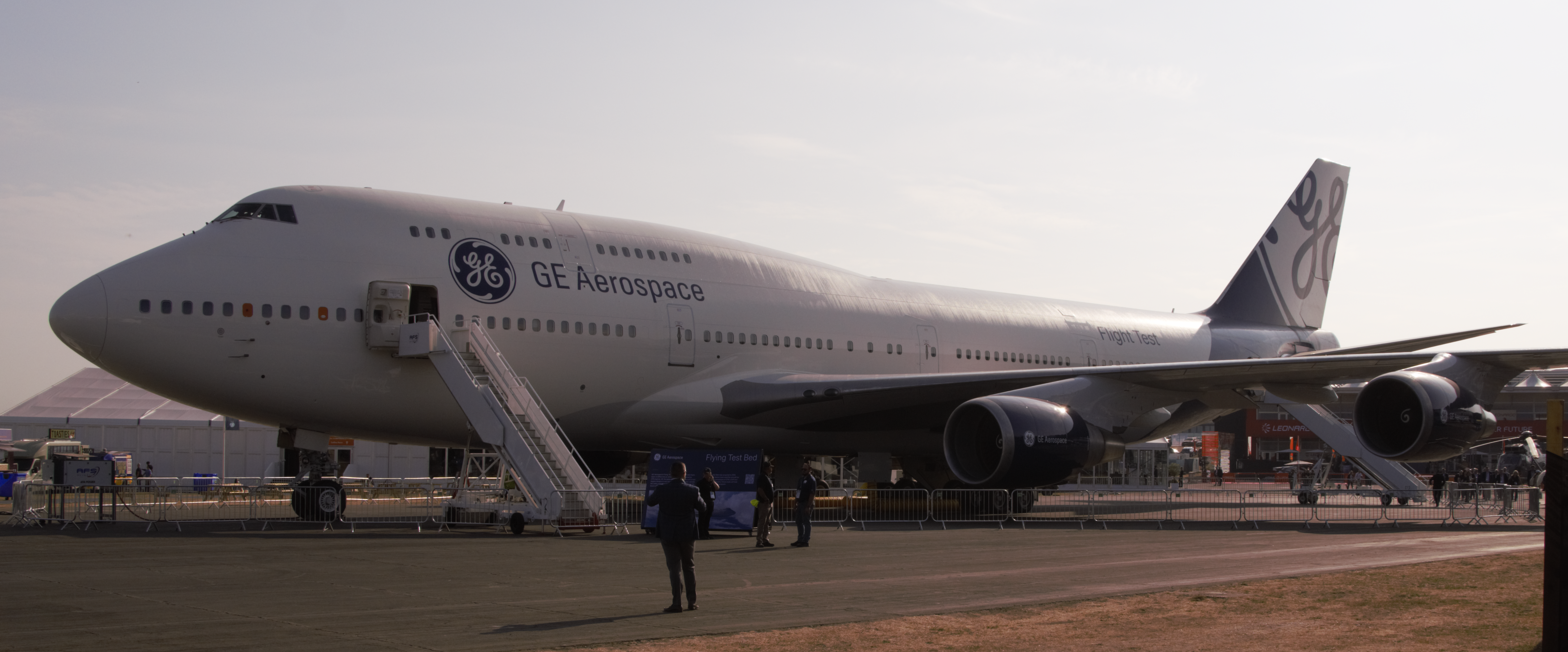
The Boeing 747-400 at the Farnborough International Airshow. Photo: Abdul Latheef.

FARNBOROUGH, England – Interest in GE Aerospace‘s flying testbed was so high at the Farnborough International Airshow this week that the company had to turn down many requests for tours.

GE Aerospace acquired the Boeing 747-400 from Japan Airlines in 2010 and converted it into an airborne laboratory to test and validate the safety and reliability of new engine technologies.

Nate Kamps, director Flight Test Operations. Photo: Abdul Latheef.

The aircraft, based in Victorville, Calif., primarily conducts test flights over the Sierra Nevada mountain range but also operates in other parts of the world when required, according to Nate Kamps, principal engineer and director of Flight Test Operations at GE Aerospace. Kamps’ team comprises 55 full-time employees.

Experimental engines are mounted on the aircraft’s wings for rigorous flight testing. Since entering service as a flying testbed, the 747-400 has logged more than 1,500 flight hours. Its predecessor, a Boeing 747-100, was retired in 2018 after 24 years of service.

The two test labs have supported the certification of 12 engine models and multiple variants for CFM International and GE Aerospace, including the CFM LEAP and GE9X.
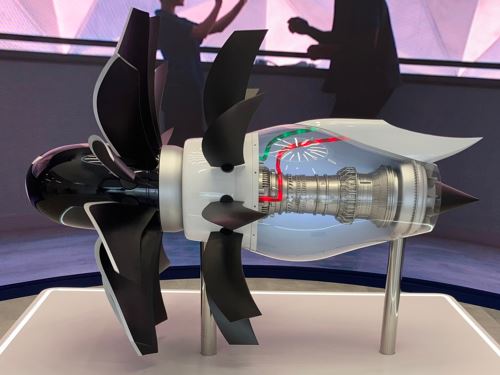
The Open Fan technology demonstrator. Photo. Abdul Latheef.

CFM International is jointly owned by GE Aerospace and France’s Safran Aircraft Engines.

The aircraft is also supporting the CFM RISE technology demonstrator program, which aims to improve fuel efficiency by more than 20%.

A key element of the effort is the Open Fan engine architecture, which uses unshrouded fan blades instead of enclosing them within a nacelle.

In late 2024, the 747-400 served as a flight platform for the Contrail Optical Depth Experiment (CODEX), a project studying how aircraft contrails form.

Contrails, or condensation trails, are the bright white streaks left behind by high-flying aircraft. Although they are not pollutants themselves, they can trap heat radiating from the Earth’s surface, contributing to atmospheric warming.

GE Aerospace said the CODEX tests, conducted in collaboration with NASA, were intended to establish a baseline for future engine testing under the RISE program.
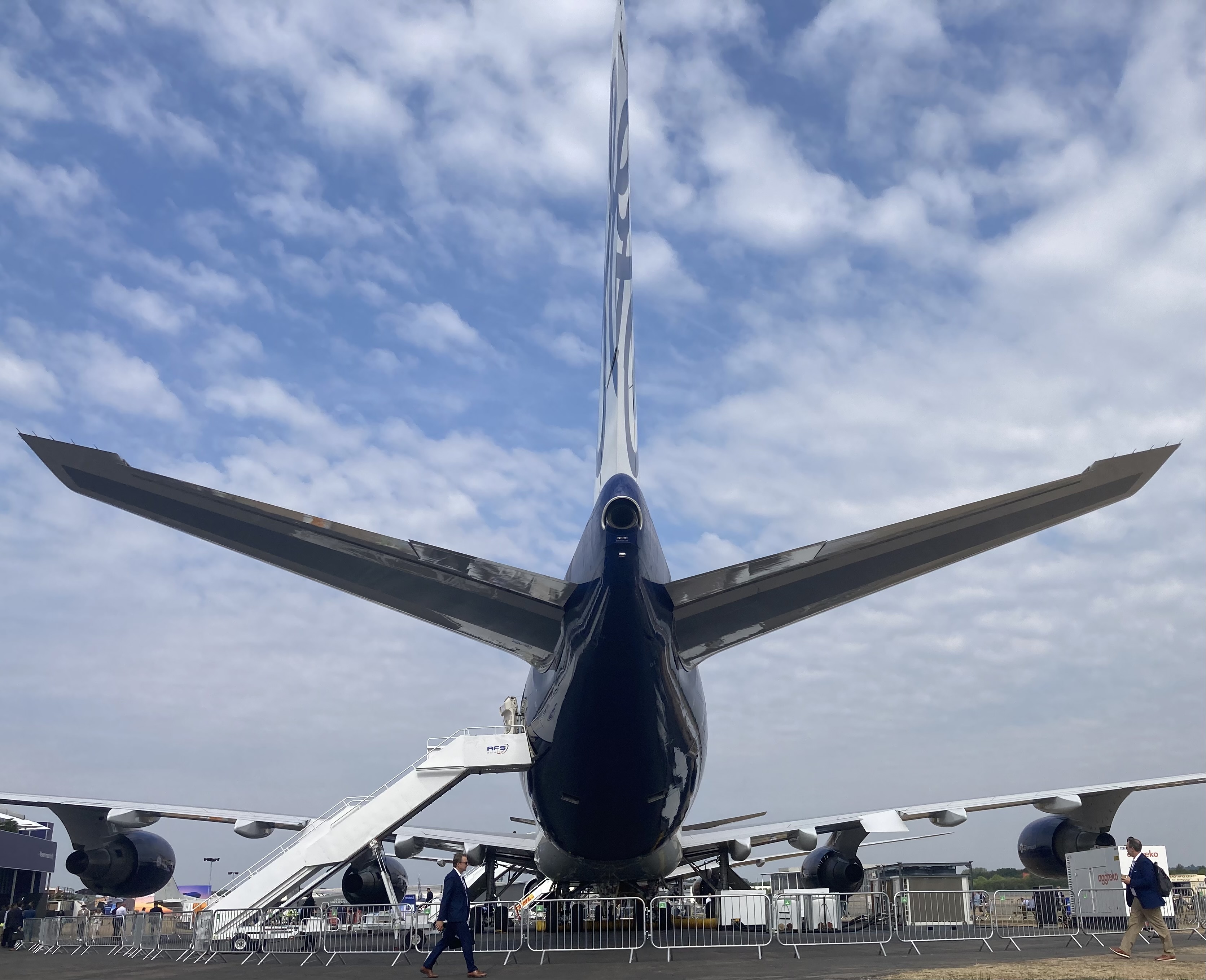
Engines are mounted on the wings of the flying testbed. Photo: Abdul Latheef.

A leading provider of aircraft propulsion, services and systems, GE Aerospace has an installed base of about 44,000 commercial and 26,000 military aircraft engines worldwide.
Airbus, Air Canada back commercial-scale SAF production

20 Monday Jul 2026

Posted by Abdul Latheef in Aviation, Sustainability

≈ Comments Off on Airbus, Air Canada back commercial-scale SAF production

Tags

Air Canada, Airbus, Aviation, News, Sustainability, Sustainable Aviation Fuel, Transport

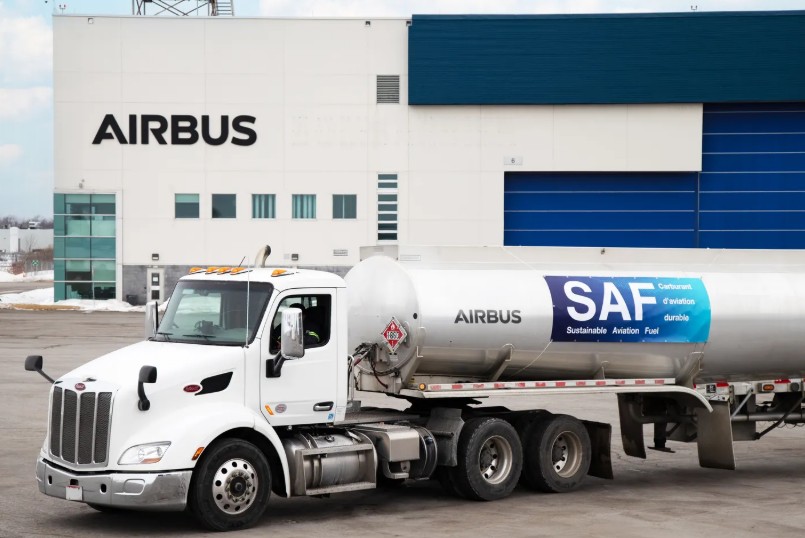
Photo: Airbus

FARNBOROUGH, England – Airbus and Air Canada announced plans Monday to establish a co-investment platform to support the development of a commercial-scale sustainable aviation fuel (SAF) industry in Canada.

The companies said at the Farnborough International Airshow that they intend to invest up to C$13.7 million (US$10 million) through the platform to help advance a Canadian SAF project toward a final investment decision.

Airbus and Air Canada said they will continue working with government partners and the Canadian Council for Sustainable Aviation Fuels to support policies intended to expand domestic SAF production.

Sustainable aviation fuel is made from renewable or non-fossil feedstocks and can reduce life-cycle greenhouse gas emissions compared with conventional jet fuel.

Because it can be used in existing aircraft and fueling infrastructure, it is considered one of the aviation industry’s primary options for reducing emissions.

The announcement coincided with the release of a study by Airbus and consulting firm ICF examining Canada’s sustainable aviation fuel production potential.

The study said producing enough SAF to meet 40% of Canada’s aviation fuel demand by 2040 could add C$32 billion to Canada’s gross domestic product and support 140,000 jobs.

Airbus, MTU plan hydrogen fuel cell engine to cut emissions

07 Tuesday Jul 2026

Posted by Abdul Latheef in Airbus, Aviation

≈ Comments Off on Airbus, MTU plan hydrogen fuel cell engine to cut emissions

Tags

Airbus, Aviation, climate-change, Emissions, energy, Environment, News, Sustainability, Transport, Travel

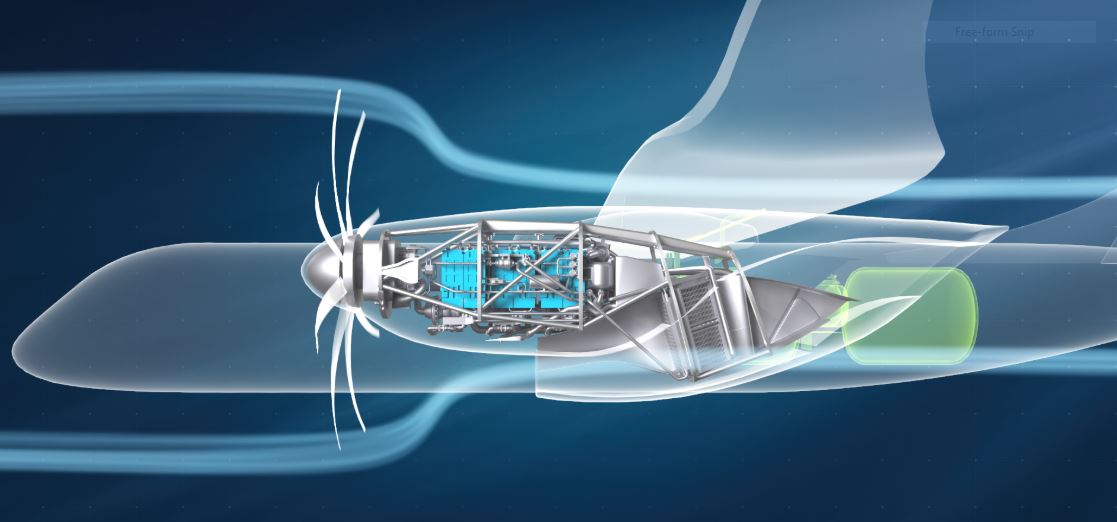
Hydrogen-powered fuel cell engine. © MTU 2026

TOULOUSE, France – Airbus and MTU Aero Engines have formed a joint venture to develop and commercialize a fully electric hydrogen fuel cell propulsion system, the European aircraft manufacturer announced Tuesday, as the industry seeks to reduce its carbon emissions.

The agreement follows a Memorandum of Understanding the parties signed at the Paris Air Show last year, Airbus added.

The company has been pursuing a multi-pronged strategy to reduce aviation emissions through more fuel-efficient aircraft, greater use of sustainable aviation fuel, hydrogen propulsion, advanced aerodynamics and improved operational efficiency.

Hydrogen-powered fuel cell engine mounted on an aircraft. ©MTU 2026

Commercial aviation generates about 2.5% of global carbon dioxide emissions, but its overall contribution to climate change is estimated at 3.5% to 4% when non-CO₂ effects such as contrails are taken into account.

The figures are based on a 2021 study published in Atmospheric Environment and cited by the Intergovernmental Panel on Climate Change.

“By establishing a dedicated and highly agile organizational set-up, the partners aim to accelerate technology development, design, testing and certification of a revolutionary propulsion system for aviation based on a hydrogen fuel cell,” Airbus said. “The new entity will be supported by Airbus and MTU with all their competences and through various engineering and manufacturing teams from both organizations.”

The joint venture is expected to start operations next year, although the deal is non-binding and subject to regulatory approvals, Airbus said.

Stefan Weber, senior vice president of engineering and technology at MTU, described the initiative as a key step toward developing the company’s first hydrogen-powered aircraft engine.

He said the project demonstrates Europe’s technological leadership in hydrogen propulsion and supports MTU’s ambition to establish a business spanning the entire fuel cell powertrain life cycle, from development and testing to certification and commercial deployment.

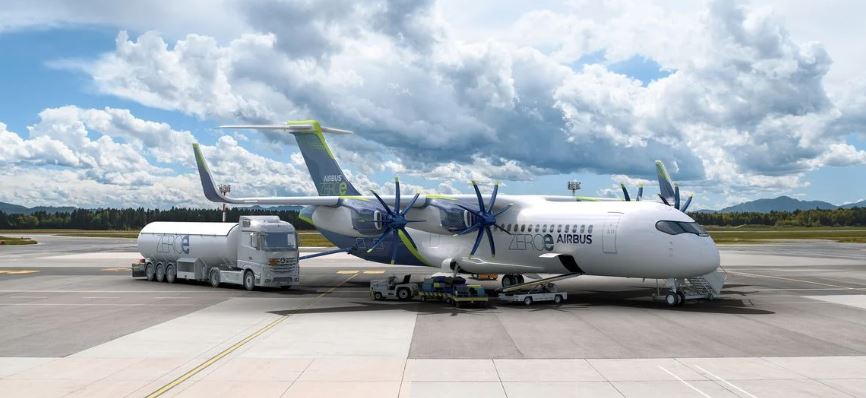
Airbus projects include this fuel cell-powered ZEROe aircraft. © Airbus 2026

Hydrogen fuel cells generate electricity through an electrochemical reaction between hydrogen and oxygen, producing only water vapor as a by-product. The technology could eliminate inflight CO₂ and nitrogen oxide emissions.

Early last year, Airbus said it would focus its hydrogen research on a fully electric fuel cell propulsion system after prototype and powertrain testing validated the technology’s potential.

Boeing sets a lofty sustainability goal

22 Friday Jan 2021

Posted by Abdul Latheef in Uncategorized

≈ Leave a comment

Tags

Aviation, Boeing, Carbon, Environment, Sustainability, Sustainable Aviation Fuel, Travel

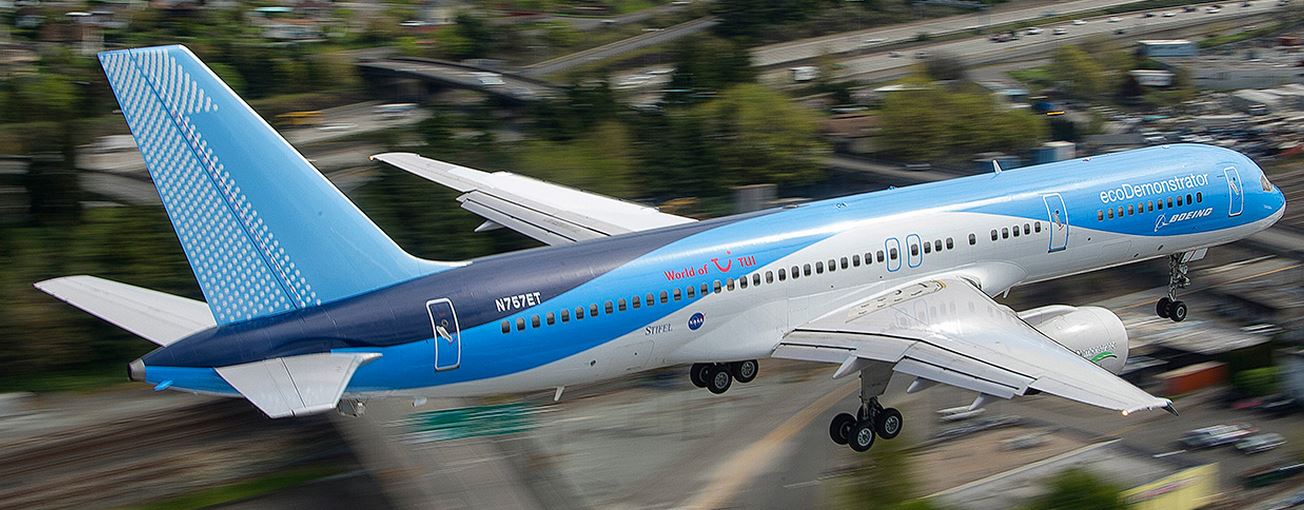
Boeing’s ecoDemonstrator 757

Boeing wants its commercial aircraft to fly on 100% sustainable aviation fuels by 2030, the company said Friday.

Is that doable? May be.

In 2018, the Boeing ecoDemonstrator flight-test program made the world’s first commercial airplane flight using 100% sustainable fuels with a 777 Freighter.

Citing various studies, the company said sustainable aviation fuels reduce CO2 emissions by up to 80% over the fuel’s life cycle with the potential to reach 100% in the future.

“Today, sustainable aviation fuels are mixed directly with conventional jet fuel up to a 50/50 blend — the maximum allowed under current fuel specifications,” it said.

“In order to meet aviation’s commitment for reducing carbon emissions by 50% from 2005 levels by 2050, airplanes need the capability to fly on 100% sustainable aviation fuels well before 2050.”

Boeing Commercial Airplanes president and CEO Stan Deal said the company is committed to working with regulators, engine manufacturers and other key stakeholders to ensure that airplanes can fly entirely on sustainable jet fuels.

Such fuels can be made from a wide variety of feedstocks, including non-edible plants, agricultural and forestry waste, non-recyclable household waste, industrial plant off-gassing and other sources, Boeing noted.

Airbus unveils concepts for zero-emission aircraft

21 Monday Sep 2020

Posted by Abdul Latheef in Airbus, Aircraft, Airlines, Airports, Biofuel, Business, Hydrogen, Zero-emission

≈ Leave a comment

Tags

Aviation, Business, Sustainability, Toulouse, Travel, ZEROe

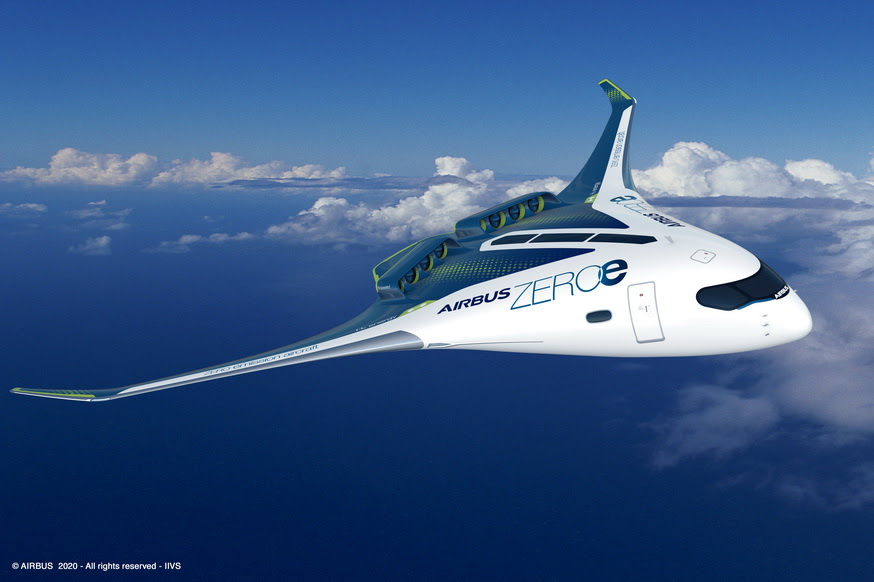
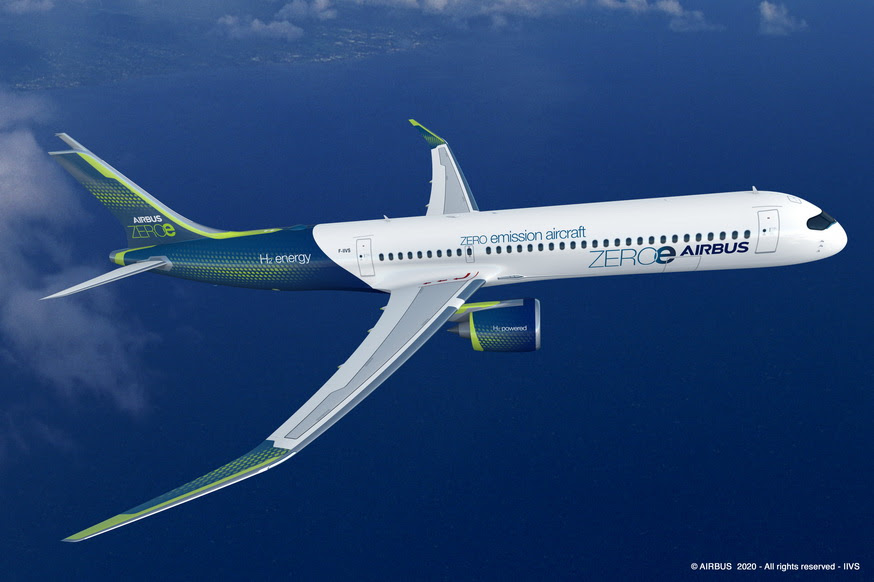
Airbus ZEROe

The blended-wing body design for up to 200 passengers.

Toulouse, France — Airbus has revealed three concepts for the world’s first zero-emission commercial aircraft, which could enter service by 2035.

Each represents a different approach to achieving zero-emission flight, Airbus said Monday.

The three concepts — all codenamed ZEROe for climate-neutral zero-emission commercial aircraft — are:

ZEROe

The turbofan design for up to 200 passengers.

A turbofan design (120-200 passengers) with a range of 2,000+ nautical miles, capable of operating transcontinentally and powered by a modified gas-turbine engine running on hydrogen, rather than jet fuel, through combustion. The liquid hydrogen will be stored and distributed via tanks located behind the rear pressure bulkhead.

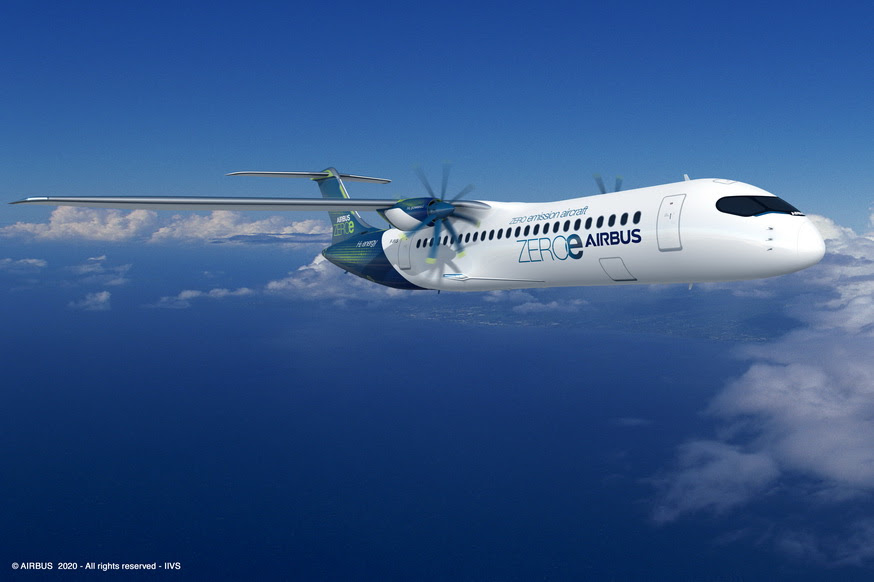
A turboprop design  (up to 100 passengers) using a  turboprop engine instead of a turbofan, and also powered by hydrogen combustion in modified gas-turbine engines, which would be capable of traveling more than 1,000 nautical miles, making it a perfect option for short-haul trips.

A blended-wing body design (up to 200 passengers) concept in which the wings merge with the main body of the aircraft with a range similar to that of the turbofan concept. The exceptionally wide fuselage opens up multiple options for hydrogen storage and distribution, and for cabin layout.

ZEROe

The turbofan design for up to 100 passengers.

All of these concepts rely on hydrogen as a primary power source, an option which Airbus believes holds exceptional promise as a clean aviation fuel.

“This is a historic moment for the commercial aviation sector as a whole and we intend to play a leading role in the most important transition this industry has ever seen,” said Airbus CEO Guillaume Faury.

“I strongly believe that the use of  hydrogen, both in synthetic fuels and as a primary power source for commercial aircraft, has the potential to significantly reduce aviation’s climate impact.”

  • All images are courtesy of Airbus


Etihad raises funds for eco residence

08 Sunday Dec 2019

Posted by Abdul Latheef in Airlines, Buisness, Etihad, Etihad Eco-Residence, News, Transport, UN Sustainable Development Goals

≈ Leave a comment

Tags

Aviation, Business, Etihad Airways, News, Sustainability, UAE, UN Sustainable Development Goals

Etihad

Etihad


Andy Cairns of First Abu Dhabi Bank, Khaled Khalfan Al Suwaidi of Abu Dhabi Global Market and Adam Boukadida of Etihad Aviation Group at the signing ceremony.

Etihad Airways has raised 100 million euros to support the expansion of its eco residence in Abu Dhabi, a sustainable residential complex for the airline’s cabin crew.

In doing so, the national carrier of the United Arab Emirates has become the first airline to secure funding for a project based on the UN’s Sustainable Development Goals, the company said Sunday.

First Abu Dhabi Bank and Abu Dhabi Global Market will finance the project.

“We are proud to be the first airline globally, and one of the first companies in the UAE, to obtain commercial funding based on our commitment to the Sustainable Development Goals of the United Nations,” said Adam Boukadida, senior vice-president, treasury, tax and finance at Etihad Aviation Group.

He said the process to secure the loan hinged on a detailed international verification of the airline’s sustainability credentials.

“This assessment will enable us to fund long-term leases of the new eco residence complex, located in Abu Dhabi’s Masdar City innovation precinct, and will serve as the foundation for Etihad to fund future sustainable initiatives.”

Financing for these type projects must be linked to one or more of the goals, and the Etihad project met two, the company said.

To support the financing, Etihad established a framework.

The airline then engaged Sustainalytics to review the framework, and confirm alignment with the Sustainability Bond Principles of the International Capital Markets Association.

The company issued a Second Party Opinion verifying Etihad’s sustainability credentials, a key condition to raising capital, Etihad said.

Images are courtesy of Etihad.


Aviation, Airports, Airlines, Airshows, Bizjets, Business, Industry, News, People, Travel

Airbus Aircraft Airshow Aviation Biofuel Boeing Bombardier Business Business Aircraft Business Aviation Canada China Cities CS100 CS300 Dreamliner Dubai Dubai Airshow Embraer Emirates Environment Etihad Airways FAA Farnborough Airshow Gulfstream IATA Le Bourget Life London Heathrow Lufthansa Montreal NBAA News Paris Air Show Qatar Airways Seattle Social Media Sustainability Technology Toronto Tourism Transport Travel UAE World Expo

Archives

  • July 2026
  • June 2026
  • March 2026
  • August 2025
  • May 2025
  • March 2025
  • January 2022
  • January 2021
  • September 2020
  • April 2020
  • February 2020
  • January 2020
  • December 2019
  • November 2019
  • October 2019
  • May 2019
  • February 2019
  • May 2018
  • June 2016
  • January 2016
  • December 2015
  • November 2015
  • October 2015
  • September 2015
  • August 2015
  • July 2015
  • June 2015
  • May 2015
  • April 2015
  • March 2015
  • February 2015
  • January 2015
  • December 2014
  • November 2014
  • September 2014
  • August 2014
  • July 2014
  • June 2014
  • May 2014
  • April 2014
  • February 2014
  • January 2014
  • December 2013
  • November 2013
  • October 2013

Website Powered by WordPress.com.

  • Subscribe Subscribed
    • The Air Dispatch
    • Join 127 other subscribers
    • Already have a WordPress.com account? Log in now.
    • The Air Dispatch
    • Subscribe Subscribed
    • Sign up
    • Log in
    • Report this content
    • View site in Reader
    • Manage subscriptions
    • Collapse this bar
Loading Comments...