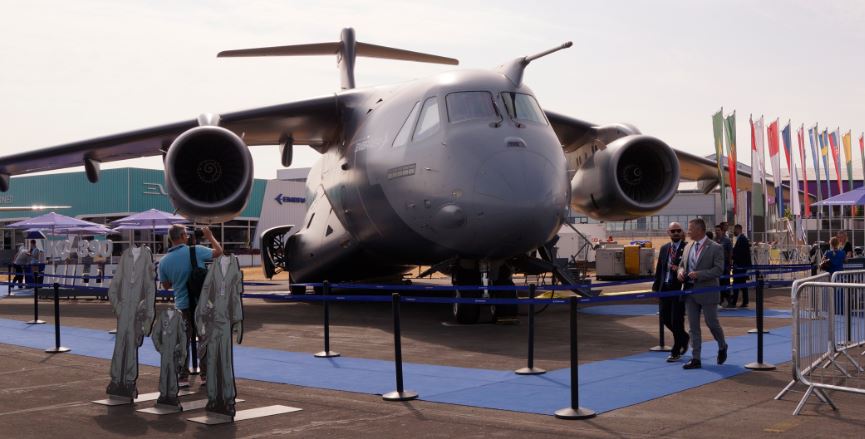
The Embraer KC-390 Millennium on display at the Farnborough International Airshow in July. Photo: Abdul Latheef.
SAO PAULO –Embraer delivered 66 aircraft in the third quarter, its best three-month delivery performance ever, the Brazilian aerospace company said Friday.
Deliveries rose 2% from the second quarter and 6% from a year earlier, Embraer said.
In the first nine months of 2026, the company delivered 175 aircraft, up 14% from 153 in the same period last year, supported by progress in its production leveling initiatives.
Commercial Aviation delivered 22 aircraft in the quarter, comprising 11 E175s and 11 E2-family aircraft, up 10% from both the previous quarter and a year earlier.
Executive Aviation delivered 41 business jets, unchanged from a year earlier, while Defense & Security delivered one KC-390 Millennium military transport aircraft and two A-29 Super Tucanos.
Embraer expects to deliver 80 to 85 commercial aircraft and up to 170 business jets this year.
In July, Embraer reported a record $34.5 billion backlog in the second quarter, up 7% from the previous period and 16% from a year earlier, marking its seventh consecutive quarterly increase.
The MSN 700 flew for 4 hours and 10 minutes. Photo: Airbus.
TOULOUSE, France – The freighter version of the Airbus A350 completed its first flight Tuesday, beginning a more than nine-month flight-test campaign for the new cargo aircraft, the European manufacturer said.
The first of two test aircraft, MSN 700 flew for 4 hours and 10 minutes, reaching an altitude of 25,000 feet. The aircraft was equipped with flight-test instrumentation and flown by an Airbus flight-test crew.
During the flight, the crew conducted tests to verify the aircraft’s basic airworthiness, flying qualities and system performance.
The second A350F test aircraft, MSN 701, is in the final stages of assembly and is expected to enter the paint shop in the coming weeks.
The A350F has a range of up to 8,700 kilometers and a maximum payload of 111 metric tons, according to Airbus. The aircraft is powered by Rolls-Royce Trent XWB-97 engines and uses more than 70% advanced materials.
Airbus said the A350F will have a maximum takeoff weight 46 metric tons lower than competing aircraft and will consume up to 40% less fuel and produce up to 40% fewer carbon emissions than freighters with similar payload and range capabilities.
As of the end of August, Airbus had recorded 115 A350F orders from 14 disclosed customers, giving it as much as 59% of the large-freighter market, according to the company.
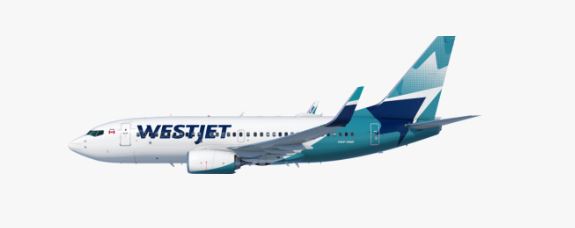
WestJet said the deal marks the start of the retirement of its 737-700 fleet. Photo: WestJet.
NEW YORK – Canadian airline WestJet has begun retiring its Boeing 737-700 fleet with the sale of 27 aircraft to lessor FTAI Aviation Ltd., including 17 in a sale-leaseback transaction, FTAI said Monday. Ten airplanes will be off lease.
WestJet currently lists 30 Boeing 737-700s in its fleet, meaning the transaction covers all but three of the type.
The 10 off-lease aircraft will support FTAI’s Aerospace Products business by expanding its supply of CFM56-7B engines and modules for its maintenance, repair and exchange customers, the company said.
FTAI added that the transaction is one of its largest aircraft acquisitions to date and combines its airplane ownership business with its engine maintenance capabilities.
“We are pleased to expand our relationship with WestJet through this transaction,” FTAI President David Moreno said.
WestJet Group Executive Vice President and Chief Financial Officer Mike Scott said the transaction marks the start of the airline’s retirement of its 737-700 fleet.
“We’re pleased to partner with FTAI Aviation Ltd. to make this happen, and we look forward to building on this relationship for future opportunities,” Scott said.
TOYOTA CITY, Japan –SkyDrive has published a paper making the case for compact eVTOLs designed for urban transportation, arguing that such aircraft should prioritize efficient hovering and vertical operations over long-range cruise performance.
The Japanese company says its approach is particularly suited to flights of less than 30 kilometers, where aircraft would spend a significant portion of their missions taking off, landing and hovering in confined urban areas.
SkyDrive is developing a three-seat eVTOL called the SD-05 with 12 independently controlled propellers for such operations.
The design differs from winged eVTOLs and tilt-rotor aircraft, which can use their wings to improve efficiency during forward flight. Those configurations also require additional structures and mechanisms to support the transition between vertical and forward flight, adding weight and complexity, SkyDrive said.
The SD-05. Photo: SkyDrive.
For short urban flights, the company argues that the additional weight provides less benefit because the aircraft spends relatively little time in cruise.
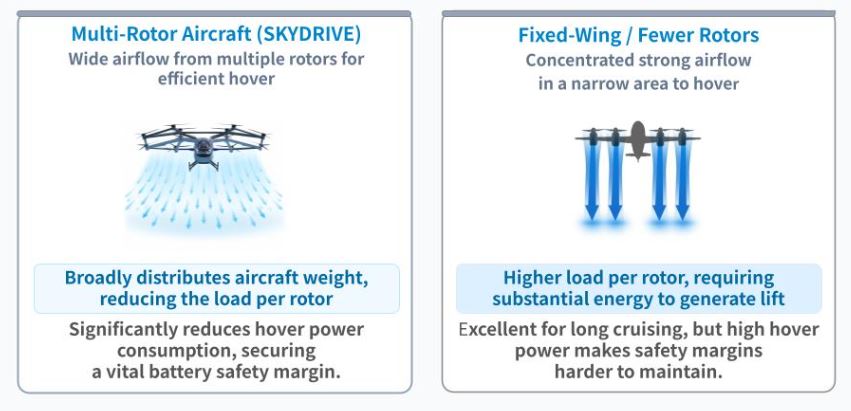
Instead, SkyDrive has designed its aircraft around what it calls a low-disk-loading configuration.
Disk loading is a measure of how much weight an aircraft must support for a given area of rotor. A larger rotor area relative to the aircraft’s weight reduces the power required to hover.
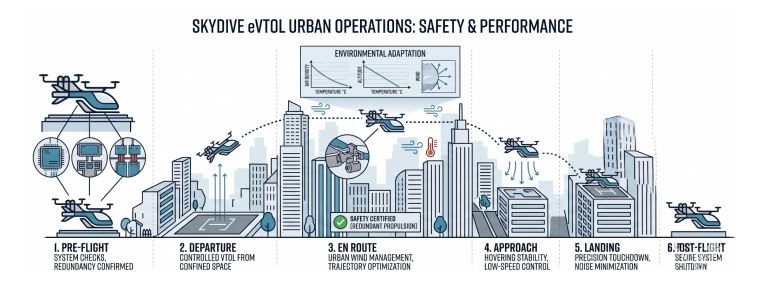
SkyDrive says that lower power requirement is important in cities because it provides additional power capacity during takeoff, landing and emergency situations.
Graphic: SkyDrive.
The aircraft also uses four separate battery systems, providing another layer of redundancy. SkyDrive says the combination of distributed propulsion and lower power requirements helps maintain a power margin for hovering and landing in contingency situations.
The company also noted that compact aircraft require less space for takeoff and landing, an important consideration in built-up areas.
SkyDrive’s focus on short-distance operations is also reflected in its recent international plans.
Last week, the company signed a memorandum of understanding with South Korea’s Verty to study commercial eVTOL operations in the country by 2028. The companies plan to examine sightseeing flights, including around Jeju Island, as well as regional routes around the Seoul metropolitan area.
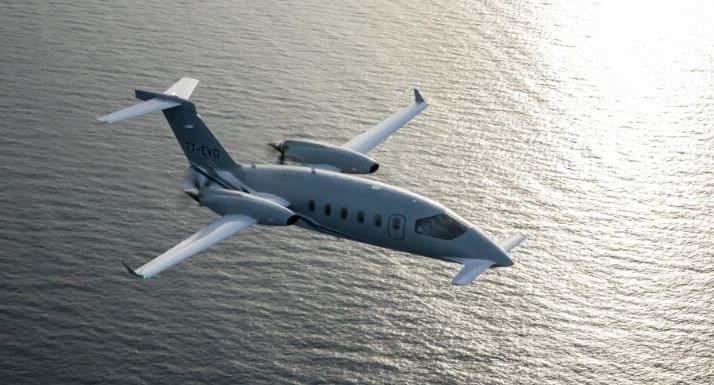
The P.180 Avanti over the Italian Riviera. Photo: Piaggio Aerospace.
VILLANOVA D’ALBENGA, Italy –Piaggio Aerospace is marking 40 years of its P.180 Avanti business aircraft by retaining the distinctive design that defined the original turboprop while continuing to introduce new technologies and capabilities.
The P.180 first flew in 1986 and has evolved through several generations while retaining its three-lifting-surface configuration and rear-mounted engines.
The Italian manufacturer has added new systems and technologies over the years without fundamentally changing the aircraft’s original design.
The anniversary coincides with another milestone for Piaggio – more than 40 Avanti EVOs, the latest version of the aircraft, have been sold since the first customer delivery in 2015, the company said this week.
More than 270 P.180 aircraft of all variants have been sold since the program began, it said.
Photo: Piaggio Aerospace.
Piaggio is now looking toward the next stage of the aircraft’s development with the Avanti NX. The new version is planned to feature an updated flight deck, a new interior and enhanced connectivity as the company seeks to bring newer technologies to the established design.
Piaggio Aerospace has been owned by Turkish aerospace company Baykar since June 2025, when Baykar completed its acquisition of the company following its sale by the Italian government.
Baykar has since approved a new industrial plan and is supporting the development of the company’s aircraft programs.
Piaggio also is expanding support for operators of the Avanti I, Avanti II and Avanti EVO, covering aircraft throughout their service lives, the company said.
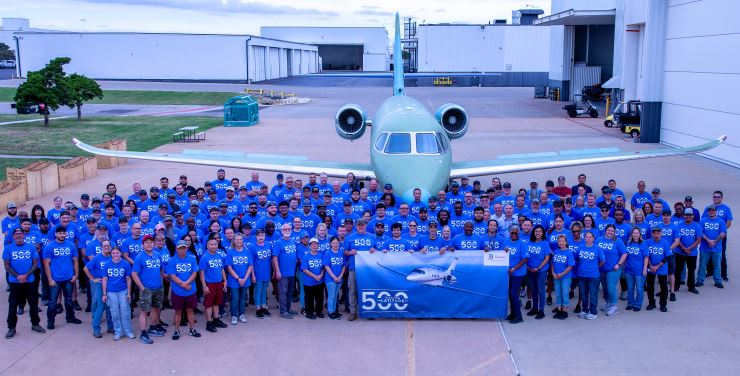
The Cessna Citation Latitude is among the Top 10 business jets in North America. Photo: Textron Aviation.
WICHITA, Kan. –Textron Aviation has rolled out the 500th Cessna Citation Latitude business jet from its Wichita manufacturing facility, marking a production milestone for the midsize aircraft.
“The rollout of the 500th Citation Latitude is a testament to the employees who build this aircraft with dedication and pride every day,” Eric Cardinali, senior vice president of manufacturing, said in a statement Tuesday. “This milestone is only possible because of the skill of our workforce and the trust customers continue to place in our products.”
The Citation Latitude is among the 10 most-active business-jet models in North America.
It ranked third by flight volume in July, with 13,255 flights, according to aviation data provider AVI-GO. Textron Aviation describes it as the world’s best-selling midsize business jet.
The Citation Latitude can carry up to nine passengers and has a maximum cruise speed of 446 knots, according to the company. Its full-fuel payload is 1,000 pounds.
The aircraft has a range of 2,700 nautical miles with four passengers at high-speed cruise. Its cabin features a stand-up, flat-floor configuration.
Textron Aviation, a Textron Inc. company, manufactures a range of Cessna and Beechcraft aircraft for the business, general aviation and special-mission markets.
The Cessna Caravan flew from California to North Carolina. Photo: Joby Aviation.
SANTA CRUZ, Calif. –Joby Aviation said Friday it completed a 3,199-mile autonomous flight across the United States using a modified Cessna Caravan, demonstrating autonomous technology the company is developing alongside its electric vertical takeoff and landing aircraft program.
The aircraft flew from California to North Carolina with no control inputs from its onboard safety pilot, including during taxiing, takeoff, cruise and landing, Joby said.
The flight was remotely supervised from California and Shaw Air Force Base in South Carolina, at distances of up to 2,323 miles.
The eastbound journey included stops in Arizona, Texas and South Carolina. The aircraft also flew over Kitty Hawk, North Carolina, near the site of the Wright brothers’ first powered flight in 1903.
Joby said the autonomous technology demonstrated in the Cessna could support applications including commercial freight, medical transport, disaster response and defense logistics.
Conceptual rendering of the SD-05 flying over Jeju Island. Photo: SkyDrive.
TOYOTA, Japan – Japanese compact aircraft developer SkyDrive and South Korean air mobility company Verty are studying the introduction of electric vertical takeoff and landing aircraft in South Korea, with commercial operations targeted for 2028, SkyDrive said Wednesday.
The companies will assess flight safety, infrastructure requirements and potential routes, including sightseeing flights and inter-city transportation, SkyDrive said.
Initial routes under consideration include tourist destinations such as Jeju Island and connections between urban centers in the Seoul metropolitan area, including Goyang City.
The partnership will focus on the three-seat SD-05 aircraft, known as SKYDRIVE, and explore business models for commercial services.
EVTOLs can support short-distance transportation, airport transfers and sightseeing services. Guangzhou, China-based EHang is currently the only company operating commercial eVTOL passenger services.
Others including Eve Air Mobility, Joby Aviation, Archer Aviation and Vertical Aerospace are developing eVTOLs and pursuing certification and plans for commercial operations.
Verty is developing an integrated operating system covering flight operations, air traffic management and vertiport infrastructure. It aims to become South Korea’s first eVTOL operator to obtain a certificate, according to the release.
SkyDrive is working with aviation authorities in Japan and the United States to certify its aircraft, with a goal of entering service in 2028.
The agreement follows SkyDrive’s efforts to expand into international markets, including the United States, the United Arab Emirates, India, Thailand, Indonesia, Vietnam, Australia and Taiwan.
Toronto Pearson International Airport is Canada’s largest. Photo: GTAA.
TORONTO – Prime Minister Mark Carney announced Tuesday that his government will seek private investment to operate Canada’s four largest airports while retaining ownership of their land and assets.
Carney was addressing business leaders from around the world gathered in Toronto for the first Canada Investment Summit, which aims to mobilize C$1 trillion for 167 projects by 2030.
Mark Carney at a campaign rally in 2025. Photo: Abdul Latheef.
“Following best practice in other countries, the Government of Canada will retain ownership of the underlying land and assets, but we will unlock their true value, by bringing new capital and expertise to their operations and growth,” he said.
“We will reinvest the tens of billions of dollars of capital we raise into the infrastructure that Canada needs for the next generation.”
The announcement came amid speculation that the government was planning to privatize the airports outright.
The Canadian Labour Congress warned in a report released last week that privatization would “put upward pressure on the cost of flying and put airport workers at risk.”
Carney, however, stressed what his government is offering is a long-term concession, not privatization. He said the investment will help provide better and more affordable air connections to regional and remote communities.
Carney noted that Canadian pension funds already invest successfully in many airports around the world.
“It is time to bring that same expertise home to more directly benefit all Canadians,” the prime minister added.
A Mokulele Airlines Cessna Grand Caravan. Photo: Surf Air Mobility.
LOS ANGELES –Mokulele Airlines has won a four-year, $19.4 million U.S. Department of Transportation contract to continue providing scheduled air service to Lana’i, Hawaii, from Honolulu and Kahului, its parent company, Surf Air Mobility, said Monday.
At 140.5 square miles, Lanaʻi is Hawaii’s smallest inhabited island and is 98% owned by Oracle founder and CEO Larry Ellison.
The Essential Air Service contract provides subsidized revenue through August 2030, excluding passenger fares. Mokulele was selected through a competitive process, Surf Air Mobility said.
Under the contract, Mokulele will operate 126 weekly flights, including 42 round trips to Honolulu and 21 to Kahului.
The Transportation Department cited Mokulele’s record of serving the Lanaʻi community, its established infrastructure in Hawaii and its interline connectivity in selecting the airline, Surf Air Mobility said.
Mokulele has interline agreements with Hawaiian Airlines, Alaska Airlines, American Airlines, United Airlines and Japan Airlines at Honolulu and Kahului, providing connections from Lanaʻi to other destinations in Hawaii, the continental United States and internationally, the company said.
Mokulele currently operates about 112 daily departures across five islands. Over the past year, it has added Cessna Caravan aircraft and upgraded ground and lounge facilities in Hawaii.
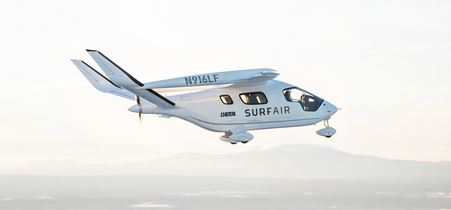
Alia’s demonstration flight. Photo: Surf Air Mobility.
Surf Air Mobility said the new contract supports the company’s broader strategy of developing its SurfOS air mobility platform and its goal of launching commercial passenger electric flights using BETA Technologies’ Alia aircraft once certified.
In June, Surf Air Mobility participated in a demonstration flight of BETA’s all-electric conventional takeoff and landing aircraft in Hawaii.
The company has since placed a firm order for 25 Alia aircraft, with an option for another 75.
AirBaltic says operations will continue as normal despite the bankruptcy proceedings. Photo: AirBaltic.
RIGA, Latvia – Latvian airline airBaltic said Monday it has voluntarily filed for Chapter 11 bankruptcy protection in the United States as it seeks to restructure its financial obligations while continuing to operate normally.
The airline and certain subsidiaries filed proceedings in U.S. Bankruptcy Court for the Southern District of New York.
AirBaltic said all flights are operating as scheduled and that tickets and reservations remain valid. Passengers can continue to book and travel with the airline as usual, and customer service will continue without interruption.
The airline has secured a commitment for 350 million euros (about $405 million) in debtor-in-possession financing arranged by Strategic Value Partners to provide liquidity and support operations during the Chapter 11 process.
The financing carries an interest rate of approximately 12% and is intended to provide liquidity during the restructuring, the airline said.
The restructuring is intended to create a stronger capital structure, a more competitive cost position and a sustainable financial foundation, it added.
AirBaltic said the process will allow it to address its financial obligations, including commitments involving aircraft lessors and other stakeholders. The company expects to complete the process by June 2027.
The Latvian government has an 88% stake in airBaltic, while Lufthansa holds 10%. The remainder is held by private shareholders.
The airline is the single-largest operator of Airbus A220-300 jets, with more than 50 aircraft in its fleet.
The Midnight completed the piloted roundtrip Friday. Photo: Archer Aviation.
SALINAS, Calif. – Archer Aviation’s Midnight electric vertical takeoff and landing aircraft has completed a piloted roundtrip flight between Salinas and Hollister, Calif., covering more than 40 miles (65 km), the company said Tuesday.
The Midnight flew Friday between Salinas Municipal Airport and Hollister Municipal Airport in about 12 minutes each way, reaching a top speed of 125 mph and cruising at 3,550 feet, Archer said.
Photo: Archer Aviation.
The flight was the first stop on Archer’s “No Roads” tour, which is intended to demonstrate the aircraft’s ability to connect cities by air and showcase potential routes for electric air taxis.
Archer plans to continue the tour with flights to Monterey, San Martin, San Jose, Oakland and San Francisco before expanding to Los Angeles and other states.
The company is conducting the flights in coordination with the Federal Aviation Administration as it prepares for future operations under a federal eVTOL pilot program.
The Midnight is a four-passenger electric aircraft designed for short urban and regional trips with zero operating emissions.
The flight comes as electric aviation moves toward larger aircraft.
In August, Heart Aerospace completed the first flight of its X1 demonstrator, which it described as the largest battery-electric aircraft to fly. The aircraft flew for 27 minutes at an altitude of 1,100 feet, demonstrating an all-electric propulsion system that delivered more than 1 megawatt of power.
The UN agency will host the seventh Worldwide Air Transport Conference in Montreal in November. Photo: ICAO.
MONTREAL –The International Civil Aviation Organization has urged governments to strengthen international air connectivity, warning that service disruptions and gaps between markets threaten economic growth and supply chains.
The UN aviation agency is making the case ahead of the seventh Worldwide Air Transport Conference in November, the first such gathering in more than a decade.
Image: ICAO.
The conference will seek agreement among governments, regulators and industry leaders on reforms to the global economic framework for aviation.
International aviation carries more than a third of the world’s trade by value and is critical to trade, investment, tourism and workforce mobility, ICAO said Friday.
But smaller markets and emerging economies often face higher costs, less frequent service and less reliable connections. The disparity was worsened by the COVID-19 pandemic, when lower-density markets generally recovered more slowly and some air links disappeared.
ICAO said outdated international air service agreements, many of which were designed to protect national carriers, can restrict market access and competition. Airport congestion, limited slots and lengthy landing permit approvals can also hinder the launch of new services.
Low-density routes are particularly vulnerable because airlines tend to prioritize markets with stable demand and predictable revenues, the agency said.
ICAO is calling for broader market access, greater competition and closer cooperation among governments on aviation, customs and border policies. It also supports streamlined approvals, more flexible visa regimes and partnerships such as codesharing to help airlines serve more markets.
The agency said governments also need to update regulatory frameworks to accommodate new technologies and business models while supporting long-term investment.
The November conference is part of ICAO’s effort to advance its vision of air transport for all by 2050.
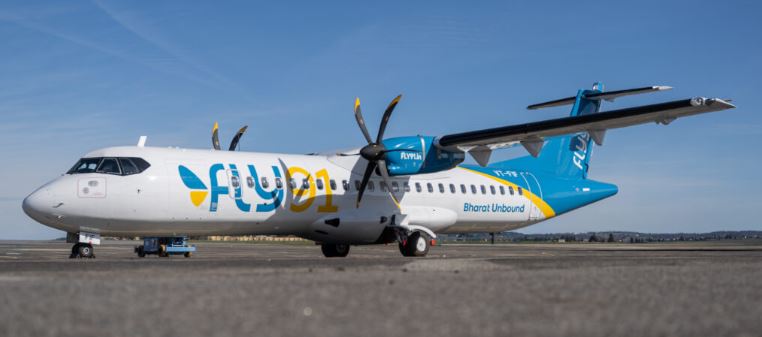
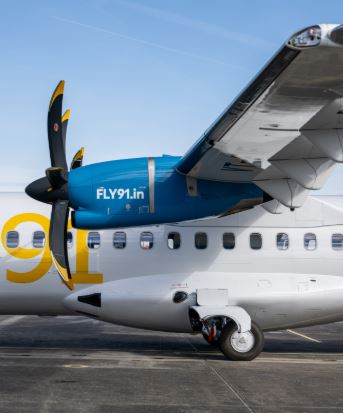
ATR said the FLY91 order for 40 aircraft is its largest in almost a decade. Photo: ATR.
NEW DELHI – Indian regional airline FLY91 is buying 40 ATR 72-600 turboprop aircraft in a deal valued at about $1 billion, as the country’s rapidly expanding aviation sector creates new opportunities for domestic connectivity, the Franco-Italian airplane manufacturer said Thursday.
FLY91 said in a separate release that the firm order is the largest for ATR aircraft globally by a regional airline, while ATR said it is its largest firm order in almost a decade. Deliveries are scheduled from 2027.
The agreement will support a major expansion by FLY91, which launched operations less than three years ago. The Goa-based airline plans to grow its fleet from six aircraft to 60 over the next five years as it expands its regional network across India.
FLY91 said the order will provide the scale to build a larger network connecting more unserved and underserved cities. The airline currently operates about 280 weekly flights to 12 cities, with a 13th destination scheduled to begin later this month.
India’s regional aviation expansion requires aircraft capable of operating short routes efficiently while keeping fares affordable, ATR said. The ATR 72-600 is suited to routes linking Tier 2 and Tier 3 cities, where demand for air travel is growing.
Deliveries of the new aircraft are expected to begin next year. Photo: ATR.
FLY91 Chairman Harsha Raghavan said the order reflects the airline’s confidence in India’s growth and the potential of regional aviation.
Founder and CEO Manoj Chacko said the ATR 72-600 offers the operating economics needed for FLY91’s network and that the order will serve as a catalyst for its next phase of expansion.
ATR CEO Nathalie Tarnaud Laude said FLY91’s commitment reflects the growing role of regional aviation in connecting India’s next generation of travelers.
ATR, based in Toulouse, France, is a joint venture between European aircraft maker Airbus and Italian aerospace company Leonardo.
The FLY91 agreement takes ATR’s 2026 order intake to 54 aircraft, already exceeding its total net orders for all of 2025.
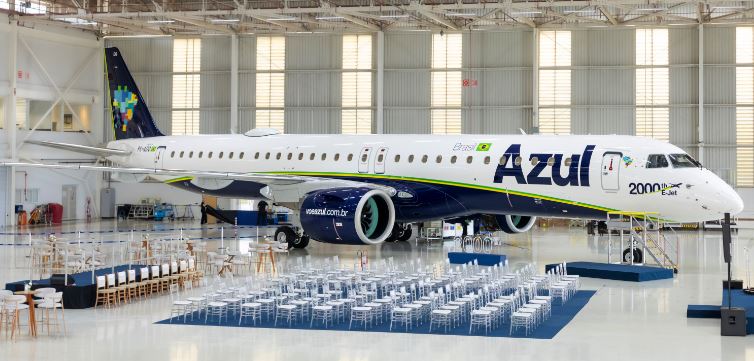
The 2,000th Embraer E-Jet was delivered to Azul Linhas Aéreas. Photo: Embraer.
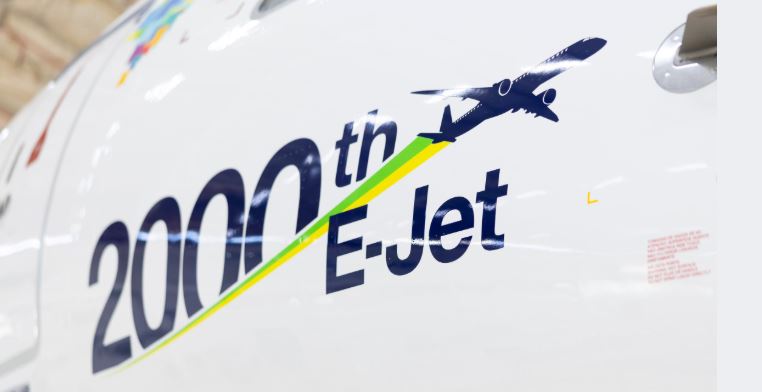
SÃO JOSÉ DOS CAMPOS, Brazil –Embraer’s E-Jet program has entered the ranks of the world’s three largest commercial jet families with the delivery of its 2,000th aircraft, the company said Wednesday.
The E-Jet family is behind only the Airbus A320 and Boeing 737 families in terms of aircraft delivered. The milestone aircraft, an E195-E2, was delivered to Azul Linhas Aéreas, Brazil’s largest airline by number of destinations served.
Photo: Embraer.
Since entering service in 2004, the E-Jets family has established a global presence, serving more than 90 airlines worldwide. The fleet has accumulated about 48 million flight hours and carried more than 2.85 billion passengers worldwide.
“The delivery of the 2,000th E-Jet is an extraordinary milestone for Embraer and for the global aviation transport industry,” Arjan Meijer, president and CEO of Embraer Commercial Aviation, said in a statement.
“As one of the world’s three most successful commercial jet programs, the E-Jets family has played a vital role in connecting communities, opening new markets, and creating sustainable growth opportunities for airlines,” Meijer added.
Azul has operated more than 140 E-Jets since beginning operations in 2008 and was the launch customer for the E195-E2, taking delivery of its first aircraft in 2019.
Embraer and Azul executives celebrate the milestone. Photo. Embraer.
The 2,000th E-Jet also marks Azul’s 50th E2 aircraft, Embraer said.
The E-Jet family comprises the first-generation E170, E175, E190 and E195, as well as the second-generation E190-E2 and E195-E2.
The program has enabled Embraer to expand beyond its traditional regional aviation market and establish a strong position in the global small narrowbody segment.