
Tags
Aviation, News, Transport, Farnborough Airshow, Sustainability, Aircraft, Engines, Contrails, GE Aerospace
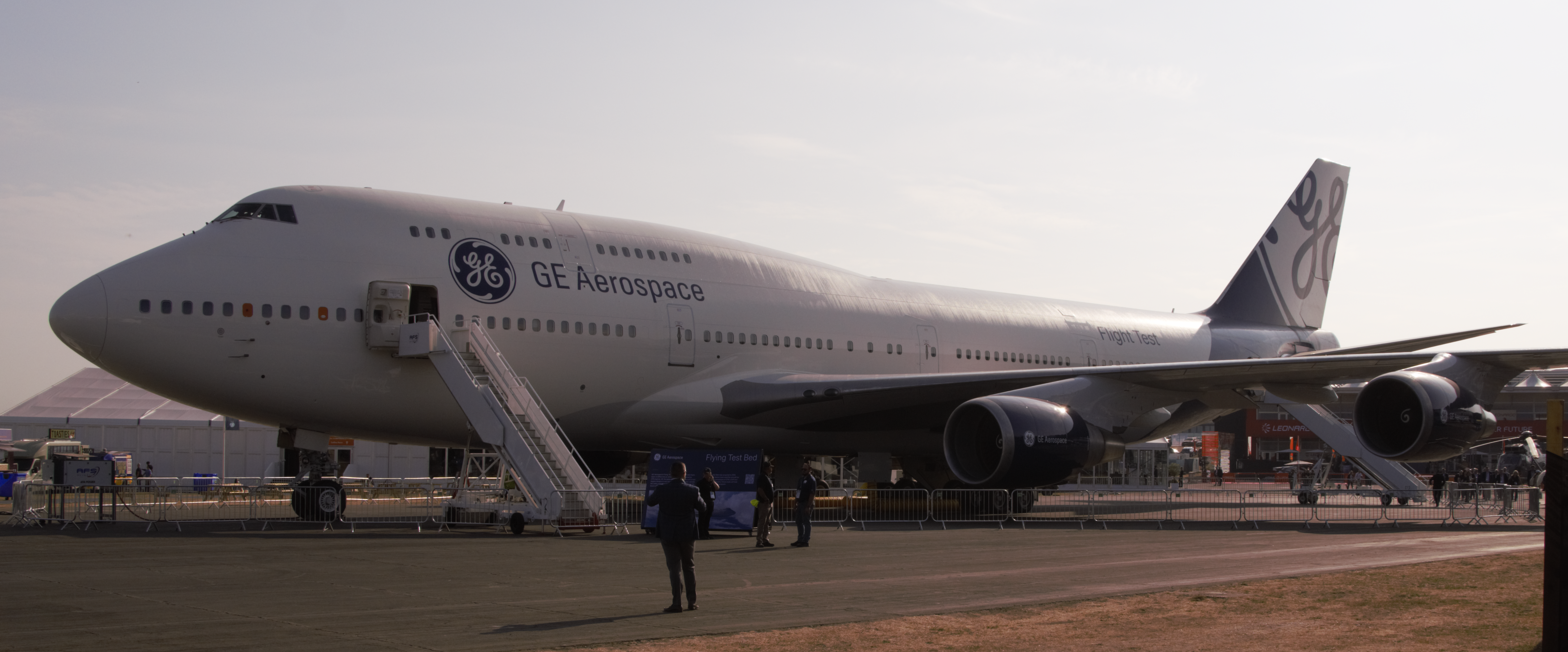
FARNBOROUGH, England – Interest in GE Aerospace‘s flying testbed was so high at the Farnborough International Airshow this week that the company had to turn down many requests for tours.
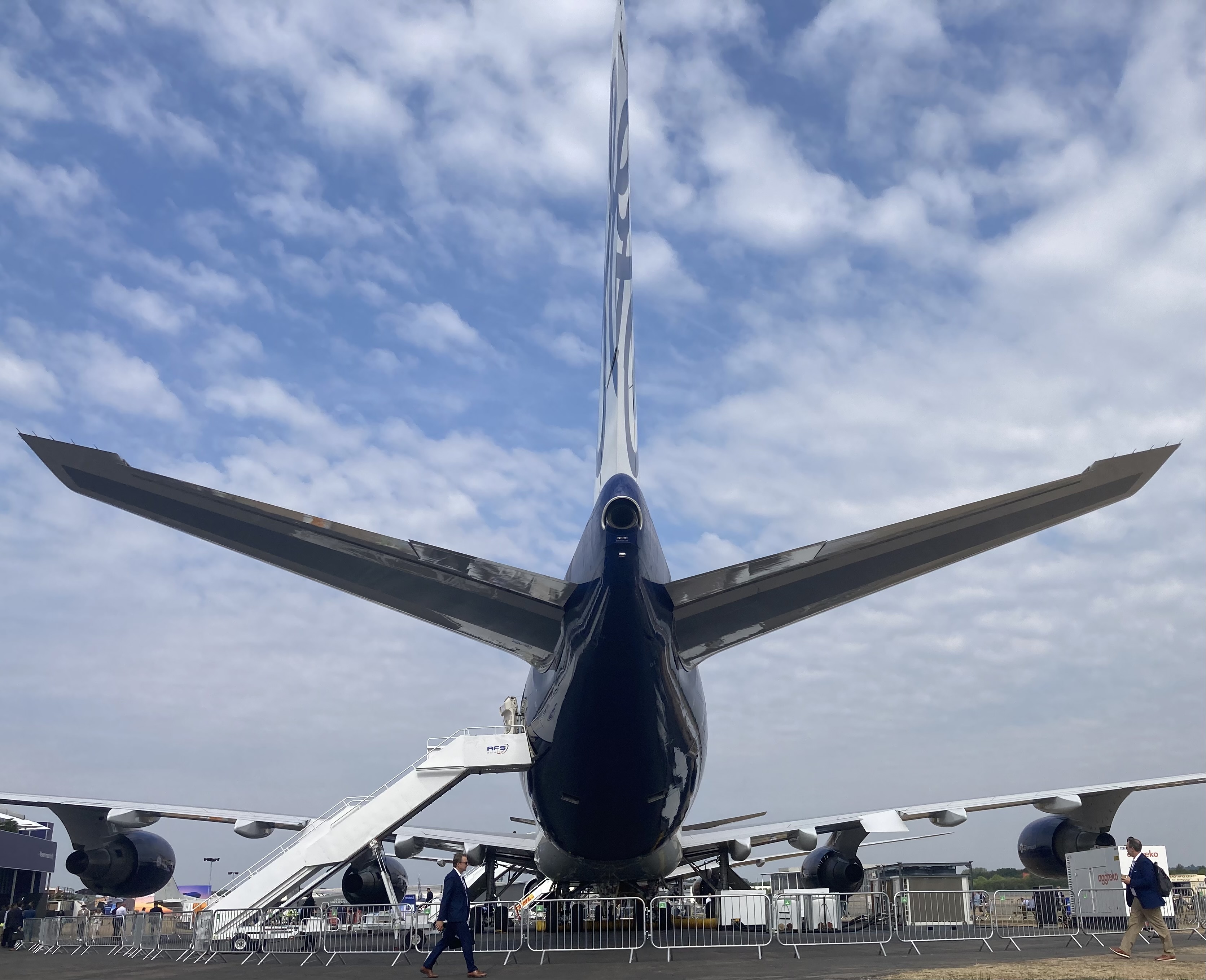
GE Aerospace acquired the Boeing 747-400 from Japan Airlines in 2010 and converted it into an airborne laboratory to test and validate the safety and reliability of new engine technologies.

The aircraft, based in Victorville, Calif., primarily conducts test flights over the Sierra Nevada mountain range but also operates in other parts of the world when required, according to Nate Kamps, principal engineer and director of Flight Test Operations at GE Aerospace. Kamps’ team comprises 55 full-time employees.
Experimental engines are mounted on the aircraft’s wings for rigorous flight testing. Since entering service as a flying testbed, the 747-400 has logged more than 1,500 flight hours. Its predecessor, a Boeing 747-100, was retired in 2018 after 24 years of service.
The two test labs have supported the certification of 12 engine models and multiple variants for CFM International and GE Aerospace, including the CFM LEAP and GE9X.
CFM International is jointly owned by GE Aerospace and France’s Safran Aircraft Engines.
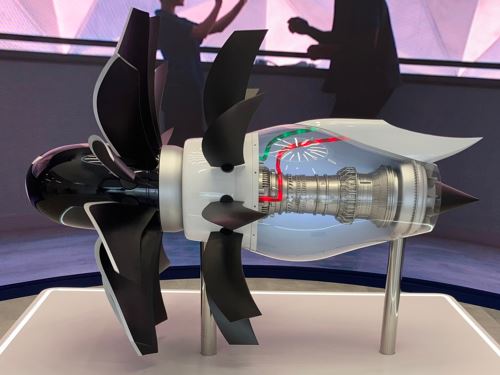
The aircraft is also supporting the CFM RISE technology demonstrator program, which aims to improve fuel efficiency by more than 20%.
A key element of the effort is the Open Fan engine architecture, which uses unshrouded fan blades instead of enclosing them within a nacelle.
In late 2024, the 747-400 served as a flight platform for the Contrail Optical Depth Experiment (CODEX), a project studying how aircraft contrails form.
Contrails, or condensation trails, are the bright white streaks left behind by high-flying aircraft. Although they are not pollutants themselves, they can trap heat radiating from the Earth’s surface, contributing to atmospheric warming.
GE Aerospace said the CODEX tests, conducted in collaboration with NASA, were intended to establish a baseline for future engine testing under the RISE program.
A leading provider of aircraft propulsion, services and systems, GE Aerospace has an installed base of about 44,000 commercial and 26,000 military aircraft engines worldwide.
 The Air Dispatch