Eve, RV Connex to develop air mobility framework for Thailand

Tags

, , , , , ,

Photo: R V Connex.

MELBOURNE, Fla. – Eve Air Mobility and Thai aerospace company RV Connex have signed a memorandum of understanding to work on developing a regulatory framework for advanced air mobility in Thailand.

The companies said Monday the agreement will support long-term industry and regulatory engagement and bring together public and private stakeholders to establish safe, efficient and scalable advanced air mobility operations.

The collaboration will evaluate future operational scenarios, safety requirements, airspace rules and infrastructure needs specific to Thailand’s aviation system, while drawing on global advanced air mobility standards.

RV Connex will work with government, academic and industry partners as part of the effort, the companies said.

“Thailand offers a fantastic opportunity for urban air mobility. Working with RV Connex lets us help shape the regulations this industry needs to grow,” Eve CEO Johann Bordais said.

RV Connex President Sujate Jantarang said the agreement would help Thai authorities develop modern regulations aligned with global standards for the technology.
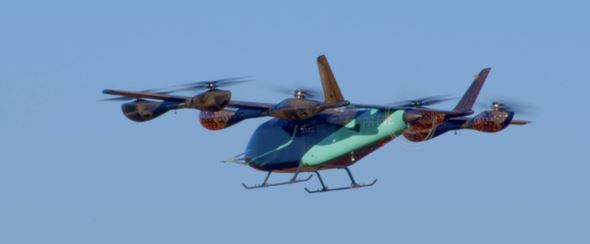
Photo: Eve Air Mobility.

Eve Air Mobility, backed by Brazilian aircraft manufacturer Embraer, is developing an electric vertical takeoff and landing aircraft as part of its broader urban air mobility program.

The company recently completed the first partial transition flight of its Eve prototype.

A partial transition flight is an early test in which an eVTOL begins shifting from vertical lift generated by its lift rotors to forward flight using a rear-mounted pusher propeller.

Sydney Airport Master Plan targets 72 million passengers by 2045

Tags

, , , , , ,

The airport says the plan will provide a pathway to meet future demand. Image: Sydney Airport.

SYDNEY, Australia – The Australian government has approved Sydney Airport’s Master Plan, setting the stage for it to handle more than 72 million passengers a year by 2045.

Sydney Airport said Friday in a news release that the plan sets out the long-term vision for how the airport will grow over the next two decades. The release did not disclose the cost of the expansion, but local media reports put the project at about A$6 billion.

The plan forecasts the airport will handle more than 72 million passengers annually by 2045, including 36.4 million international passengers and 36.2 million domestic and regional passengers.

Sydney Airport CEO Scott Charlton said the plan provides a pathway to meet future demand and invest in infrastructure needed as Sydney grows.

“As Australia’s international gateway, this plan ensures we can continue supporting tourism, trade, investment and jobs while delivering the capacity needed for future generations,” Charlton said.

The airport’s annual economic contribution is expected to increase to about $70 billion, while direct employment at the airport is forecast to rise to more than 105,000 jobs.

The Master Plan provides for future investment in terminal capacity, transportation connections and passenger facilities to support the projected growth.

Image: Sydney Airport.

A central element is the proposed redevelopment of the airport’s domestic precinct, including plans to bring domestic, regional and international services together through a new integrated terminal experience.

The plan also incorporates Sydney Airport’s five-year Airport Environment Strategy, which outlines measures to reduce emissions, build climate resilience and support more sustainable airport operations.

Charlton said the plan provides a framework for the airport to grow sustainably and responsibly while minimizing environmental impacts and working with surrounding communities.

Sydney Airport is currently Australia’s busiest airport and ranked 58th worldwide by total passenger traffic in 2024, according to Airports Council International.

Heart Aerospace completes first flight of largest electric aircraft

Tags

, , , , ,

Photo: Heart Aerospace.

PLATTSBURGH, N.Y. – Heart Aerospace has completed the first flight of its X1 demonstrator, which the company says is the largest battery electric aircraft ever flown.

The piloted flight took place Wednesday at Heart’s flight-test base at Plattsburgh International Airport in upstate New York.

The 27-minute flight reached an altitude of 1,100 feet and demonstrated the aircraft’s all-electric propulsion system, which delivered more than 1 megawatt of power, the company said Thursday.

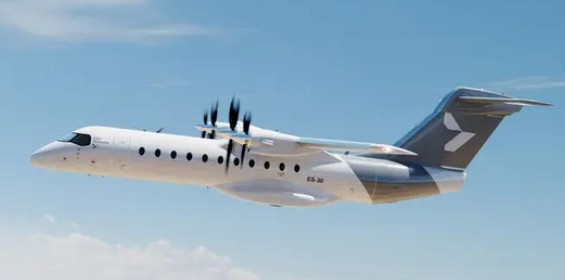
The X1 has a 106-foot wingspan and is designed to demonstrate technologies for Heart’s ES-30, a 30-seat hybrid-electric regional aircraft.

The ES-30. Photo: Heart Aerospace.

“With the first flight of X1, Heart Aerospace has demonstrated electric flight at the scale of a commercial airliner,” Anders Forslund, Heart’s co-founder and CEO, said in a news release.

“This is a defining moment for aviation.”

The flight was conducted under a Federal Aviation Administration special airworthiness certificate in the experimental category and included taxiing, takeoff, climb, maneuvering and landing, Heart said.

The X1 flight campaign will continue as the company gathers data to support development and certification of the ES-30, it said.

Investor group grabs 25% stake in Aeroplan

Tags

, , , , , , ,

Photo: Air Canada

MONTREAL – Air Canada said Tuesday it will sell a 25% non-controlling stake in its Aeroplan loyalty program to an investor group led by Blackstone and La Caisse for C$2.5 billion, valuing the business at C$10 billion.

The investor group also includes PSP Investments and British Columbia Investment Management Corp. Air Canada will retain 75% ownership interest and continue to control Aeroplan’s strategy, operations and day-to-day management.

Air Canada said Aeroplan members, partners and employees will see no changes as a result of the transaction.

The airline plans to use the proceeds primarily to repay an upcoming US$1.2 billion debt maturity, with most of the remaining funds going toward accelerating share repurchases under its long-term strategic plan.

Air Canada also plans to spend up to $800 million to buy back shares, it said.

Settlement of the Aeroplan investment is expected Aug. 17.

Air Canada said it will continue to consolidate Aeroplan in its financial statements, with the investment recorded as a non-controlling interest within shareholders’ equity.

The airline will also have the right to repurchase the investors’ stake between the fifth and eighth anniversaries of the transaction’s settlement, as well as following certain specified events.

Aeroplan has more than 10 million active members worldwide, according to Air Canada.

Vertical Aerospace secures commitments for $100 million

Tags

, , , , , , ,

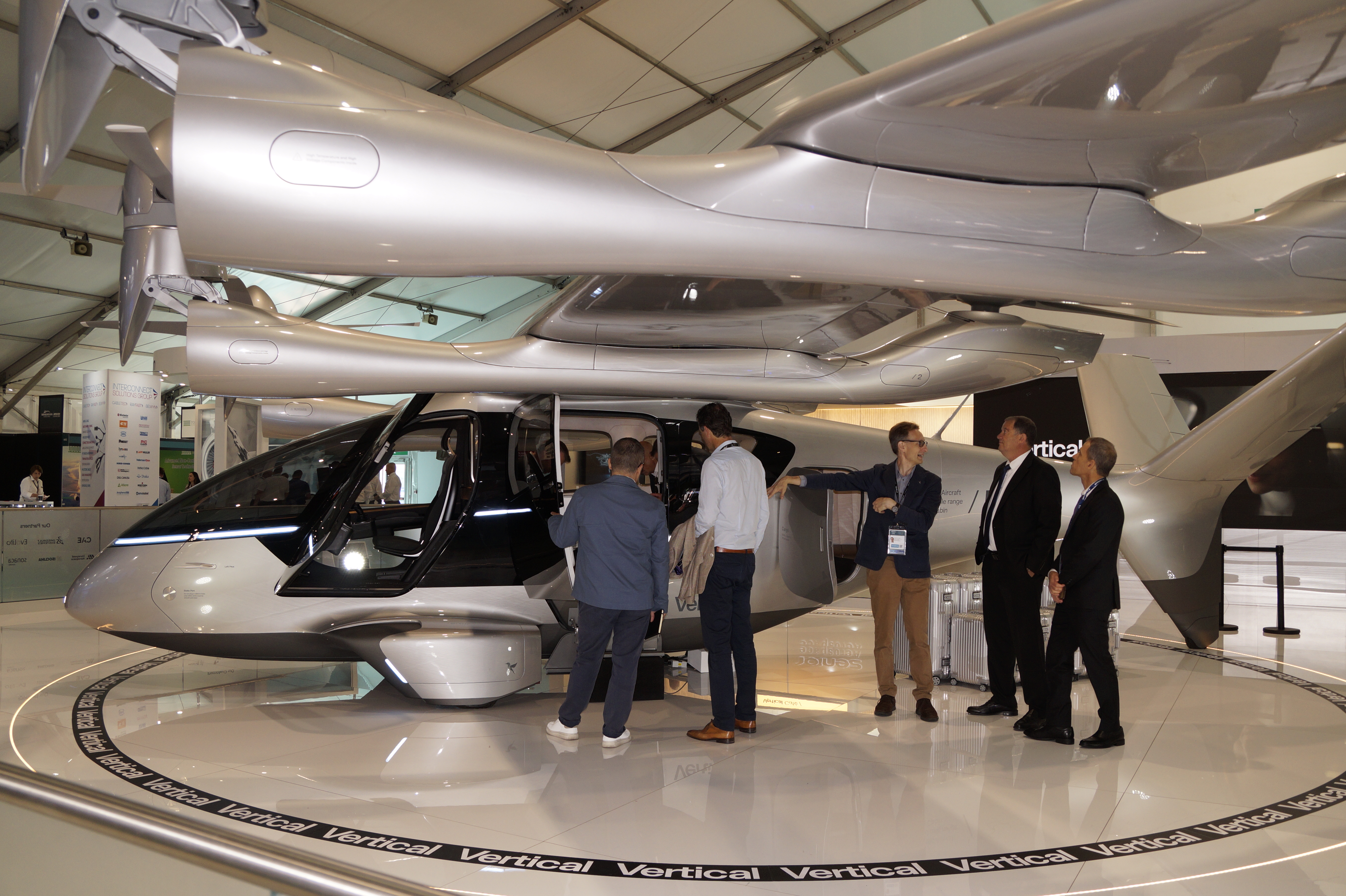
The Valo at the Farnborough International Airshow last month. Photo Abdul Latheef.

LONDON / NEW YORK – Vertical Aerospace said Monday it has secured financing commitments of about $100 million as the electric airplane developer moves toward certification and commercial production.

The financing includes $40 million from Mudrick Capital Management, $35 million through a planned equity offering and $25 million from the company’s preferred equity facility with Yorkville Advisors Global.

The funding is intended to support Vertical’s certification program and development of manufacturing capabilities for Valo, its four-passenger electric vertical takeoff and landing aircraft.

Vertical said the money will help fund completion of the aircraft’s Critical Design Review, expand battery production capacity at its Energy Centre and develop future production capabilities in the United Kingdom.

The company also plans to retrofit its third prototype for hybrid-electric flight testing in the first half of 2027.

The financing announcement comes after Vertical completed piloted transition flights at the Farnborough International Airshow. A transition flight is an early test in which an eVTOL shifts from vertical lift generated by its lift rotors to forward flight using a rear-mounted pusher propeller.
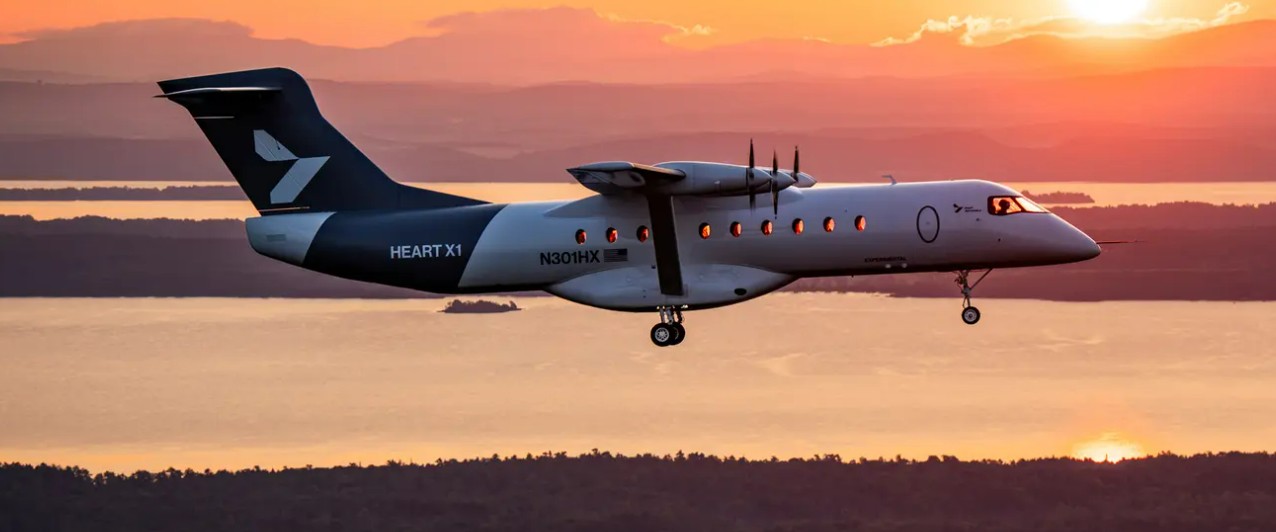
Photo: Abdul Latheef

The company has secured some 1,500 orders for Valo.

“Following the momentum generated by our progress over the last six months, we are focused on converting operational progress and partner engagement into continued advancement of our certification and commercialization strategy,” Chief Executive Stuart Simpson said.

The eVTOL sector is moving closer to commercial operations, with manufacturers advancing aircraft development and certification programs while working with regulators to establish the standards and infrastructure needed to bring electric aircraft into commercial service.

The proposed Mudrick financing is subject to definitive agreements, and Vertical said there is no assurance it will close on the announced terms.

Vertical is based in Bristol, England, and trades on the New York Stock Exchange under the ticker EVTL.

Coulson to convert retired Canadian military aircraft into aerial firefighters

Tags

, , , , ,

Britton Coulson, left, and Wayne Coulson stand in front of one of 10 former Royal Canadian Air Force CC-130H Hercules aircraft. At right is a Coulson C-130H equipped for aerial firefighting. Photo: Coulson Aviation.

ABBOTSFORD, British Columbia – Coulson Aviation will convert 10 retired Royal Canadian Air Force CC-130H Hercules transport aircraft into aerial firefighters under a conditional sale agreement with the government, the company said Friday.

The aircraft are among 12 CC-130Hs retired by the RCAF in January. The remaining two will be put on public display at Canadian military bases and museums, the government said Friday.

The sale is subject to regulatory approvals and other conditions. The government did not disclose the sale price or bid information, saying it was confidential.

“Responsible asset divestment can allow military assets to continue to protect Canadians while creating new opportunities for Canadian industry,” Stephen Fuhr, secretary of state for defence procurement, said.

The acquisition will double Coulson’s global C-130H fleet to 20, expanding the company’s capacity to develop what it describes as the world’s largest C-130 airtanker fleet.

Canada had 637 active wildfires as of Friday, including 125 classified as out of control, according to the Canadian Interagency Forest Fire Centre.

Coulson’s C-130H airtankers are equipped with its RADS-XXL retardant delivery system, which can carry more than 15,000 litres of water or fire retardant.

The system allows crews to control the amount of retardant released and the area covered during each drop.

Coulson said the C-130H’s payload, speed, range and ability to operate from shorter runways make it suitable for both initial attack and sustained wildfire operations.

Solairus acquisition creates world’s largest business jet management company

Tags

, , , , , ,

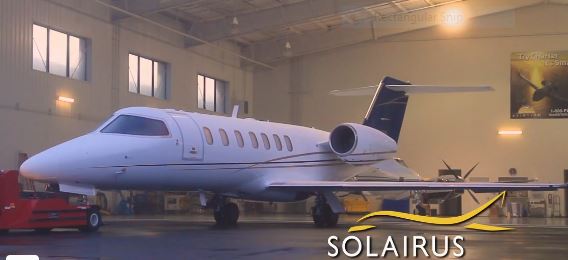
Photo: Solairus Aviation.

PETALUMA, Calif. – Business jet services provider Solairus Aviation said Friday that it has agreed to acquire the aircraft management and charter divisions of Clay Lacy Aviation in a deal that will create the world’s largest private aircraft management company.

The combined entity will manage some 500 aircraft, bringing together Solairus’ fleet of 360 jets and Clay Lacy’s fleet of about 140.

No financial details were disclosed.

Solairus said the transaction strengthens its position as the leading pure-play aircraft management company while expanding its scale in private aviation asset management and charter services. The business will remain headquartered in Petaluma, Calif., with offices in Los Angeles and New York.

Solairus said the larger fleet and broader operating footprint will enhance its ability to serve aircraft owners through expanded access, improved pricing and operational efficiencies while maintaining personalized service.

Clay Lacy will retain its fixed-base operator, maintenance and real estate businesses, which will continue to operate independently under the Clay Lacy name.

The acquisition is subject to regulatory approvals and closing conditions. The companies expect the transaction to close by the end of next month.

FAA orders inspections of Boeing MAX jets over cracking risk

Tags

, , , ,

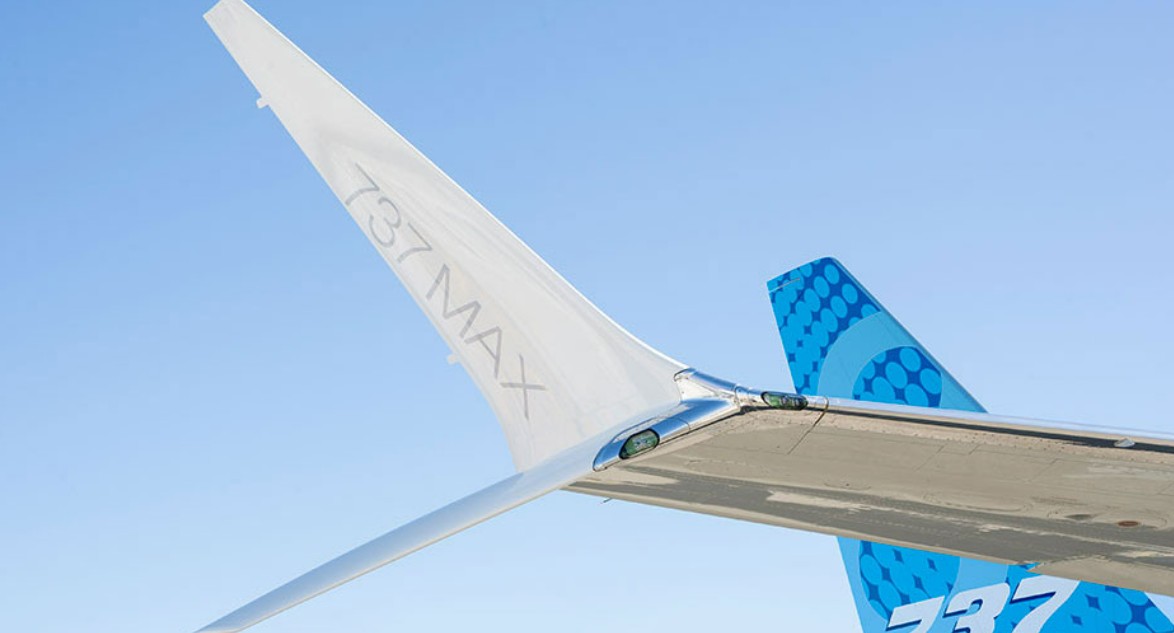
Photo: Boeing.

WASHINGTON – The U.S. Federal Aviation Administration has ordered inspections of hundreds of Boeing 737 MAX airplanes after determining that fatigue cracking could develop in a key structural reinforcement, potentially affecting the aircraft’s structural integrity.

The airworthiness directive, published Thursday in the Federal Register, applies to 471 U.S.-registered Boeing 737-8, 737-9 and 737-8200 airplanes. It becomes effective Sept. 10.

The directive requires operators to determine whether repairs have previously been made to the fuselage skin at the forward upper corner of the forward galley door cutout. Depending on the findings, airlines must carry out repetitive external inspections for cracking of the fuselage skin and the underlying bear strap, a structural reinforcement designed to help carry fuselage loads. Any cracking found must be repaired before further flight using a method approved by the FAA.

The FAA said the action was prompted by reports of bear strap cracking on Boeing 737 Next Generation airplanes. Although the agency said no cracking has been reported on 737 MAX aircraft, it determined that the MAX fleet is subject to the same unsafe condition because the affected structure has a similar design and manufacturing process.

Image: FAA.

According to the directive, cracks in the bear strap and fuselage skin could reduce the ability of a principal structural element to carry required loads. If left undetected, the damage could grow and compromise the structural integrity of the airplane.

The FAA estimated the required inspection to determine whether a repair exists would take about one work-hour per airplane. Additional inspections and any corrective actions would depend on the aircraft’s configuration and inspection results.

The agency estimated the cost of the initial inspection across the U.S. fleet at about $40,000, excluding any repairs that may be required.

The directive adopts requirements previously proposed by the FAA after the agency concluded the inspections were necessary to address the potential unsafe condition.

The directive comes days after the FAA certified Boeing’s 737-7, the smallest member of the 737 MAX family, for commercial service following what the agency described as years of work to resolve technical issues and complete its review of the aircraft’s design and safety analyses.

Air India names Tewolde Gebremariam CEO

Tags

, , , , , , ,

Air India said Tewolde Gebremariam’s track record makes him “uniquely suited” to lead the airline. Photo: Air India

NEW DELHI – Air India has named former Ethiopian Airlines Group chief executive Tewolde Gebremariam CEO and managing director, succeeding Campbell Wilson, as the Tata Group-owned carrier enters the next phase of its turnaround.

The airline said Wednesday that its board unanimously selected Gebremariam following a global search for a leader with experience in large-scale airline restructuring, operational performance and profitable growth.

Gebremariam led Ethiopian for more than a decade, overseeing a major expansion that transformed the carrier into Africa’s largest airline group by revenue and fleet size.

“It is a profound honour to be entrusted with leading Air India at such a historic moment in its journey,” Gebremariam said in a statement issued by the airline. “Air India carries an incredible legacy, and the opportunity to build a world-class global airline that reflects India’s extraordinary economic potential is uniquely exciting.”

Air India Chairman N. Chandrasekaran said the airline had completed its initial stabilization and integration phase under Wilson and was now focused on execution and expansion.

“Tewolde’s track record in building one of the world’s most efficient and profitable airline groups makes him uniquely suited to lead Air India,” Chandrasekaran said.

“His operational expertise, commitment to safety, and vision for hub development will be instrumental as we establish Air India as a premier global carrier.”

Photo: Air India

The airline said Gebremariam’s experience in expanding long-haul networks, developing hub operations and improving operational reliability would support its growth strategy.

Air India said details of Gebremariam’s onboarding and the leadership transition timeline will be announced later.

The carrier currently operates 198 aircraft and has ordered 570 new Airbus and Boeing jets as part of a multibillion-dollar fleet renewal and expansion program.

FAA clears Boeing 737-7 after lengthy review

Tags

, , , , , ,

Photo: Boeing

WASHINGTON/SEATTLE – After nearly a decade of review, the Federal Aviation Administration on Monday certified Boeing‘s 737-7 passenger jet for commercial service, clearing the smallest member of the 737 MAX family to begin airline deliveries.

The FAA said the amended type certificate follows years of work to resolve technical issues and complete an extensive review of the aircraft’s design and safety analyses.

Regulators said they scrutinized flight controls, system safety, human factors and other critical areas while requiring additional testing, design changes and analysis before approving the aircraft.

The certification required Boeing to incorporate changes mandated under the Aircraft Certification, Safety and Accountability Act and recommendations from the National Transportation Safety Board, including updates to flight-control software, the flight crew alerting system and a redesigned engine anti-ice system.

The FAA said the changes provide pilots with clearer warnings and prevent engine inlet overheating that could weaken surrounding structures.

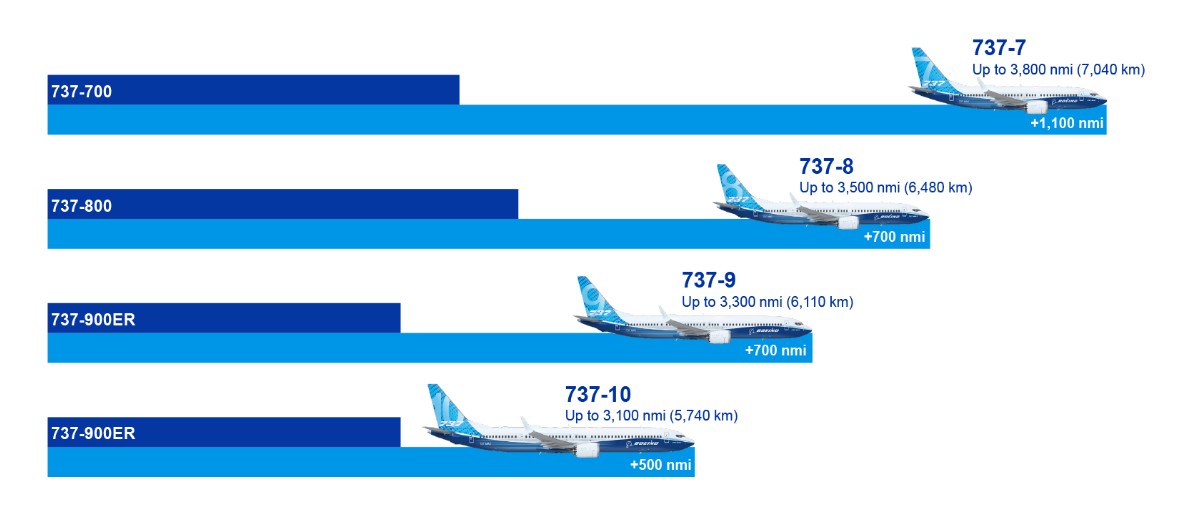
The 737-7 is designed to carry 135 to 160 passengers in a typical two-class configuration. It also has the longest range in the MAX lineup, capable of flying up to 3,800 nautical miles (7,040 kilometers).

Illustration: Boeing.

“This important certification validates the rigor of our airplane’s design and recognizes the determination and resilience of our 737 MAX development team,” Stephanie Pope, president and CEO of Boeing Commercial Airplanes, said in a statement.

Boeing said the aircraft burns 20% less fuel and produces 20% fewer carbon dioxide emissions than the airplanes it typically replaces while cutting its noise footprint by 50%.

Southwest Airlines, the launch customer for the 737-7, is preparing to take delivery of the first aircraft.

The FAA said safety inspectors will remain at Boeing production facilities to monitor manufacturing, including the company’s safety management system and safety culture.

Boeing has booked about 300 firm orders for the 737-7

 Eve completes first partial transition flight

Tags

, , , , , ,

The Eve prototype on its partial transition flight. Photo: Eve Air Mobility.

MELBOURNE, Fla. – Eve Air Mobility has completed the first partial transition flight of its electric vertical takeoff and landing (eVTOL) aircraft, marking a key step toward full wing-borne flight, the company said Monday.

A partial transition flight is an early test in which an eVTOL begins shifting from vertical lift, generated by its lift rotors, to forward flight using a rear-mounted pusher propeller.
The aircraft does not complete the full transition but validates systems that will eventually allow it to fly like a conventional airplane.

During the test, the Eve prototype activated its rear pusher propeller for the first time in flight while the aircraft remained airborne.

The flight lasted 3 minutes and 9 seconds, covered about 0.84 nautical miles, reached a maximum altitude of 90 feet above ground level and achieved a stabilized speed of 27 knots with a maximum ground speed of 30 knots, the company said. The pusher propeller operated at up to 1,200 rpm.

Photo: Eve Air Mobility.

The transition from vertical to wing-borne flight is considered one of the most technically demanding phases of eVTOL operations because it requires the aircraft to safely transfer lift from its vertical propulsion system to its wings while maintaining stable flight.

The company said data from the flight will be used to expand the aircraft’s flight envelope through additional transition tests at higher speeds. It also plans datalink testing to validate radio communications during flights of up to 50 knots.

Eve Air Mobility, backed by Brazilian aircraft manufacturer Embraer, is developing the eVTOL aircraft for urban air mobility.

Thales air traffic system aims to cut delays, emissions in Singapore

Tags

, , , , ,

Thales says the new system will help reduce flight delays and lower carbon emissions. Photo: Singapore Changi Airport.

SINGAPORE – Thales will develop a new air traffic management system for Singapore that the French aerospace giant said Thursday will help reduce flight delays and lower carbon emissions.

Thales said the Civil Aviation Authority of Singapore (CAAS) has awarded the company a contract for the NexGen Air Traffic Management System, which will replace the country’s existing air traffic management platform.

No financial details were disclosed, but the company said the new system is expected to become operational by 2030.

Singapore’s Changi Airport is one of Asia’s busiest aviation hubs. It handled nearly 70 million passengers last year, up 3.4% from 2024, according to airport data.

The Thales project also includes a knowledge transfer program, with CAAS personnel joining the project office in France, as well as other localization projects in Singapore, the company said.

Photo: Thales.

The new system will use Thales’ TopSky–ATC One platform, which the company said provides air traffic controllers with artificial intelligence-enabled tools, streamlined workflows and a new human-machine interface.

It also includes TopSky–Sequencer, an AI-based system designed to optimize aircraft arrivals and departures.

The company added that the system has an open architecture that will allow future upgrades and the integration of third-party technologies.

Thales said the platform also incorporates cybersecurity features that comply with standards set by the International Civil Aviation Organization and Singapore.

As part of the contract, Thales will also supply two next-generation air traffic control radars. The company said the radars will provide continuous aircraft detection in all weather conditions and will be integrated with the new air traffic management system to improve situational awareness for controllers.

COMAC C919 high-altitude variant completes maiden test flight

Tags

, , , , , , ,

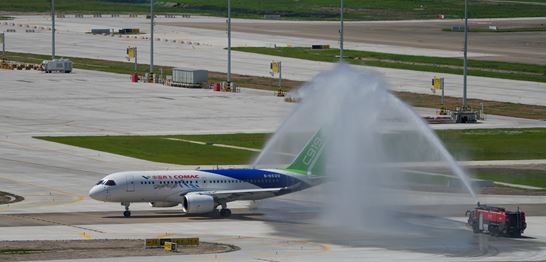
The C919 on the tarmac at Shanghai Pudong International Airport on Wednesday. Photo: COMAC.

SHANGHAI – A shorter high-altitude variant of China’s COMAC C919 single-aisle airliner completed its maiden test flight Wednesday, the Commercial Aircraft Corp. of China said.

The state-owned manufacturer said the flight lasted 1 hour and 59 minutes and completed all scheduled test objectives. The aircraft took off from and landed at Shanghai Pudong International Airport.

“This marks a significant step forward in the C919 series development,” the company said in a statement posted on its website. “Based on the basic model, the C919 high-altitude prototype incorporates targeted design features such as a shorter fuselage and enhanced system functions to meet the requirements of high-altitude operations.”

The first C919 entered commercial service in March 2023, nearly seven years after the aircraft’s maiden flight. The narrowbody jet can accommodate up to 190 passengers.

As of December, COMAC had secured 1,005 orders for the aircraft, along with 120 purchase options.

The C919 is scheduled to begin its first international service next month when Air China launches regular flights between Beijing and the Mongolian capital of Ulaanbaatar.

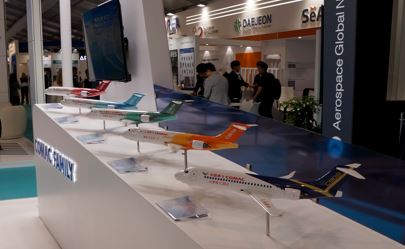
COMAC models on display at the Farnborough International Airshow. Photo: Abdul Latheef.

COMAC also produces the C909 regional jet, formerly known as the ARJ21, which seats up to 105 passengers.

The aircraft entered commercial service in June 2016. Earlier this month, Air Cambodia ordered 20 C909s.

A business jet variant of the C909 entered service in June with Chinese private jet operator Deer Jet.

COMAC showcased its family of aircraft at last week’s Farnborough International Airshow in the United Kingdom.

Global aviation groups launch runway safety initiative

Tags

, , , , ,

The initiative will focus on safety reporting, strengthening teams and sharing best practices. Photo: Abdul Latheef.

GENEVA – Three major aviation industry groups are joining forces to reduce runway incursions through a new global safety initiative.

The program, launched by the International Air Transport Association, Airports Council International and the Civil Air Navigation Services Organisation, focuses on improving safety reporting, strengthening local runway safety teams and expanding the sharing of best practices.

The organizations said Tuesday the effort will improve the collection and sharing of safety data, including incident reports, near misses and observations from frontline personnel, while encouraging closer coordination among airlines, airports, air navigation service providers and regulators.

It also builds on existing global runway safety programs through the use of risk assessments, runway safety checklists and support for local runway safety teams.

A runway incursion occurs when an aircraft, vehicle or person is incorrectly present on a runway or its protected area. Although relatively uncommon, incursions can have serious consequences, and several recent incidents have been fatal, according to IATA.

Image: IATA

Nick Careen, the association’s senior vice president for operations, safety and security, said the initiative is intended to help aviation stakeholders identify runway risks earlier and take coordinated action to maintain aviation’s strong safety record.

“Flying is the safest form of long-distance travel,” Careen said. “Maintaining that record requires a relentless focus on continuous improvement, supported by global standards, safety data and collaboration.”

IATA names first woman leader

Tags

, , , ,

GENEVA – The International Air Transport Association has named Saadia Zahidi the next director general, making her the first woman to lead the global airline industry’s trade organization in its more than 80-year history.

Zahidi, a managing director and member of the board at the World Economic Forum, will become IATA’s ninth leader Nov. 1, the organization announced last week.

She succeeds Willie Walsh, who will step down July 31 after leading IATA through the airline industry’s recovery from the COVID-19 pandemic. Walsh has been appointed chief executive of India’s largest airline, IndiGo.

Sandrine Le Borgne, IATA’s chief financial officer and senior vice president for corporate services, will serve as interim director general until Zahidi takes office, the group said.

Zahidi said she was honored to lead IATA at what she described as a critical moment for aviation.

“I am honored to help advance IATA’s mission to represent, lead and serve the airline industry at this pivotal moment,” Zahidi said. “In a rapidly changing world, IATA’s role in bringing the industry together to collaborate through trusted standards, essential services and advocacy has never been more important.”

A veteran of more than two decades at the World Economic Forum, Zahidi founded and leads the Center for the New Economy and Society. She also helped develop several flagship reports, including the Future of Jobs Report and the Global Gender Gap Report.

Her appointment marks a milestone for IATA as the association prepares to navigate technological change, sustainability challenges and shifting global economic conditions.

Zahidi studied economics at Smith College, the Graduate Institute and Harvard University. She holds Swiss and Pakistani nationalities.

IATA represents more than 370 airlines that account for about 85% of scheduled air traffic.

Images are courtesy of IATA.