




All photos are by the author. All rights reserved.
09 Thursday Jan 2014
04 Saturday Jan 2014
Posted in Air New Zealand, Aircraft, Airlines, Aviation, Business, Dreamliner, News, Transport, Travel
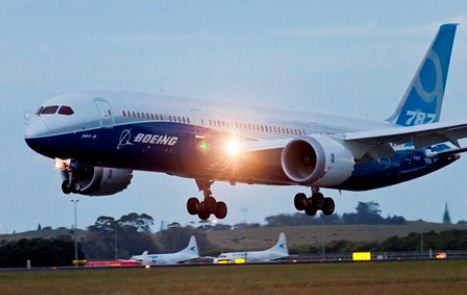
The test aircraft lands in Auckland. Boeing photo.
The new version of the Boeing 787 Dreamliner has made its international debut.
The 787-9 flew to Auckland, home of launch customer Air New Zealand, this week from the United States as part of a test program.
The aircraft, codenamed ZB002, took off from Seattle at 9:55 a.m. Friday and landed in Auckland 13 hours, 49 minutes later, marking its longest flight since the program began, Boeing said.
The airplane is scheduled to continue on to Alice Springs, Australia, for testing in hot weather, the company said.
The ZB002 is the only 787-9 fitted with elements of the passenger interior.
The 787-9 is 20 feet longer and can seat 40 more passengers than the Dreamliner 787-8, which went into service in October 2011.
 Air New Zealand, which has ordered 10 aircraft, will get its first 787-9 in the middle of this year.
The airline plans to use it on the Auckland-Perth route, starting October.
In all, 26 customers, including Air Canada, have ordered 402 787-9 Dreamliners.
20 Friday Dec 2013
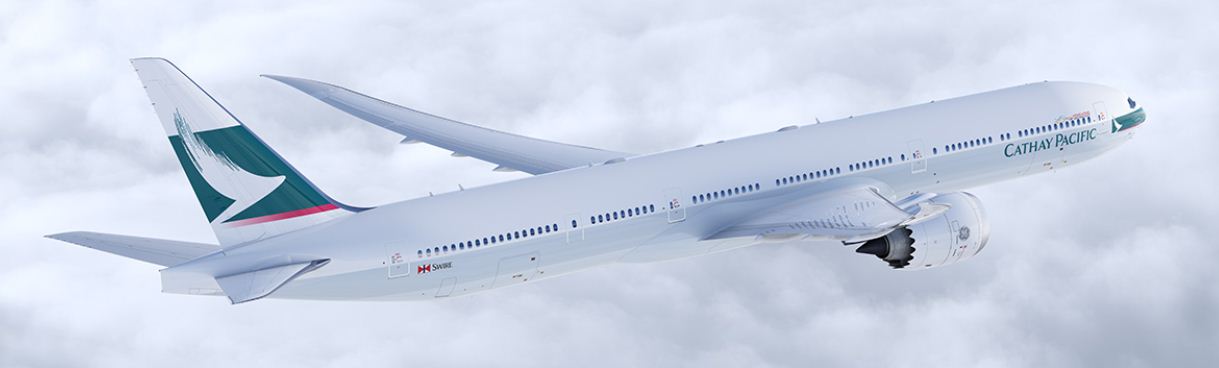
The Cathay Pacific 777-9X. – Boeing photo.
One of Asia’s biggest airlines has given a major boost to Boeing’s 777X program, ordering 21 aircraft worth more than $7 billion dollars.
Cathay Pacific’s order is for the 777-9X version of the yet to be named aircraft. This version will offer seating for more than 400 passengers, and the airline says the order reflects its future long-haul fleet strategy.
“We think it will be an ideal fit for long-haul destinations in North America and Europe, in particular those routes where we carry high volumes of passengers and cargo each day,” said John Slosar, CEO of the Hong Kong flag carrier.
In addition, the 777-9X promises improved payload range capability and reduced operating costs, he said.
The 777X program was launched at the Dubai Airshow last month where Boeing won orders and commitments for 259 aircraft worth $95 billion.
“The 777X currently stands as the largest product launch in commercial jetliner history by value and is targeted for first delivery in 2020,” Boeing said Friday in announcing the Cathay Pacific deal.
The aircraft is now undergoing low-speed wind tunnel tests in Britain.
Cathay Pacific has been a major Boeing customer for years. It operates 55 777s and an all-Boeing freighter fleet that includes 13 747-8
The 777X is the newest member of the highly successful 777 family of long-haul airliners.
12 Thursday Dec 2013
Nearly 26 million bags are lost or misplaced in airports around the globe each year, but a trackable bag may help reduce that number dramatically.
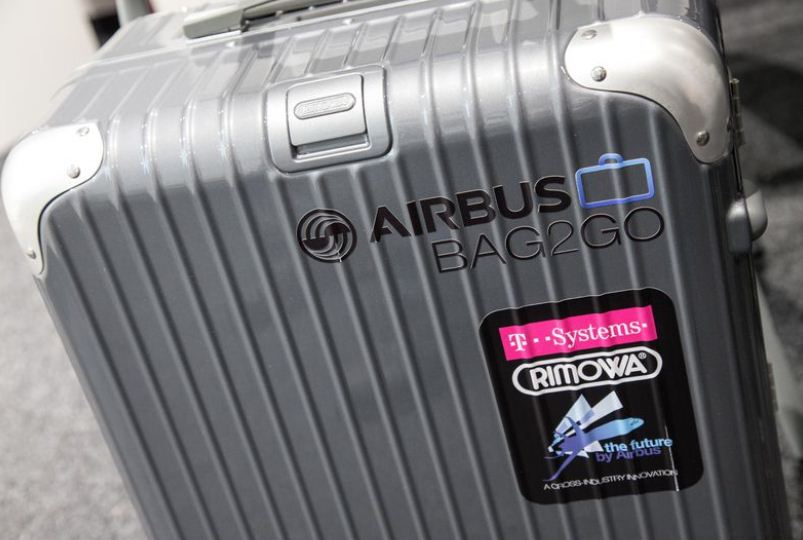
A prototype of the trackable Bag2Go
Bag2Go is being developed by Airbus in partnership with luggage manufacturer Rimowa and IT services company T-Systems.
It is a specially designed suitcase with integrated electronic tagging which can be controlled by a smartphone.
Tests on Bag2Go will be conducted throughout next year, Airbus said this week.
“It was very important for us to come up with an easy-to-use solution for passengers,” said Airbus Innovation Manager Jan Reh.
“Bag2Go is one piece in the overall puzzle to make luggage more controllable for airlines and provide passengers with a better travel experience.”
The European aircraft manufacturer says airlines are keen to participate because each lost luggage on average costs them about $100 to retrieve and return to the passenger.
The International Air Transport Association, the group that represents the world’s airlines, estimates that lost or misplaced baggage accounts for almost $2.5 billion dollars in lost revenue annually.
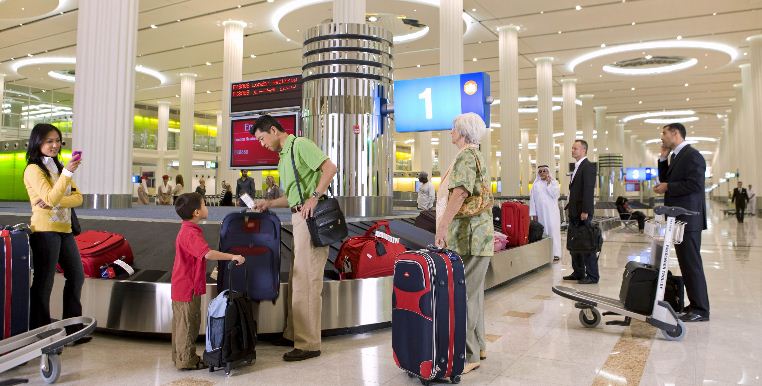
A baggage carousel at Dubai International Airport
“This new technology is a fantastic enabler that will help the business transform itself, so that not only will fewer bags be mishandled but newer, more innovative ways of delivering those bags will be found,” said Andrew Price, head of baggage services at the organization.
“These technologies may seem like they are new today but within five years they will be absolutely common place.”
At last, there is hope for light at the end of the baggage carousel!
Images are courtesy of Airbus and Dubai Airport.
10 Tuesday Dec 2013
 While the world is bracing for a big rise in air travel, North America will record the slowest growth in international passenger demand in the next four years, the group that represents the world’s airlines said Tuesday.
The International Air Transport Association says the region will see a 3.6 per cent compound annual growth rate during 2013-2017.
The Middle East will report the strongest — a growth of 6.3 per cent.
Overall, international passenger numbers are expected to rise from 1.2 billion in 2012 to 1.5 billion in 2017, bringing in 292 million additional passengers, IATA said.
With a rate of more than 10 per cent, Uzbekistan is the fastest growing market for international passenger traffic. Others are Kazakhstan, Russia, Turkey, Oman, China, Vietnam, Saudi Arabia, Azerbaijan and Pakistan.
The group also forecast that airlines expect to see a 31 per cent increase in total passenger numbers between 2012 and 2017.
“By 2017, total passenger numbers are expected to rise to 3.91 billion — an increase of 930 million passengers over the 2.98 billion carried in 2012,” the IATA Airline Industry Forecast said.
The United Arab Emirates, home of the high-flying carrier Emirates, will add 29.2 million passengers over the forecast period, nearly as many as China, IATA said.
“For international traffic, routes between the Middle East and Asia-Pacific will see the strongest growth.”
Routes within or connected to China will be the single largest driver of growth, accounting for 24 per cent of new passengers during the forecast period, IATA said.
“Of the anticipated 227.4 million additional passengers, 195 million will be domestic and 32.4 million will be international.”
With 677.8 million domestic passengers in 2017, the United States will continue to be the largest single market for domestic passengers, although it will add only 70 million passengers over the forecast period, IATA said.
IATA, which represents nearly 250 airlines, says the global aviation industry supports some 57 million jobs and $2.2 trillion in economic activity.
06 Friday Dec 2013
Tags
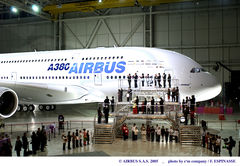 European aircraft manufacturer Airbus says it is exploring the use of three-dimensional printing of individual parts or even larger airframe structures.
Airbus has been testing the technology, also known as additive manufacturing, since the late 1990s.
Its parent company, EADS, is a key partner in the European Space Agency’s AMAZE project to perfect the printing of space-quality metal components.
AMAZE, or Additive Manufacturing Aiming Towards Zero Waste and Efficient Production of High-Tech Metal Products, involves 28 industrial partners. 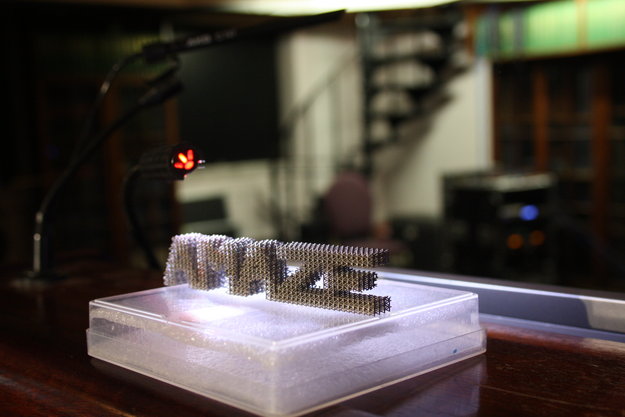
The 3D printing technology offers greater manufacturing flexibility as well as cost- and weight-saving potential. Other aerospace companies, including engine manufacturers General Electric and Rolls-Royce, are also testing it.
Airbus made the announcement on Wednesday as the company and the Massachusetts Institute of Technology signed an agreement to explore the use of digital manufacturing in the aerospace industry.
The company will work with MIT’s Center for Bits and Atoms to evaluate how the digital material concepts being developed at the institute can potentially be applied to the design and construction of aerospace vehicles.
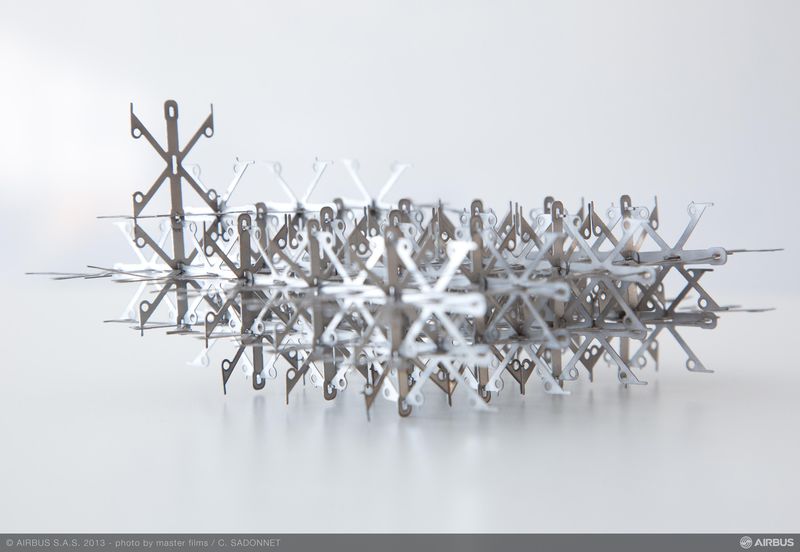
Metallic digital material.
“The agreement with MIT opens up an interesting collaboration with a cutting-edge research partner,” said Axel Krein, senior vice-president of research and technology at Airbus.Neil Gershenfeld is the director CBA.
“We’re delighted to welcome Airbus as CBA’s newest member, with a focus on aerospace applications of digital fabrication,” he said.
Airbus believes digital material technology could lead to a totally new way of assembling airplanes and may offer substantial benefits, including lighter aircraft structures as well as lower construction and assembly costs.
Images are courtesy of Airbus and ESA.
04 Wednesday Dec 2013
Jetairfly of Belgium is set to become the first airline in Benelux to operate the Boeing 787.
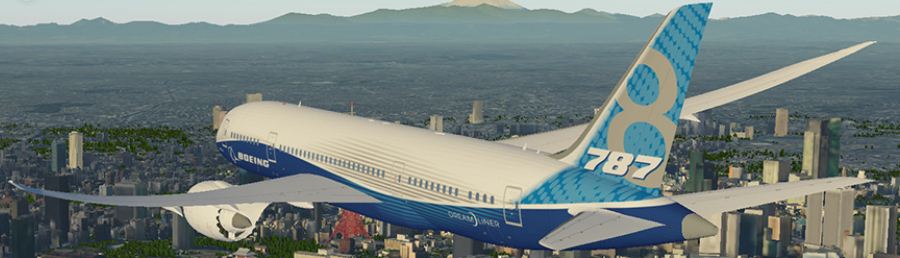
The Dreamliner. Boeing photo.
The carrier, which is part of the British-based leisure travel company TUI Travel PLC, took delivery of the Dreamliner at a ceremony in Seattle on Tuesday. The 787 will start flying this month, replacing the airline’s 767.
 “We are very excited about the Jetairfly Dreamliner entering service as the first and only 787 operated by a Belgian airline,” said Elie Bruyninckx, CEO of TUI Belgium.
Bruyninckx called the aircraft a great asset in the company’s strategy of offering unique holiday experiences to its passengers, especially when they fly between Europe and the Caribbean.
“We are very excited that Jetairfly will be flying the 787 Dreamliner,” said, Todd Nelp, vice- president of European Sales, Boeing Commercial Airplanes.
The fuel-efficient Dreamliner has features such as larger, electronically-dimmable windows and larger overhead luggage bins.
TUI Travel, which operates six airlines including Thomson Airways, Arkefly, TUI Fly Nordic and Jetairfly, has made a commitment for up to 15 Dreamliners. It now has four in service.
The Dreamliner was launched in 2004. It reached a sales milestone at the Dubai Airshow last month when Boeing received the 1,000th order for the aircraft, from Etihad Airways of Abu Dhabi.
Boeing puts the total number of orders at 1,012 from 16 customers.
27 Wednesday Nov 2013
Celebrations are underway in Dubai, UAE, after the city won the right to host the world’s fair in 2020, the first in the Middle East.
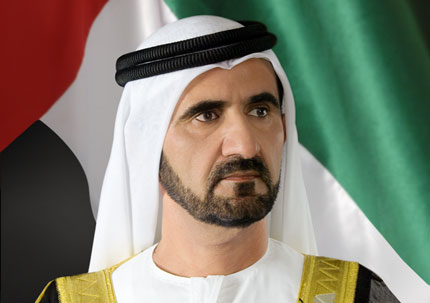 “To the world: we renew our promise to astonish you at Expo 2020,” Dubai’s Ruler Sheikh Mohammed bin Rashid Al Maktoum tweeted shortly after winning the bid.
“Dubai will bring to life our vision: Connecting Minds, Creating the Future.”
Rival bids came from Ekaterinburg, Russia; Sao Paulo, Brazil and Izmir, Turkey.
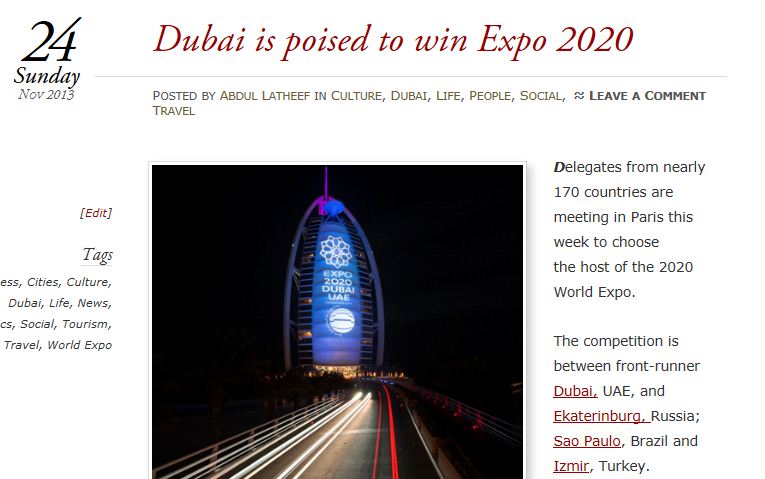
My previous post on Expo 2020
Dubai was the front-runner from the very beginning of the bidding process, and on Wednesday it won in all three rounds of voting by member countries of the Bureau International des Expositions in Paris.
“Expo 2020 will breathe new life into the ancient role of the Middle East as a melting pot for cultures and creativity,” Sheikh Mohammed said.
“Our goal is to build a better future for the region’s youth. The UAE will achieve it through collaboration and inspiration at Expo 2020.”
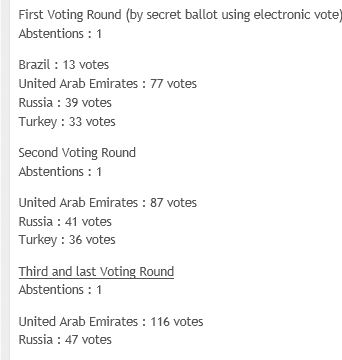 The BIE noted that in just a few decades, Dubai had become one of the world’s most modern, innovative and technological cities, attracting investors and workers from more than 200 countries.
“With a target of 25 million visitors, the Expo will continue building Dubai and the UAE’s status as a world hub…”
Canada and Britain were among the countries supporting the Dubai bid. 
Canadian Foreign Affairs Minister John Baird congratulated Dubai, saying in a tweet that it was the right proposal, right place and right time.
Sheikh Mohammed’s photo is courtesy of Dubai Government.
24 Sunday Nov 2013
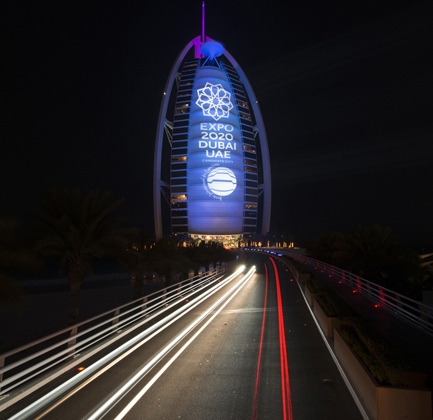 Delegates from nearly 170 countries are meeting in Paris this week to choose the host of the 2020 World Expo.
The competition is between front-runner Dubai, UAE, and Ekaterinburg, Russia; Sao Paulo, Brazil and Izmir, Turkey.
All indications are that the Bureau International des Expositions will overwhelmingly choose Dubai on Nov. 27.
There are many reasons for that, primarily no other city competing for the world’s fair can match what Dubai offers – it has ultra-modern infrastructure, solid financial backing and above all an impeccable track record of hosting mega events.
The Dubai Airshow that concluded just last week is just an example. It generated a record US$206 billion in business for Boeing, Airbus and others.
Dubai has also won the endorsements of several countries, including Britain, France and Canada.
“Canada believes it is time for the Middle East to host the world at a time of such hope and challenge in the region, and Dubai is best placed to bring together the most diverse group of peoples from around the world, to share ideas, aspirations, and concrete solutions for the future,” Foreign Affairs Minister John Baird said in a statement earlier this month.
“Canada’s support for Dubai reflects our commitment to the dynamism, hope and future of emerging economies in the region and beyond.” 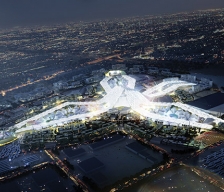
Former U.S. president Bill Clinton, a frequent visitor to Dubai, and Microsoft co-founder Bill Gates also have endorsed Dubai’s bid.
“Dubai’s model of shared prosperity is more important today than ever and an inspiration to many countries in the Middle East,” Clinton told students of the American University of Dubai in April.
Dubai under its charismatic Ruler, Sheikh Mohammed bin Rashid Al Maktoum, has made dramatic progress in the past few years.
The emirate has delivered everything it ever promised. Expo 2020 will be no different. It would be another jewel in Dubai’s crown.
But win or lose, Dubai has made its case.
“The UAE will be successful whether it wins the bid or not, as we are working and moving forward with various development plans,” Sheikh Mohammed was quoted as saying this month.
All photos are courtesy of Dubai Expo 2020 and Dubai Government. The video, “Then and Now,” is from YouTube.
17 Sunday Nov 2013
Tags
Aviation, Boeing, Business, Emirates Airline, Etihad, Lufthansa, News, Qatar Airways, Travel
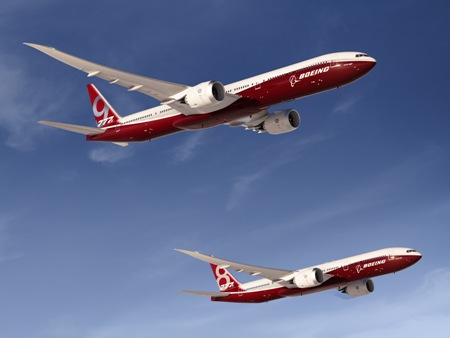
Boeing’s newest aircraft – the 777-8X and 777-9X. Boeing photo.
Boeing made history on the opening day of the Dubai Airshow, announcing record-breaking orders worth almost $100 billion for its new 777X airplanes. The American aircraft maker said Sunday the orders for 259 airplanes represented the largest product launch in commercial jetliner history by dollar value.
Dubai flag carrier Emirates led the way with an order for 150 of the aircraft. Other Gulf airlines followed suit, with Etihad of Abu Dhabi ordering 25 and Qatar Airways 50. Joining them was the German airline Lufthansa with a commitment for 34 aircraft.
“We are proud to partner with each of these esteemed airlines to launch the 777X – the largest and most-efficient twin-engine jetliner in the world,” said Boeing Commercial Airplanes president and CEO Ray Conner.
“Its ground-breaking engine technologies and all-new composite wing will deliver unsurpassed value and growth potential to our customers.”
The 777X is the newest member of the highly successful 777 family of long-haul airliners. It will be built in two versions: the 777-9X that offers seating for more than 400 passengers and the 777-8X, which will seat 350 passengers.
Boeing’s European rival, Airbus, also won a major order at the show, again from Emirates for 50 A380s worth $23 billion, boosting the airline’s fleet of the superjumbos to 140.
“The A380 continues to be the flagship of our fleet and after five years in operation it remains highly popular with our passengers,” said Emirates chairman Sheikh Ahmed bin Saeed Al-Maktoum.
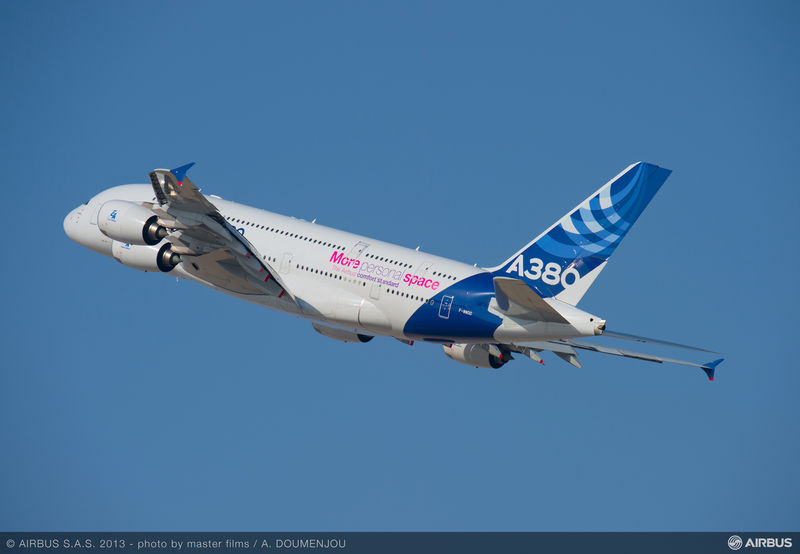
The Airbus A380 in Dubai. Airbus photo.
He added that the latest order will help the airline meet both fleet expansion and fleet replacement needs.
“By strategically placing the A380 at the centre of its business, Emirates is maximizing its leading position with each day of operations,” said Airbus president Fabrice Bregier.
The airshow has attracted some 1,000 exhibitors from around the world. It runs through Nov. 21 and more orders are expected in the next few days.
16 Saturday Nov 2013
Posted in Airlines
As the Dubai Airshow opens on Sunday, all eyes will be on Boeing 777X, the newest addition to the highly successful 777 family of long-haul aircraft. The American company is widely expected to launch the airplane with a big order from the fast-growing Dubai carrier, Emirates.
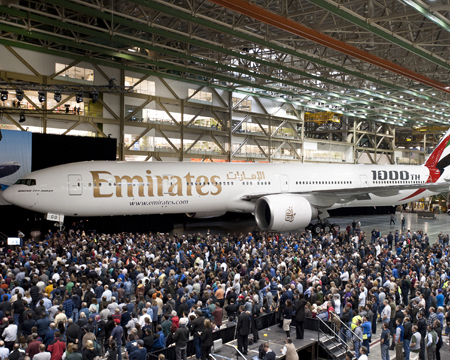
Emirates is already the largest customer of Boeing 777s. Boeing photo
The airline has so far refused to comment on any potential deal, but it is already the largest operator of the 777s and the Airbus A380 superjumbos. “The 777X will include new engines, an all-new composite wing and will leverage technologies from the 787 Dreamliner,” Boeing said in a fact sheet posted in May. “The 777X will be the largest and most-efficient twin-engine jet in the world.”
Orders worth more than $63 billion were placed during the 2011 show, with Airbus winning a big portion of them. This year, all signs are leading to a mega order for Boeing.
Airbus has forecast that the Middle East will need 1,921 commercial aircraft by 2030 while Boeing has estimated the number to be at 2,520.
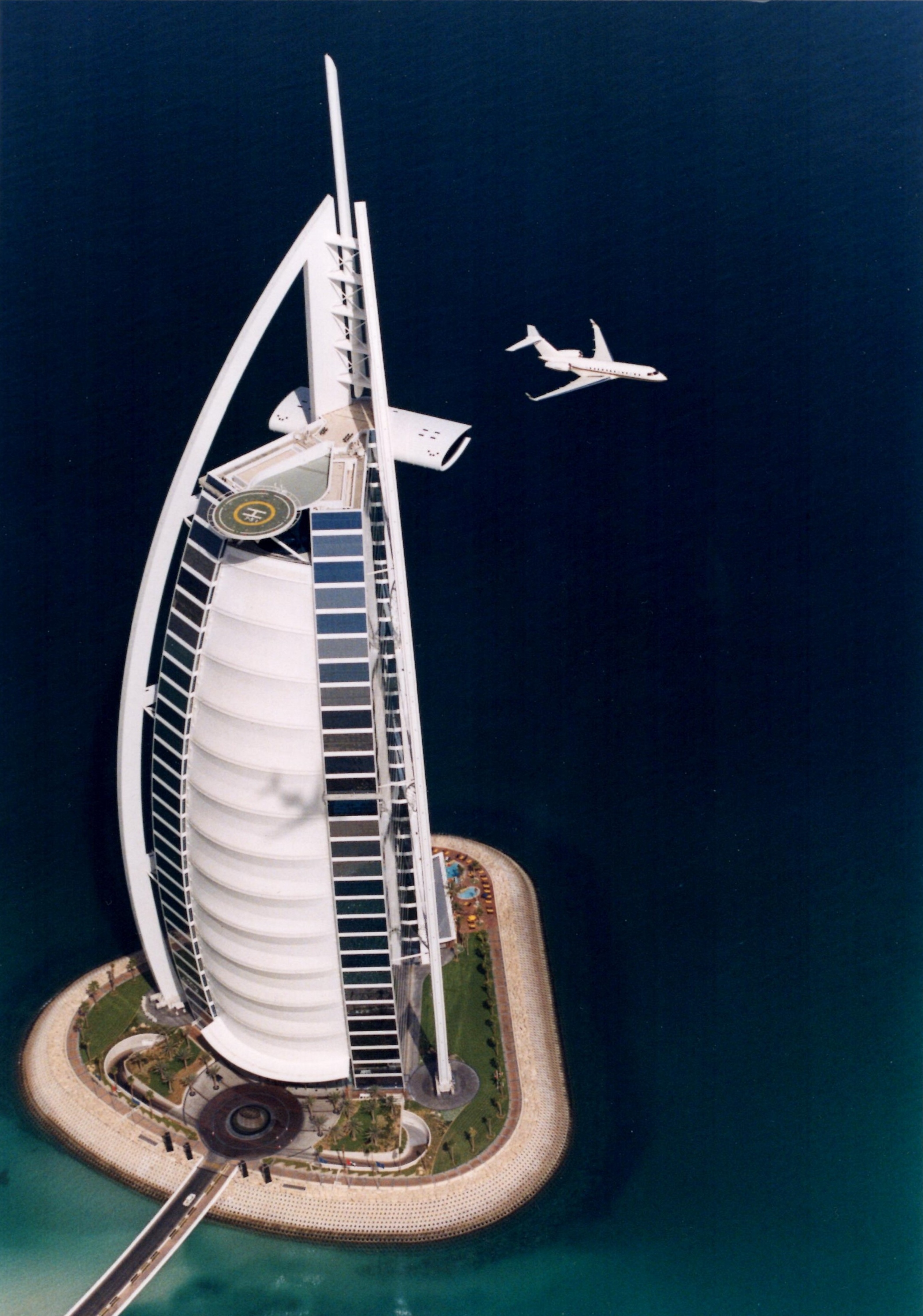
Flying high in Dubai: The Global Express flies past the iconic Burj Al Arab Hotel. Bombardier file photo
Canada’s Bombardier Aerospace has set up a special pavilion for its brand new CSeries aircraft, specifically designed for the 100- to 149-seat market segment.“Closely following in the footsteps of the CSeries aircraft’s historic first flight on Sept. 16, invited guests to Bombardier’s unique CSeries pavilion will be able to view the full-scale passenger cabin and cockpit demonstrators of this game-changing aircraft,” the company said this week.
Bombardier has received 177 firm orders for the aircraft, 10 from Gulf Air, the national carrier of Bahrain. Deliveries are expected to begin next fall.
Meanwhile, Bombardier’s static display will feature the wide-body Challenger 605 jet, the large Global 6000, and the Q400 NextGen turboprop airliner.
In all, 150 aircraft, including more than 50 business jets, will be on display at the five-day show at the new Dubai World central airport.
15 Friday Nov 2013
Posted in Airlines
Tags
Remember the Icelandic ash cloud of early 2010? The eruption of the Eyjafjallajokull volcano led to the cancellation of thousands of flights, stranding millions of passengers worldwide for days.
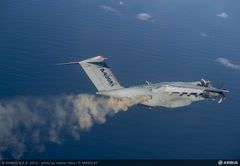
An Airbus A400M test aircraft disperses Icelandic ash into the atmosphere.
This week an airplane flew through an artificial ash cloud over the Bay of Biscay in the northeast Atlantic Ocean to test how passenger aircraft can cope with such eruptions. For the experiment, European aircraft maker Airbus teamed up with Britain’s largest airline, easyJet.
Technology came from Norway.
During the test, an Airbus A400M dispersed Icelandic ash into the atmosphere while another aircraft, an Airbus A340-300 fitted with the AVOID volcanic sensor, flew towards the cloud, identifying and measuring it from almost 60 kilometres away.
Airbus said the ash cloud was created at between 9,000 feet and 11,000 feet, conditions consistent with the 2010 eruption.
A third aircraft took measurements to corroborate data from the AVOID system.
“The threat from Icelandic volcanoes continues and so we are delighted with the outcome of this unique and innovative experiment,” said easyJet’s engineering director Ian Davies.
He said easyJet intends to fit its aircraft with the AVOID system.
“Finding a solution is as crucial now as ever to ensure we never again see the scenes of spring 2010 when all flying ceased across Europe for several days.”
The Airborne Volcanic Object Imaging Detector technology was invented by Fred Prata of Nicarnica Aviation, based in Norway.
“The team has just executed a unique scientific and engineering experiment conclusively demonstrating that low concentrations of ash can be identified by the AVOID sensor,” said an excited Prata.

Dr. Prata
“The highly successful outcome of this complex experiment… is a testament to the commitment and skills of easyJet and Airbus engineers and a great example of industry and science coming together to solve an important problem.”
While the cloud was fake, the ash used in the test was real — it was from the 2010 eruption.

Ash ready to go into the atmosphere.
Airbus said it was collected and dried by the Institute of Earth Sciences in Reykjavik, Iceland. EasyJet then collected it and flew it to Toulouse, the headquarters of Airbus in France. Charles Champion, Airbus executive vice-president and head of engineering, said the team wanted to prove that the ash-detection concept can work.
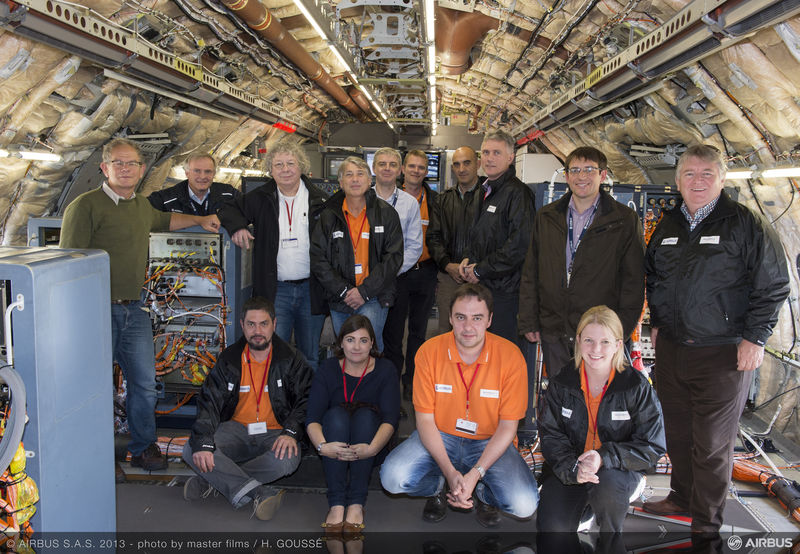
The AVOID test team.
“We are at the beginning of an invention which could become a useful solution for commercial aviation to prevent large-scale disruption from volcanic ash.” Experts believe the risk of another Icelandic eruption remains high and the AVOID technology could help open up large areas of airspace that would otherwise be closed during an eruption.
All photos are courtesy of Airbus.
07 Thursday Nov 2013
The only Boeing 787-9 Dreamliner fitted with elements of the passenger interior has successfully completed its test flight. 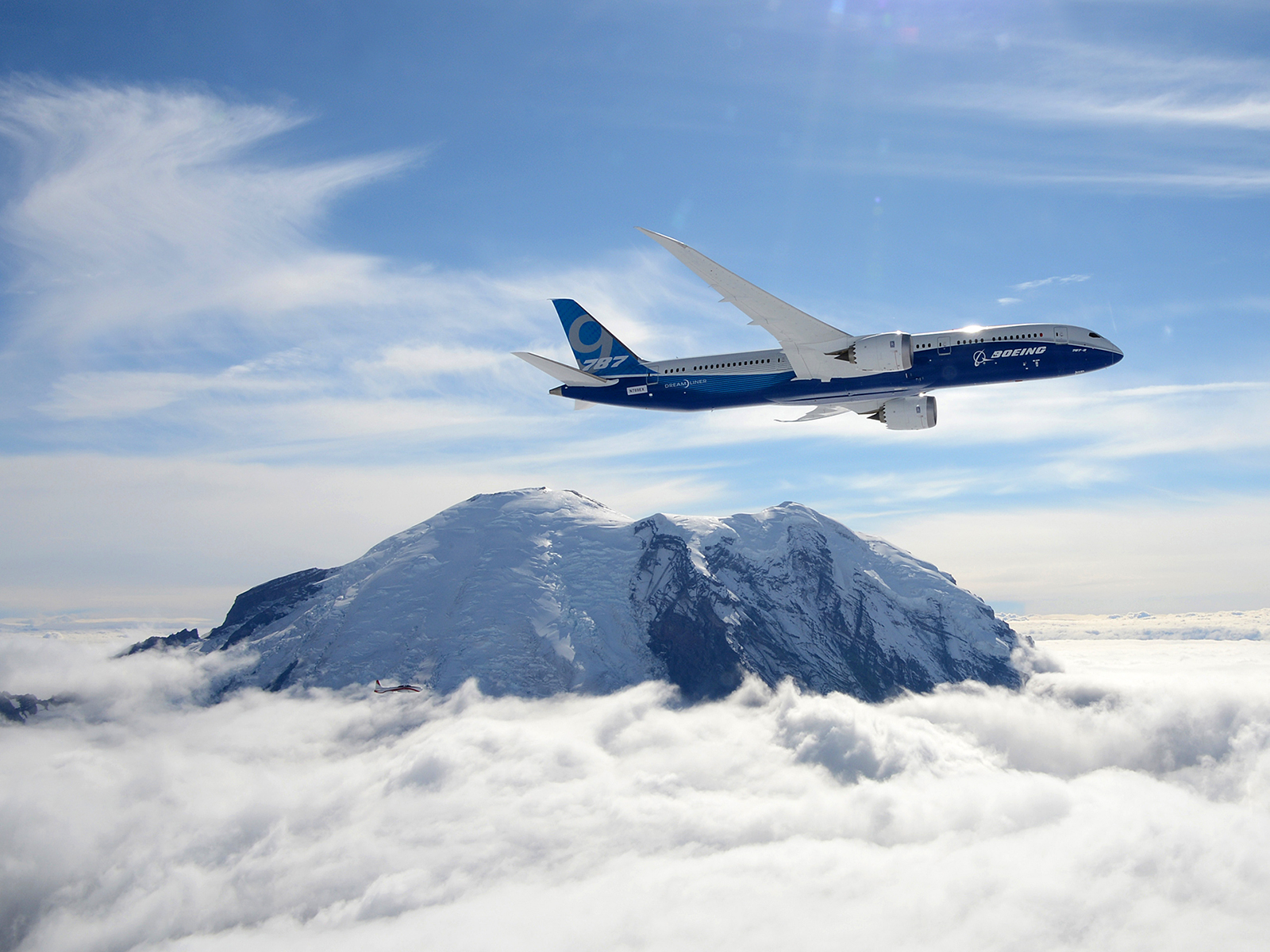
The test aircraft, known as ZB002, flew from Paine Field in Everett, Wash., to Seattle’s Boeing Field on Thursday afternoon, the company said.
The four-hour, 18-minute flight tested various aspects of airplane performance. Ground tests on the airplane were completed earlier.
It was the second test of the Dreamliner 787-9 after a debut flight in September.
The 787-9 is six metres longer and can seat 40 more passengers than the Dreamliner 787-8, which went into service in October 2011.
Air New Zealand is the launch customer of the 787-9. It has ordered a total of 10 aircraft.
The airline plans to use the aircraft on the Auckland-Perth route, starting next October.
Twenty-six customers, including Air Canada, have ordered 396 Dreamliner 787-9s.
All photos in this post are courtesy of Boeing.
28 Monday Oct 2013
Even as airlines try to increase revenue by squeezing more passengers in, one leading aircraft maker is calling for a minimum 18-inch (46-centimetre) seat standard on long-haul flights.
Citing a study conducted in Britain, Airbus said Monday an 18-inch seat improved passenger sleep quality by more than 50 per cent, compared to the more common 17-inch (43-centimetre) seat.
In calling for more cabin comfort in the economy class, 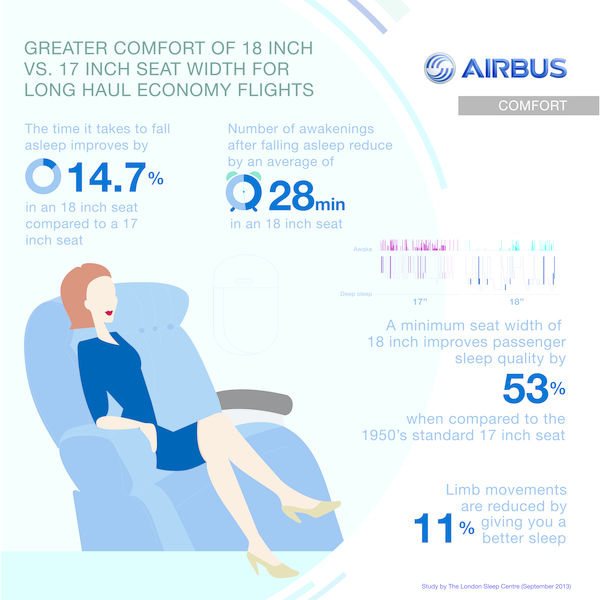 the European manufacturer noted the rapid growth in long-haul flights.
It said in the past five years alone, the number of daily flights over 13-plus-hour flying time had increased from 24 to 41.
Airbus has also predicted that in the next 15 years passenger traffic will double and by 2032, the world’s airlines will take delivery of more than 29,000 new aircraft.
But lately, the focus of many airlines worldwide has been on making more money.
That worries Kevin Keniston, head of passenger comfort at Airbus.
“If the aviation industry doesn’t take a stand right now then we risk jeopardizing passenger comfort into 2045 and beyond –- especially if you take into account aircraft delivery timetables combined with expected years in service,” he said.
“Which means another generation of passengers will be consigned to seats which are based on outdated standards.”
But Airbus has its own vested interest in promoting a wider-seat campaign — it says it has always maintained a standard of 18 inch minimum in its long-haul economy cabins.
“However, other manufacturers are eroding passenger comfort standards by going back to narrower seat widths from the 1950s in order to remain competitive,” the company claimed Monday.
So, the stage is set for a PR war over cabin comfort.
24 Thursday Oct 2013
It all began with a start-up capital of just US$10 million and two leased aircraft in 1985.
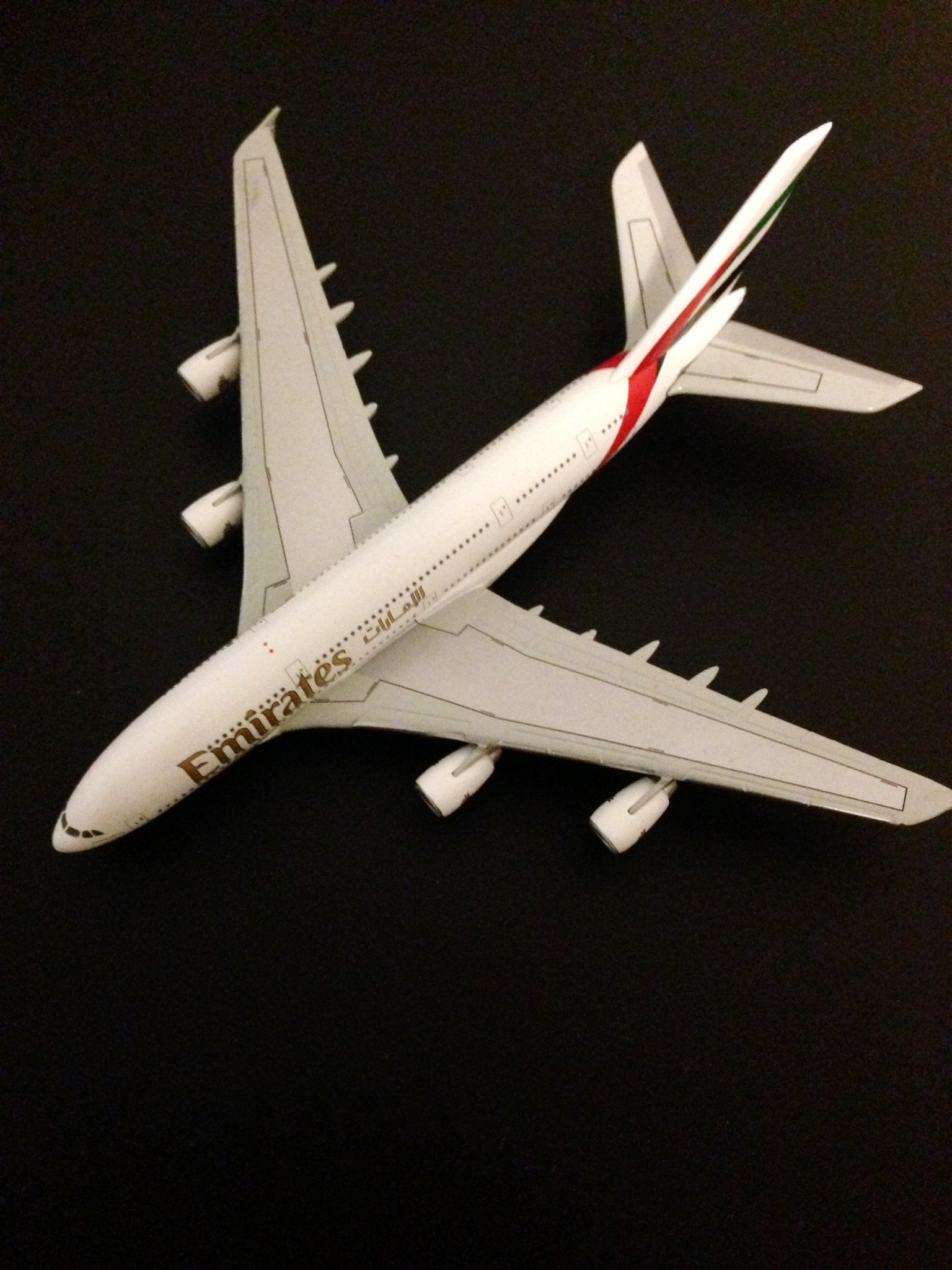
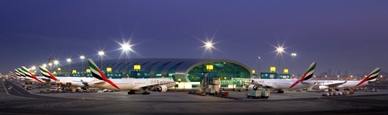
Ready to fly – an image from Dubai Airport. Emirates Photo.
Today, Dubai-based Emirates is one of the world’s largest airlines with one of the youngest fleets. This week, Emirates unveiled plans that would make it THE largest airline in the world in seven years.
“By 2020, we will have more than 250 aircraft serving some 70 million passengers across six continents. It will make us the largest airline on the planet by international passenger traffic,” Emirates president Tim Clark told an international delegation appraising Dubai’s bid to host the World Expo 2020.
But Clark added that being the biggest airline in the world was not really the company’s end goal. The aim, he said, was to connect travellers from around the world to Dubai, and other destinations with just a single stop. Clark pointed out that more than a third of the world’s population lives within a four-hour flight from Dubai, and two-thirds within an eight-hour flight.
“The strategic location of Dubai makes it possible for us to serve almost 90 per cent of the world’s population with non-stop flights.”
The airline has grown exponentially since it debuted with Flight EK600 from Dubai to Karachi on Oct. 25, 1985.
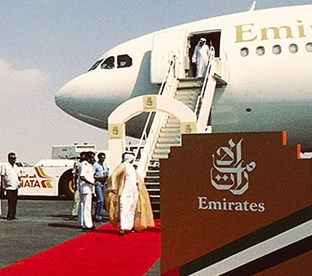
Today, Emirates operates nearly 3,200 flights a week to 135 destinations in 76 countries, including Canada and the United States. It carried more than 39 million passengers in 2012-13. With 37 Airbus A-380s, Emirates is the largest operator of the largest passenger aircraft in the world.
It has 53 more on order and opened the first dedicated concourse for the superjumbo in Dubai earlier this year. It is also the largest operator of Boeing 777s, with 131 in the fleet and 64 on order.
But the airline’s rapid growth has hurt other carriers in the region and beyond.
According to one report, in 2011-12, Emirates flew more international passengers in and out of India than India’s own national carrier Air India.
That is a testimony to the success of the “Dubai hub” concept.
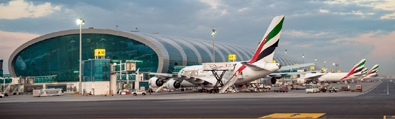
Dubai International Airport. Emirates Photo.
In 2012, Dubai International Airport handled 57 million passengers from 225 destinations. A second airport, known as Dubai World Central Al Maktoum International Airport, will open to passenger aircraft in a few days, ahead of next month’s Dubai Airshow. The organizers of the world’s fair have yet to decide which city will host Expo 2020, but Emirates and Dubai are gearing up to welcome an estimated 20 million visitors that year.
 The Air Dispatch