• Home
  • Blog
  • About/Disclaimer
  • Contact

The Air Dispatch

~ Covering the business of aviation and travel

The Air Dispatch

Tag Archives: Transport

Cathay bolsters Boeing 777X program

20 Friday Dec 2013

Posted by Abdul Latheef in Aircraft, Airlines, Aviation, Business, Cathay Pacific, Hong Kong, News, Transport, Travel

≈ Leave a comment

Tags

Aviation, Boeing, Cathay Pacific, Hong Kong, News, Transport, Travel

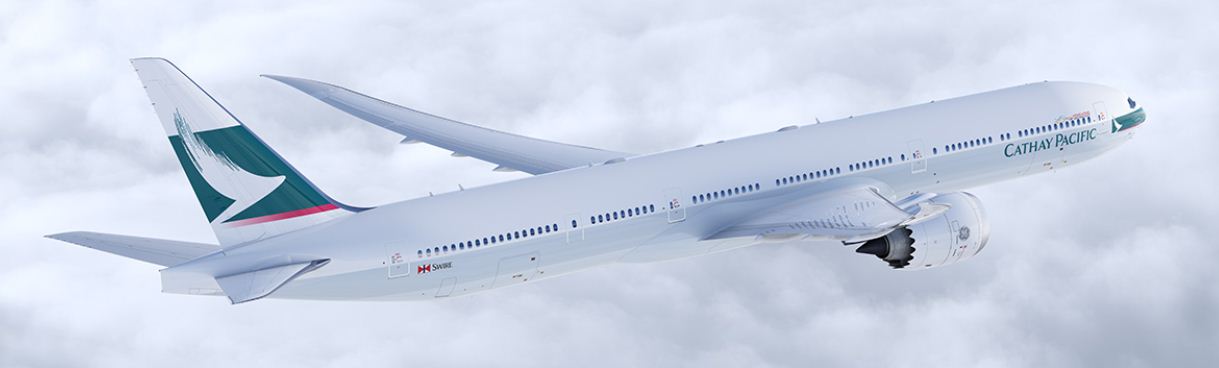
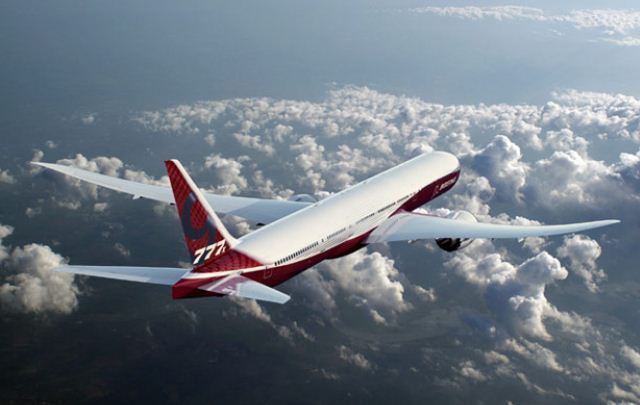
An artist's impression of a Catahy Pacific 777-X9. Boeing photo.

The Cathay Pacific 777-9X. – Boeing photo.

One of Asia’s biggest airlines has given a major boost to Boeing’s 777X program, ordering 21 aircraft worth more than $7 billion dollars.

Cathay Pacific’s order is for the 777-9X version of the yet to be named aircraft. This version will offer seating for more than 400 passengers, and the airline says the order reflects its future long-haul fleet strategy.

“We think it will be an ideal fit for long-haul destinations in North America and Europe, in particular those routes where we carry high volumes of passengers and cargo each day,” said John Slosar, CEO of the Hong Kong flag carrier.

In addition, the 777-9X promises improved payload range capability and reduced operating costs, he said.

The 777X program was launched at the Dubai Airshow last month where Boeing won orders and commitments for 259 aircraft worth $95 billion.

“The 777X currently stands as the largest product launch in commercial jetliner history by value and is targeted for first delivery in 2020,” Boeing said Friday in announcing the Cathay Pacific deal.

The aircraft is now undergoing low-speed wind tunnel tests in Britain.

Cathay Pacific has been a major Boeing customer for years. It operates 55 777s and an all-Boeing freighter fleet that includes 13 747-8

The 777X is the newest member of the highly successful 777 family of long-haul airliners.

Green taxiing technology taking shape

18 Wednesday Dec 2013

Posted by Abdul Latheef in Aircraft, Airlines, Aviation, Business, Environment, News, Technology, Transport

≈ Leave a comment

Tags

Aviation, Business, Environment, News, Technology, Transport

Airbus is embracing a green taxiing technology that would cut fuel consumption – and pollution at airports – substantially.

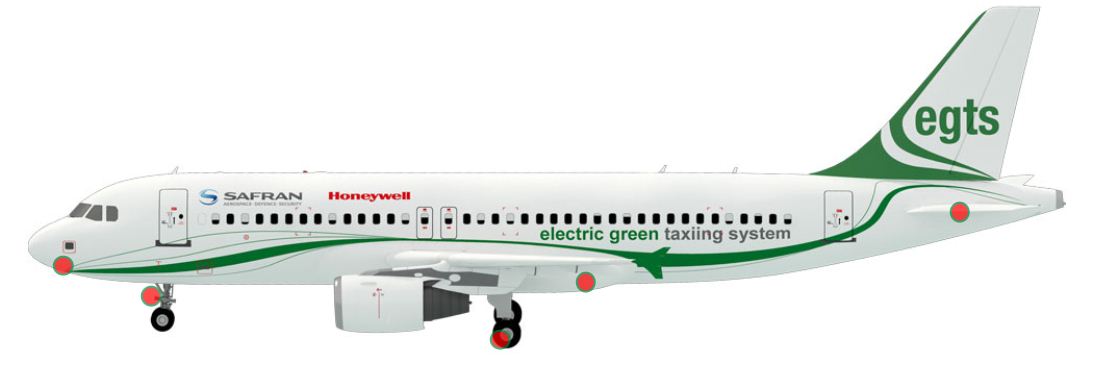
The electric green taxiing system, or EGTS, is being developed by technology giants Honeywell and Safran.

This is how the technology works. EGTS photo

This is how the technology works. EGTS photo

It was demonstrated at the Paris Airshow in June.

The European aircraft manufacturer says it has signed a memorandum of understanding with EGTS International, a joint venture between Honeywell and Safran, to adopt EGTS for its A320 family of single-aisle airliners.

Airbus is calling it eTaxi.

The company says the system would allow the aircraft to push back from the gate without a tug, taxi out to the runway, and return to the gate after landing without operating the main engines.

The power will come from electric motors fitted to the airplane’s main landing gear wheels.

“Following our demonstration of the technology at this year’s Paris Airshow, this MoU marks the next critical milestone in the advancement of the electric green taxiing system as an option for Airbus A320 family,” said Brian Wenig, EGTS program vice-president at Honeywell Aerospace.

Olivier Savin, EGTS program vice-president at Safran, says the agreement is significant in the development of the system.

“Through this agreement we are creating the ideal context to collaborate to best utilize our own landing gear systems expertise to develop a green taxiing solution for the A320 family.”

Airbus says eTaxi will offer several operational and environmental benefits, including up to four per cent savings in fuel consumption and four per cent reduction in carbon dioxide emissions.

“Over the next few months the partners will jointly develop and present a global commercial case and implementation plan to determine the feasibility of an electric taxiing solution for the A320 family,” Airbus said Tuesday.

The system is expected to be installed on new aircraft in 2016.

Boeing expands training in Russia

16 Monday Dec 2013

Posted by Abdul Latheef in Aircraft, Airlines, Aviation, Business, Technology, Transport

≈ Leave a comment

Tags

Aviation, Boeing, Business, News, Technology, Transport

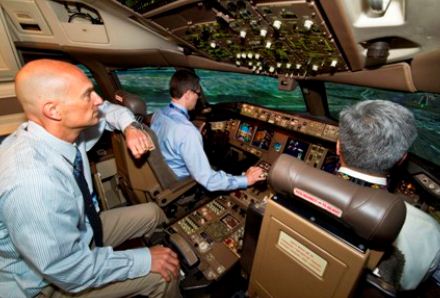
Pilot training in a 777 full-flight simulator. Boeing photo.

Pilot training in a 777 full-flight simulator. Boeing photo.

Boeing says it will open a new, state-of-the-art aviation training campus in Russia’s emerging high-tech centre in 2015.

The new full-service training facility will be located in the Skolkovo Innovation Center near Moscow, the U.S. aircraft manufacturer said Monday.

Initial capability will include flight, maintenance and specialty training, it said.

“We are bringing Boeing’s flight and maintenance training closer to our Russian customers, giving them the world-class support they need to successfully operate and maintain their fleets,” said Sherry Carbary, vice-president, Boeing Flight Services.

“Airlines in the region will benefit from a technologically advanced training campus staffed by the industry’s best qualified and most experienced pilots and instructors.”

Boeing will partner with the St. Petersburg, Russia-based avionics and flight-simulator manufacturer Transas on the project.Russia2

“We are delighted to become technology partners in this unique project,” said Nikholay Lebedev, president of Transas.

“We strongly appreciate that our flight simulation technologies have become part of this international project, aimed at improving the efficiency and quality of flight crew training in Russia — a sign of confidence in our products that we are proud of.”

Boeing says the new facility will open with four simulator bays, featuring three Next-Generation 737 full-flight simulators and one 777 full-flight simulator.

Two of the simulators will be built by Transas, it said.

Groundbreaking on the new campus is scheduled for spring of 2014, with training beginning in mid-2015.

Boeing has forecast that the Commonwealth of Independent States, including Russia, will require 15,200 additional airline pilots and 18,000 technicians over the next two decades, supporting 1,530 new commercial airplanes by 2032.

Airbus tests trackable bags

12 Thursday Dec 2013

Posted by Abdul Latheef in Aircraft, Airlines, Aviation, Business, News, Technology, Tourism, Transport, Travel

≈ Leave a comment

Tags

Aviation, Business, News, Technology, Tourism, Transport, Travel

Nearly 26 million bags are lost or misplaced in airports around the globe each year, but a trackable bag may help reduce that number dramatically.

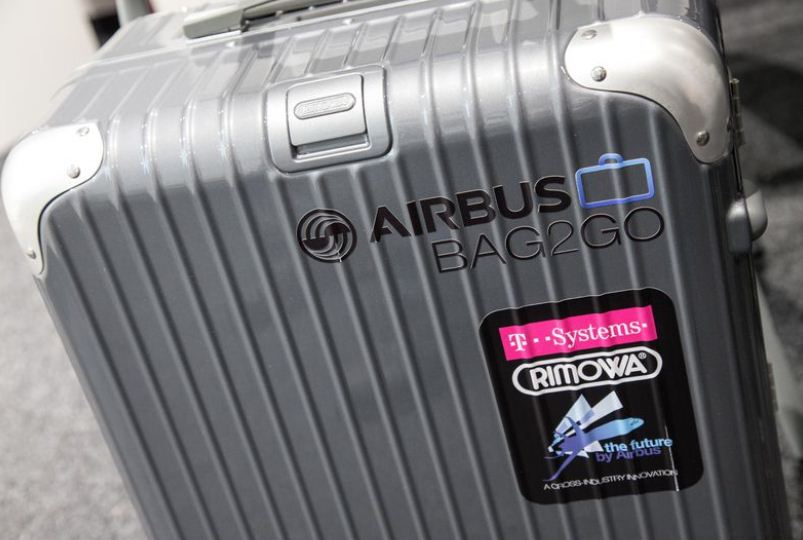
A prototype of the trackable Bag2Go

A prototype of the trackable Bag2Go

Bag2Go is being developed by Airbus in partnership with luggage manufacturer Rimowa and IT services company T-Systems.

It is a specially designed suitcase with integrated electronic tagging which can be controlled by a smartphone.

Tests on Bag2Go will be conducted throughout next year, Airbus said this week.

“It was very important for us to come up with an easy-to-use solution for passengers,” said Airbus Innovation Manager Jan Reh.

“Bag2Go is one piece in the overall puzzle to make luggage more controllable for airlines and provide passengers with a better travel experience.”

The European aircraft manufacturer says airlines are keen to participate because each lost luggage on average costs them about $100 to retrieve and return to the passenger.

The International Air Transport Association, the group that represents the world’s airlines, estimates that lost or misplaced baggage accounts for almost $2.5 billion dollars in lost revenue annually.

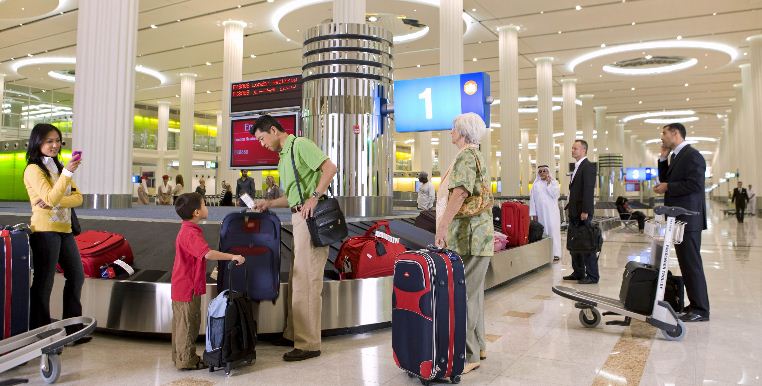
A luggage carousel at Dubai International Airport

A baggage carousel at Dubai International Airport

“This new technology is a fantastic enabler that will help the business transform itself, so that not only will fewer bags be mishandled but newer, more innovative ways of delivering those bags will be found,” said Andrew Price, head of baggage services at the organization.

“These technologies may seem like they are new today but within five years they will be absolutely common place.”

At last, there is hope for light at the end of the baggage carousel!

Images are courtesy of Airbus and Dubai Airport.

Wind-tunnel testing for 777X begins

09 Monday Dec 2013

Posted by Abdul Latheef in Aircraft, Airlines, Aviation, Business, News, Technology

≈ Leave a comment

Tags

Aviation, Boeing, Business, News, Technology, Transport

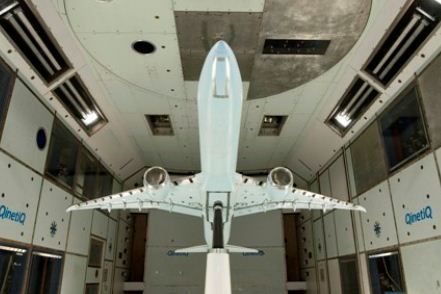
Wind-tunnel testing will last about five months.

Wind-tunnel testing will last about five months.

Less than a month after its spectacular launch at the Dubai Airshow, the Boeing 777X is undergoing low-speed wind-tunnel testing in Britain.

Testing started last week at a facility in Farnborough, the town northeast of London best known for the world’s premier airshow, Boeing said Monday.

“This is the first major development milestone for the program since we launched the program last month,” said Terry Beezhold, vice-president and chief project engineer of the 777X program.

“Wind-tunnel testing will validate our performance models and generate a vast amount of data that our engineering teams will use to design the airplane in this phase of development.”

The low-speed model currently being tested is a 5.5 per cent scale model of the baseline 777X, measuring 4.22 metres long with a wing span of 3.92 metres, Boeing said.

“Hundreds of sensors are embedded in the model to measure pressure to determine the in-flight loads as well as provide valuable diagnostics of the aerodynamic performance of a given design.”

The testing will last about five months.

“We are on track to complete our top-level design in 2014 and reach firm configuration in 2015,” said Beezhold.

B777XBoeing won orders and commitments for 259 aircraft worth almost $100 billion for the 777X in Dubai last month in what was the largest product launch in commercial jetliner history by dollar value.

They came from Emirates, Etihad, Lufthansa and Qatar Airways.

The 777X is the newest member of the highly successful 777 family of long-haul airliners. It will be built in two versions: the 777-9X that offers seating for more than 400 passengers and the 777-8X, which will seat 350 passengers.

Deliveries are expected to begin in 2020.

Images are courtesy of Boeing.

Benelux gets its 1st Dreamliner

04 Wednesday Dec 2013

Posted by Abdul Latheef in Aircraft, Airlines, Aviation, Business, News, Tourism, Travel

≈ Leave a comment

Tags

Aviation, Boeing, Business, News, Tourism, Transport, Travel

Jetairfly of Belgium is set to become the first airline in Benelux to operate the Boeing 787.

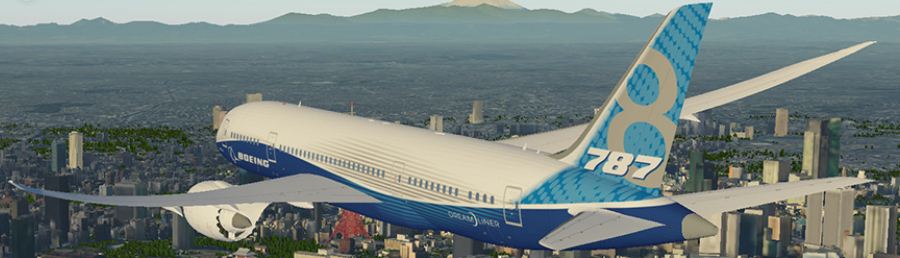
The Dreamliner. Boeing photo.

The Dreamliner. Boeing photo.

The carrier, which is part of the British-based leisure travel company TUI Travel PLC, took delivery of the Dreamliner at a ceremony in Seattle on Tuesday. The 787 will start flying this month, replacing the airline’s 767.

Jetair“We are very excited about the Jetairfly Dreamliner entering service as the first and only 787 operated by a Belgian airline,” said Elie Bruyninckx, CEO of TUI Belgium.

Bruyninckx called the aircraft a great asset in the company’s strategy of offering unique holiday experiences to its passengers, especially when they fly between Europe and the Caribbean.

“We are very excited that Jetairfly will be flying the 787 Dreamliner,” said, Todd Nelp, vice- president of European Sales, Boeing Commercial Airplanes.

The fuel-efficient Dreamliner has features such as larger, electronically-dimmable windows and larger overhead luggage bins.

TUI Travel, which operates six airlines including Thomson Airways, Arkefly, TUI Fly Nordic and Jetairfly, has made a commitment for up to 15 Dreamliners. It now has four in service.

The Dreamliner was launched in 2004. It reached a sales milestone at the Dubai Airshow last month when Boeing received the 1,000th order for the aircraft, from Etihad Airways of Abu Dhabi.

Boeing puts the total number of orders at 1,012 from 16 customers.

Boeing set to steal the show in Dubai

16 Saturday Nov 2013

Posted by Abdul Latheef in Airlines

≈ Leave a comment

Tags

Airshow, Boeing, Bombardier, Dubai, News, Transport, Travel

As the Dubai Airshow opens on Sunday, all eyes will be on Boeing 777X,  the newest addition to the highly successful 777 family of long-haul aircraft. The American company is widely expected to launch the airplane with a big order from the fast-growing Dubai carrier, Emirates.

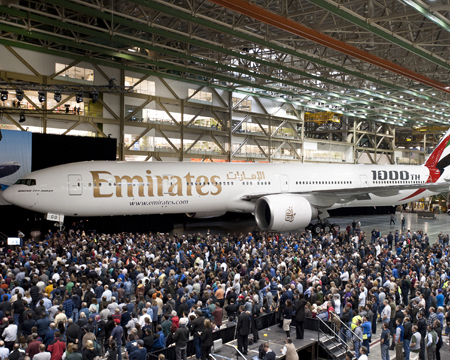
Emirates is already the largest customer of Boeing 777s.  Boeing photo

Emirates is already the largest customer of Boeing 777s. Boeing photo

The airline has so far refused to comment on any potential deal, but it is already the largest operator of the 777s and the Airbus A380 superjumbos. “The 777X will include new engines, an all-new composite wing and will leverage technologies from the 787 Dreamliner,” Boeing said in a fact sheet posted in May. “The 777X will be the largest and most-efficient twin-engine jet in the world.”

Orders worth more than $63 billion were placed during the 2011 show, with Airbus winning a big portion of them. This year, all signs are leading to a mega order for Boeing.

Airbus has forecast that the Middle East will need 1,921 commercial aircraft by 2030 while Boeing has estimated the number to be at 2,520.

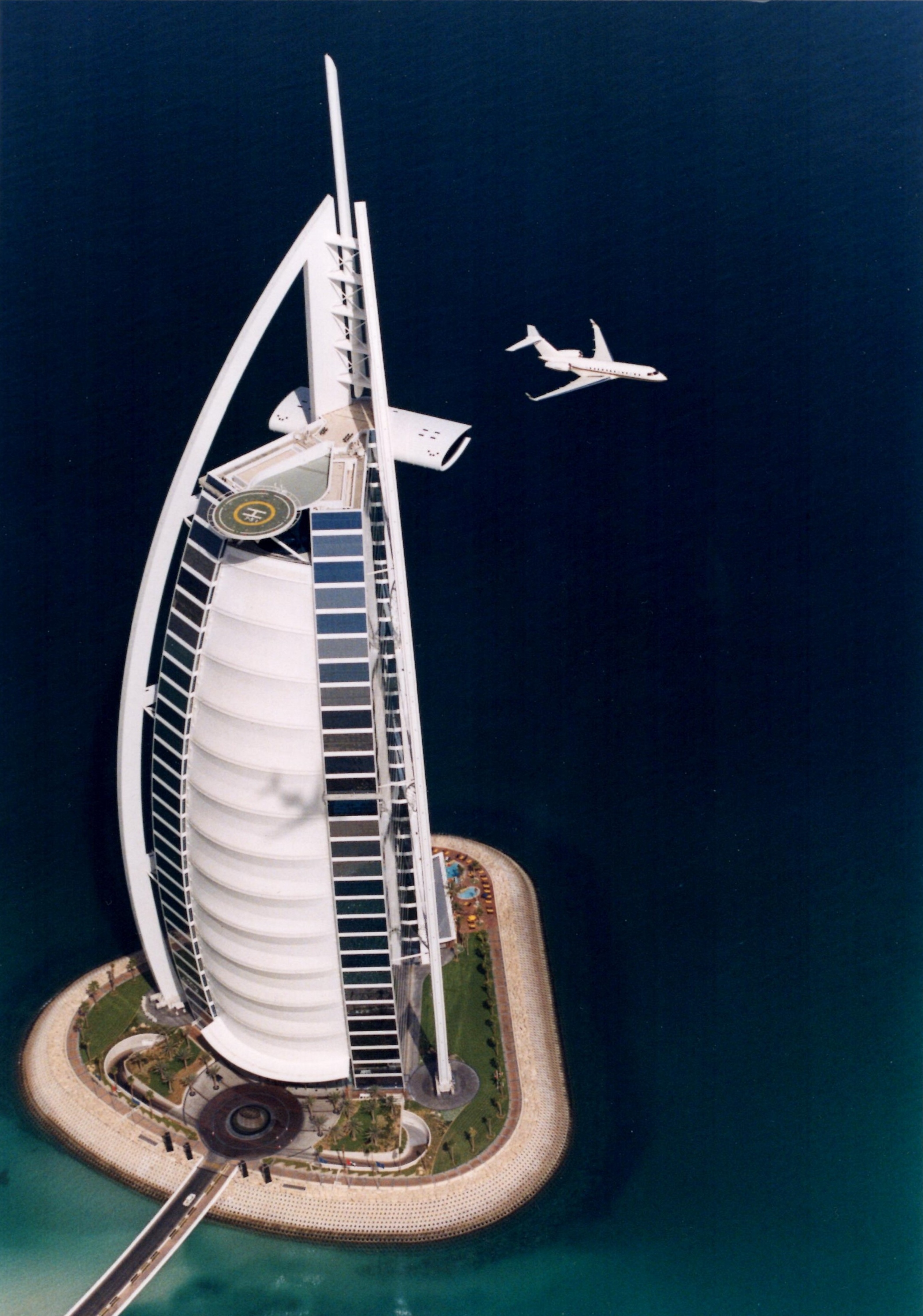
Flying high in Dubai: The Global Express business jet flies past the iconic Burj Al Arab Hotel. Bombardier photo

Flying high in Dubai: The Global Express flies past the iconic Burj Al Arab Hotel. Bombardier file photo

Canada’s Bombardier Aerospace has set up a special pavilion for its brand new CSeries aircraft, specifically designed for the 100- to 149-seat market segment.“Closely following in the footsteps of the CSeries aircraft’s historic first flight on Sept. 16, invited guests to Bombardier’s unique CSeries pavilion will be able to view the full-scale passenger cabin and cockpit demonstrators of this game-changing aircraft,” the company said this week.

Bombardier has received 177 firm orders for the aircraft, 10 from Gulf Air, the national carrier of Bahrain. Deliveries are expected to begin next fall.

Meanwhile, Bombardier’s static display will feature the wide-body Challenger 605 jet, the large Global 6000, and the Q400 NextGen turboprop airliner.

In all, 150 aircraft, including more than 50 business jets, will be on display at the five-day show at the new Dubai World central airport.

Airplane flies through fake ash cloud

15 Friday Nov 2013

Posted by Abdul Latheef in Airlines

≈ Leave a comment

Tags

Environment, News, Technology, Transport, Travel

Remember the Icelandic ash cloud of early 2010? The eruption of the Eyjafjallajokull volcano led to the cancellation of thousands of flights, stranding millions of passengers worldwide for days.
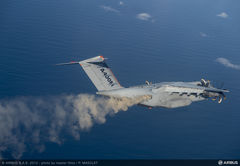
The Airbus A400M test aircraft disperses  Icelandic ash into the atmosphere.

An Airbus A400M test aircraft disperses Icelandic ash into the atmosphere.

This week an airplane flew through an artificial ash cloud over the Bay of Biscay in the northeast Atlantic Ocean to test how passenger aircraft can cope with such eruptions. For the experiment, European aircraft maker Airbus teamed up with Britain’s largest airline, easyJet.

Technology came from Norway.

During the test, an Airbus A400M dispersed Icelandic ash into the atmosphere while another aircraft, an Airbus A340-300 fitted with the AVOID volcanic sensor, flew towards the cloud, identifying and measuring it from almost 60 kilometres away.

Airbus said the ash cloud was created at between 9,000 feet and 11,000 feet, conditions consistent with the 2010 eruption.

A third aircraft took measurements to corroborate data from the AVOID system.

“The threat from Icelandic volcanoes continues and so we are delighted with the outcome of this unique and innovative experiment,” said easyJet’s engineering director Ian Davies.
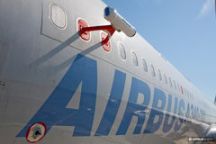
The Airbus A340-300  fitted with the AVOID sensor.
An Airbus A340-300 fitted with the AVOID sensor.

He said easyJet intends to fit its aircraft with the AVOID system.

“Finding a solution is as crucial now as ever to ensure we never again see the scenes of spring 2010 when all flying ceased across Europe for several days.”

The Airborne Volcanic Object Imaging Detector technology was invented by Fred Prata of Nicarnica Aviation, based in Norway.

“The team has just executed a unique scientific and engineering experiment conclusively demonstrating that low concentrations of ash can be identified by the AVOID sensor,” said an excited Prata.

Dr. Prata

Dr. Prata

“The highly successful outcome of this complex experiment… is a testament to the commitment and skills of easyJet and Airbus engineers and a great example of industry and science coming together to solve an important problem.”

While the cloud was fake, the ash used in the test was real — it was from the 2010 eruption.

Ash ready to go into the atmosphere.

Ash ready to go into the atmosphere.

Airbus said it was collected and dried by the Institute of Earth Sciences in Reykjavik, Iceland. EasyJet then collected it and flew it to Toulouse, the headquarters of Airbus in France.  Charles Champion, Airbus executive vice-president and head of engineering, said the team wanted to prove that the ash-detection concept can work.
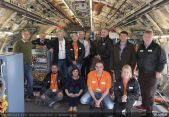
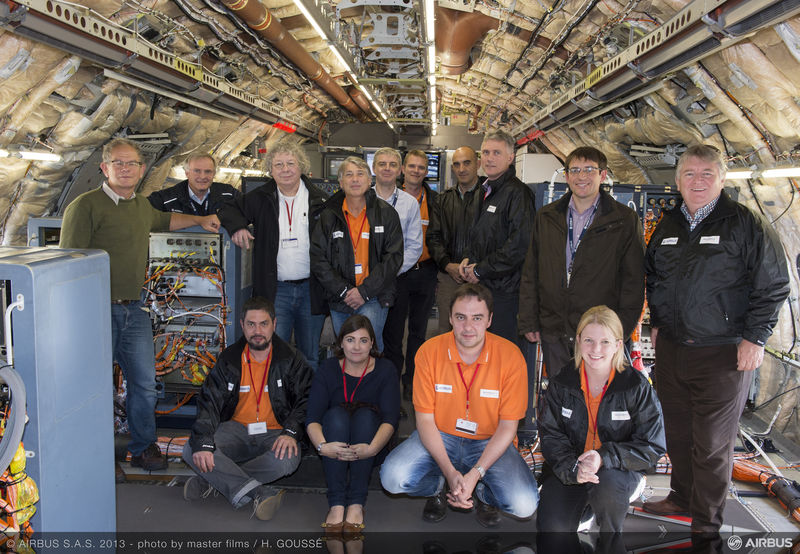
The AVOID test team.

The AVOID test team.

“We are at the beginning of an invention which could become a useful solution for commercial aviation to prevent large-scale disruption from volcanic ash.”  Experts believe the risk of another Icelandic eruption remains high and the AVOID technology could help open up large areas of airspace that would otherwise be closed during an eruption.

All photos are courtesy of Airbus.
Newer posts →

Tags

Aviation Boeing Bombardier Buisness Business Business Aircraft Business Aviation Canada Cities CS100 CS300 CSeries Culture Dreamliner Dubai Dubai Airshow Embraer Emirates Environment Le Bourget Lufthansa Luxury Travel NBAA News Paris Paris Air Show Politics Qatar Airways Social Technology Toronto Tourism Transport Travel UAE

Categories

Follow me on Twitter

My Tweets

Archives

  • June 2026
  • March 2026
  • August 2025
  • May 2025
  • March 2025
  • January 2022
  • January 2021
  • September 2020
  • April 2020
  • February 2020
  • January 2020
  • December 2019
  • November 2019
  • October 2019
  • May 2019
  • February 2019
  • May 2018
  • June 2016
  • January 2016
  • December 2015
  • November 2015
  • October 2015
  • September 2015
  • August 2015
  • July 2015
  • June 2015
  • May 2015
  • April 2015
  • March 2015
  • February 2015
  • January 2015
  • December 2014
  • November 2014
  • September 2014
  • August 2014
  • July 2014
  • June 2014
  • May 2014
  • April 2014
  • February 2014
  • January 2014
  • December 2013
  • November 2013
  • October 2013

Website Powered by WordPress.com.

  • Subscribe Subscribed
    • The Air Dispatch
    • Join 127 other subscribers
    • Already have a WordPress.com account? Log in now.
    • The Air Dispatch
    • Subscribe Subscribed
    • Sign up
    • Log in
    • Report this content
    • View site in Reader
    • Manage subscriptions
    • Collapse this bar

Loading Comments...